Loading the document
1 free read left. Create a free account for unlimited reading + AI research.
Create free account
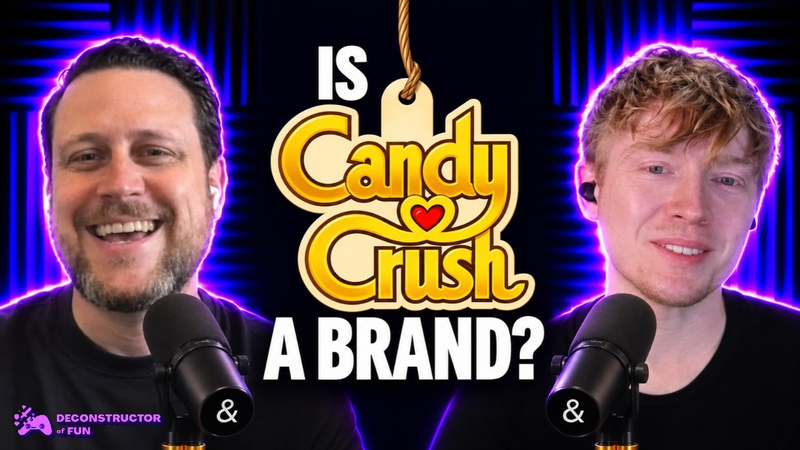
IP Won't Fix a Bad Game | Luis de la Camara, ex-Rovio, King & Sonic
Key insights
7 takeaways- 01An IP only qualifies as a franchise once it has successfully carried more than one product, as a brand name alone does not guarantee long-term community engagement or commercial viability.
- 02The 'flywheel' effect of transmedia—such as plushies or movies—is primarily valuable as a source of additional revenue that can be reinvested into live operations, marketing, or new game development.
- 03IP cannot fix a fundamentally bad game; while applying established IP like Angry Birds to a prototype can lower CPI, the game must still meet player expectations to maintain retention.
- 04Performance marketing and brand management must be bridged, as performance teams prioritize competitive, agile UA while brand teams focus on the long-term integrity of the IP.
- 05When using CTV for user acquisition, QR codes typically drive only 10% to 15% of installs, meaning most traffic arrives via organic or paid search, making attribution complex and prone to cannibalization.
- 06Teams should prioritize rapid prototyping and early marketability testing to avoid the high opportunity cost of sinking millions of dollars into projects that fail to perform after years of development.
- 07For studios generating $20M annually, prioritizing robust margins and core product stability is currently more critical than investing in long-term brand building, given the industry's heavy reliance on user acquisition.
Ask AI about this video
Transcript
[music]
Luis, every studio says they want a franchise. You've run several. What do people think they're asking for and what do they actually get?
There's different ways of looking at what a franchise is. I think the first one is sort of of course people think of Angry Birds, they think of Candy Crush, they think of Overwatch, etc. right? So there are games that people will see it as a brand name. And then there's franchise in terms of games that have a community and have been able to nurture that community over a long period of time, but it's not sort of positioned a brand in the same way like uh you know, a Nike or a Coca-Cola is, right? Where maybe Angry Birds is more in that in that category. People don't always have a very clear idea what they have in mind. I think ultimately at the end of day people want to have a competitive advantage over the market. Some of that can come with uh IP, but you know, building IP in that sense
is not something that is sort of can be done very easily, especially in a mature industry as today. But that's not to say that people shouldn't care about, you know, building IP.
Yeah. Okay, break it down for me. What are the core assets of like a mega franchise like Angry Birds or Candy Crush that make it different than something that isn't a franchise?
At the very highest level it's again familiarity and a promise of an expectation of delivering on an expectation, right? So if you think of Candy Crush as an example, you know, you're thinking of a certain type of match-three game, a certain type of puzzle. You're thinking of certain colors, iconic imagery such as the candies, um specific candies. In some case the characters. It's true that King like they tried to really do stuff with the characters. The reality is people gravitate more towards the iconic candies more than the the characters themselves. With Angry Birds obviously the birds themselves, but it's really hard to remove the idea of slingshot. Like historically when I was at Rovio like we would think about brand pillars,
we would we'd talk about things like, you know, birds versus pigs, so the conflict of birds versus pigs, saving the eggs, so the idea of rescue, birds with powers, right? So, these things that are ingredients that make something have an identity and then they create a cohesion. And that cohesion is what you then use to be able to deliver on the expectations of that brand promise. Now, the question is like, how wide can you go? For example, in a Candy Crush, do you have to stick to match three? In Angry Birds, do you have to stick to slingshot? Right? And slingshot gameplay, physics gameplay. And I think the reality, there's no like yes or no question there. I think it really depends on again, like what you've been able to do with the brand, what are the elements that are super iconic to the brand, and like where you can take it. I mean, Monopoly goes really interesting, right? Where maybe the first 5 minutes feel like it's a real Monopoly game, but once you really get in, it's very little little to do with like a real Monopoly game. Yet, I would say that game,
because of its success, has been able to really bring the Monopoly brand back to new heights. You know, sometimes you also can be surprised like where you can take the brand. But like, to answer your questions, I think it's a series of elements that are what define what is memorable and identifiable of your IP, basically. Um and of course, name is at the top of that, name and logo. But then the other kind of core elements, right? Whether those are characters, whether that's story and lore, whether that's setting, colors, uh music, uh gameplay style, etc., etc.
Okay, you've got my mind going. Um
Yeah.
Let's look at Candy Crush. Candy Crush is a franchise, right? That's a that's a [ __ ] franchise. Does Royal Kingdom qualify? What about like Project Makeover or Match Villains? Like what is this a binary? Is this like a gradient? Like help me like cuz you're listing all these things, and it's like, I have some of those. I don't have others. Like, how do you visualize the definition of a franchise? Is it a yes,
no? Is there maybe? Is there a great When I think of the term franchise, I think is that you've taken an IP and you've built more than one product out of that, right? So, doesn't necessarily mean you've built two games. It can be one game and one TV show. It can be multiple games, right? I think franchise, that's kind of the concept. I think if you want to take it back to IP, IP is like something that is identifiable enough that you can take it and build a franchise out of it. It's sort of the way I would I would think of it.
Like you've proven extensibility to the concept.
Like that's where I would sort of draw the line. I mean, at the end of the day, these are semantics and everyone can define what they believe is an IP. You know, at the end of the day, IP just means intellectual property. But again, like this idea of what's the purpose of a brand? The brand The purpose of a brand is to be able to build loyalty with with a product or a series of products to be able to have a competitive advantage over the competition, to differentiate with something that people will identify or, you know, feel familiar with, who will build trust in uh create expectations
that you then deliver on. Royal Kingdom, right? I think that's interesting as a way to think about it, right? Like they went from Royal Match to then deliver then then releasing Royal Kingdom. That's a moment in which they truly are sort of putting a flag in the uh in the sand saying like, this is going to be a franchise. We are going to franchise this IP. But that being said, like I think they already started to show signs of that way before Royal Kingdom, right? Like when they the way they thought of, you know, is it Robert, the uh the king? Right? The fact that I even know his name, right? Like I've had actually many conversations in the past at industry events with like Playrix folks, where like I was like, "Hey, um Austin, I think is his name, right? The butler. I'm like, "Austin, the fact that he's got a name, the fact that you've taken him to multiple products, you have an IP." And they're like, "Oh, no, we don't have IP. We just do performance marketing." And and like we've tried to do brand stuff and it doesn't work. And and I think that's where people get mixed up, which is like one thing is, you know, do you have to just do performance marketing? Can you do brand
marketing? But I did find it interesting how like there was a debate maybe even on the Playrix side of like do they even have an IP or a franchise? And I would say yes, they absolutely do. I just don't know that everyone there believes that and you know, they're just thinking like hey, we make good games and we do great UA.
I imagine it's easier to make movies and plushies about Angry Birds than it is about a butler.
Yeah, I mean I don't know. I mean they did some weird sort of music video at one point or something. I don't know if you saw that, but like some heavy metal thing I think maybe or something. I don't know. You type it up. There's some weird music video out there with Austin in it. Um saw it from a few years ago, but um I don't know where that came from. I don't know if that was a marketing team thing or someone did it on the side, but uh obviously like when you have characters that are iconic and they're easily to identify with, it's easy to sort of then build lore out of that. And if you can build lore, you can then build more transmedia initiatives. You can build like series, TV shows, movies, etc., right? Um Uh like for Candy Crush to do that, it
would be harder, I would believe, than for like Rovio Birds, right? I think like with King, as I said, they've for many years, I remember that they were trying to kind of push the characters more, but the audience wasn't really that interested in the characters, right? Like they had Yeti, I think was more of a favorite character, Bubblegum Troll, if I remember. Um but like Tiffi and Kimmy, I think were the girls' names. Again, people at King, apologies. This is trying to remember back from my good old King days. But like so they have characters, etc. But what's interesting about that IP is that what people find iconic are the candies. So like the reality is if you were to make, let's say, a Candy Crush movie, and shout out to King if if if they are working on transmedia initiatives like that, but like but if they are doing something like that, it's most likely going to be less about the characters. Maybe the characters appear here and there, but it'll probably be much more focused around the world, right? World building, right? The idea of like a Candy Land. Candy Crush when we first saw it, a lot of us remembered that old sort of Candy Land game, right?
That's how they could take it into a place. I think with characters though, it's a lot easier to do that, right? And I think that's where Angry Birds or Sonic, even Brawl Stars, if they wanted to make a movie or you know, the Clash franchise, like they could obviously make movies probably much more easily because they do have very iconic characters. And so, I think when you do have those characters, it's much easier to then tell stories around those characters specifically.
So, there's those characters as assets and lore. You talked about awareness and associations, the other games, merchandising, community. Of all these parts, which one do you think operators most consistently overrate when they're deciding whether or not the franchise?
Actually, funny enough, maybe maybe the characters side of things. Like when you have characters and you're able to make them iconic and and make them relatable and people care about them, then I do think you need to double down and really think about it. I think Supercell, what they do with the Clash series and what they've done with Brawl Stars, I think is a great example of, you know, having
these short social media content that is comedic, you know, entertaining, it really helps build community, etc. But, the reason I say that that can be somewhat overrated or estimated is because you don't need that to be an iconic brand and and even an iconic gaming brand. So, let's take Tetris as example, right? Tetris is extremely iconic. I don't think anyone in the world would say it's not a not a brand and IP and a franchise. It very much is so, but it's not about characters, right? It's these iconic shapes, the puzzle nature of of it, it's the time period in which it came out, and all that kind of together, plus obviously the maybe the Moscow background, the Red Square background, and like the music, etc. These are all things that are that you identify with that IP and that franchise. And again, they they've never had to use characters or anything like that, any gimmick or anything to to make it really iconic, right? Whoever designed it, I have no idea, but like whoever designed
Tetris probably never thought of it as like, "I'm going to build an IP. I'm going to build a franchise." Right? They just built an incredibly fun, addictive game at the right time and the right moment, captured lightning in a bottle and then over the years it's become extremely iconic and now with time it's very much an IP and a franchise.
What's most underrated?
I think the importance of expectations. Um
Like player expectations?
Yeah, like consumer expectations, right? Like I think there's a sandbox in which you can play in. I think you can expand that sandbox over time. But that sandbox is narrow at the beginning, normally. Brawl Stars as an example, could they create a shooter, a first-person shooter game? Probably very much they could. Now, would it be the obvious thing for them to do versus, you know, maybe like a PvP fighting game? Right? Probably a PvP fighting game would be more kind of respected or appreciated by their core community
first because again, it's in the the idea of brawling, the idea of fighting, et cetera, right? A beat 'em up sort of thing. Like if they wanted to kind of push the boundaries a bit, that's probably where they would be able to start first. Again, I've not done any research on this or anything. I'm completely kind of just talking on the fly at the moment, but like for them to go there first, it would make more sense to then to basically then say, you know, we're going to do a shooter or we're going to do a puzzle game, right? A puzzle game would be way way pushing the boundaries of that IP, right? Now, I'm not saying that over a 20-30 year period they couldn't get to a place where they could create a puzzle game. But you would need to sort of push the boundaries of the sandbox over time until you get there. Or else you're kind of like you're not really delivering on the expectations of what people sort of associate the brand with, et cetera.
Okay, speaking of how far you can push the boundaries, I think transmedia and and merchandising are always something that come to mind
when you think of a franchise and they generate revenue in their own right. Is that revenue impact isolated to those line items? Or does like the plushies and the trans media actually drive core game revenue?
The magic flywheel or whatever that people talk a lot about. Um Yeah, I think the best way of thinking of the flywheel is if you have a great trans media line and it works, that's additional revenue that you can then invest back into your business. So you have a bigger business. If you have a bigger business, you can invest back into building new games or hiring more people for live operations or spending more money on marketing dollars to to grow your audience, etc., right? So So I think that's the real advantage. There is of course a long-term advantage, which is if you have a growing trans media business over time, you know, you're making your IP evergreen and creating a an interest and engagement with consumers, which hopefully if you're able to do that in a sustainable way
over a long period of time, then you're kind of keeping your IP and brand healthy. Um and that should in time continue to benefit any games you make if games is the core of your IP. But I don't think it's as simple as like, "Hey, we're going to release a TV show on Netflix. Yeah, we're going to get 10x RDAU and we're going to be the biggest game in the industry because now we have this amazing Netflix show." Like it doesn't work that way, right? Like maybe you get a bump, maybe you get a spike if the Netflix show happens to be extremely relevant to the exact same audience that plays your game, um which is always difficult, right? Because, you know, again, like you take something like Angry Birds, right? Like Rovio, like we had these amazing movies, like really highly rated, do extremely well on streaming. They did okay theatrically, but did extremely well on streaming, but they're very family focused. And then if you look at the people that played Angry Birds games, like they're not necessarily always overlapping with the same people that are enjoying the movies, right? You know, of course
historically everyone's played Angry Birds games, so everyone's got some sort of reference, but in terms of playing and spending in the in the current free-to-play games, you know, it's not exactly the the same overlap, right? And so the impact of one thing onto the other is a little bit more disconnected. So, of course, like if you have a 4X game and you're able to land this deal with Netflix to have this really successful Netflix series, of course, if that Netflix series is directly targeting the exact same audience that plays your game, you would expect that that would have more of a direct impact, but I wouldn't think it would materially change your business, your game's business, you know, overnight. It might give you some, you know, a really great, you know, better than any featuring you've ever gotten or anything like that, but grow your game is by growing your community, doing better at UA, getting higher LTVs so you can be more competitive in UA, um being able to grow your business enough to have marketing dollars to reinvest in I think I think at the end of the transmedia's promise is more on growing your total business rather than actually
being a user acquisition channel, if that makes sense.
Eiffel Tower, iconic. [music] Tower of London, historic. The Two Towers, simply epic. But, none of them tell you anything about mobile app intelligence. [music] Downloads, revenue, active users, and my personal favorite, weekly cohort retention. Get the real story, get the real data, get Sensor Tower today.
In sickness and in health, in soft launch and in live ops, through every meta shift and every platform policy change. That's the kind of loyalty VIBES builds between your game and your players. AI power [music] targeting, a real meta layer, ROAS optimization that actually compounds. That's what makes VIBES the fastest growing loyalty platform in mobile games. Till churn do us apart. VIBES. V Y B S dot C O.
In today's hyper-competitive digital landscape, understanding your app's
journey from discovery to download isn't just insightful, it's the difference between scaling and [music] stagnating. Enter AppsFlyer, the undisputed leader in mobile attribution and marketing analytics. They've mastered the science of making every ad dollar work harder by revealing exactly where your players come from and how they interact with your app. Their platform transform mountains of complex data into clear, actionable intelligence that separates winning campaigns from [music] budget draining experiments. And I know that many of the top game companies leverage AppFlyer and are a key partner in their success. AppFlyer, [music] where your app's potential meets performance.
Then let's talk about what you what you do get with the UA. What's the most valuable thing a franchise, you know, gives a performance marketer that an unbranded or unfranchised game can't buy at like any price?
Yeah, when I when I was at Rovio, um we did lots of tests where we had, you
know, games that were uh call it new IP or generic IP, whatever you want to call them, and many game teams didn't want to work with Angry Birds uh IP, ironically. Cuz they kind of wanted to do their own Well, they, you know, game makers are creative people, right? And uh a lot of them want to be able to create their own I I world, their own IP, their own characters, their own their own They want They want to have full freedom when it comes to designing their game. They don't want, you know, additional constraints. And so, often times new game teams would start with we're building something completely new, completely from scratch. And time and time again, we would, you know, run these CPI tests early in the marketability testing, and, you know, maybe the CPIs weren't great, and then we're like, "Well, what if we skinned it with Angry Birds?" And, you know, and then we would see a true CPI discount, and they were like, "Okay, what if it was instead of it skinning with Angry Birds, we really thought about the design side of it to make it feel authentically Angry Birds?" And then we saw an even a better CPI on it, etc., right? So, I think like
what has been proven to me in the past is that IP can truly bring CPI down in a meaningful way. It can be a bit of a double-edged sword, right? You take like a game like Sonic, and you might get incredible CPI discount, and you might get a bunch of organics. But then your retention, day one retention numbers can be really poor because unless you're doing exactly what a Sonic fan expects you to do, they're going to bounce immediately, right? And so like it's really interesting to think about sort of maybe you call it tourist installs, right? Where you're like, "Oh, cool, a new game for this IP." And they're going to download it and they're going to give it a shot, but they're going to they're they're going to give it very little time and effort, right? And if you're not instantly retaining them, they're going to bounce and that can really screw with your retention metric. So it's a little bit of a double-edged sword sometimes. I wouldn't say it's like stick on IP and you're instantly going to get a a CPI discount that will help you scale. I think you need to look at both sides of that, right? Like is it retaining better and
not just slapping an IP on something is going to fix anything. And that and and the one thing I'll always say time and time again, IP will never fix a [ __ ] product. The games industry is an industry of LTV. LTV's driven by retention, conversion, and upselling, and then obviously player loyalty and habitual use, etc. Regularity is the scope that people like to talk about. Like that's what making great games is all about and no IP will ever fix that or change that or give you a a shortcut to win. The I What the IP can do is give you a competitive advantage when you have a great product to get more scale, to be able to as I said get a better, you know, better cost on acquisition, etc.
One thing I see changing is that performance creative at least right now is trending very heavily towards volume and iteration speed. Some people do and don't want to use AI in in their games for art and things like that, but really
when you get into to ad creative, AI is all the rage, volume is all the rage, feedback loops and iteration speed, especially on the SDK networks. You know, brand guidelines may not love that reality. Is it possible that Oh, yeah, okay. They don't love that reality. Is it possible that um as a game starts to scale, some of those brand and franchise effects like benefits become more muted where you're going to launch with a lower CPI? But as you maintain over time and you have to maintain a ton of of new creative, is this something that scales with the game or is it something that's really powerful top of funnel, but as you go deeper and deeper into the game life cycle, it's a little bit harder to be usable specifically by the performance UA teams?
That's a great question and and it's a topic I've had to deal with multiple
times as sort of a marketing leader. Um is sort of bridging the reality of you know, hey the brand folks, people who care about the IP, who care about the long-term nature of the IP and those that are UA performance gurus and are incredible at their job and to your point are about volume, about ideation, about creativity, about looking at the market, about benchmarking, testing, trying to find hero creatives, etc. etc. And what I would say is like my role has been multiple times being the kind of the ambassador of those two worlds and finding where they can come together and I always end up at a place where it's like there's a lot of education that has to happen on both ends, but more so from educating the brand folks about user acquisition and at the IP holders more on the user acquisition side because they have to understand sort of the nature of UA and how it performs and how it works. To your point, performance marketing is about performance and to perform you need to be on the cutting edge, you need to be highly competitive, you need to be agile, you need to be
fast, you need to do what works and what performs. And so therefore, putting a lot of constraints and limitations on those creative teams is going to really handcuff them. And so that's kind of the starting ground is to really kind of educate the IP holders on on how that works. And so it's also important that they understand that UA creative is not like a massive TV commercial that you've spent 500 grand on, you know, where you know, it's you're looking at to win all these awards at at can or whatever. Like that's not what you ate creative is, right? You ate creative is I don't want to say spaghetti in the wall, but there's a little bit of that, you know, like test and learn and iterate and try and, you know, cancel pivot, try again, go in a different direction, copy, etc. etc. right? So like it's very ephemeral. Sure, a hero creative can sometimes last a year and a half, 2 years in some like cases. In other cases it lasts 2-3 weeks. And again, it's like the devices where people are seeing it on, the
scenario especially in the SDK networks, right? They're watching it while they're playing another game, they're thinking about another game, you know, they're maybe watching a few seconds of it etc. So it's very different than like a TV commercial like or a launch trailer like in the world of triple A. So you see this a lot when you start to work with companies that come more from like a triple A background and then it's like, "Oh, now you need to educate them about user acquisition." So that's the first step. The second step is also for the UA folks to understand the long-term nature of an IP and while performance matters, you know, if an IP is very important, let's say let's take Sonic as an example or Candy Crusher, Angry Birds, right? All those IPs, right? Those are three IPs that I've been had the privilege to work with. All those IPs hopefully will exist 20, 30, 40, 50 years from now, right? If things are done properly by the businesses that own them, those IPs should last that long or longer, right? Like how old is Mickey Mouse? How old is Superman? How old is Spider-Man, right? Like Like those are those are IPs that should last for decades and and potentially centuries. And so I think there's also a responsibility that we
bear as custodians of the IP. And so the UA creative folks need to understand a little bit more around okay, what can they do in a way that's not going to damage, it's not going to take credit out of the IP, right? Like someone once told me about an IP like being a bank account where you like you put credit in and then you can take credit out. And like some things build credit and some things deduct credit. And so UA creative has the ability to do both. Often probably more deduct than add, but if it done well, it can also add. And so I think it's just about coming to an agreement on sort of like what is the sandbox that the UA creative team can play in. And again, those boundaries are not super defined and they shouldn't be super defined, right? Because you want to let the creative the UA creative team to kind of go to that edge. And if they somewhat go over that edge, that's when you're going to know where that border is. And because it's ephemeral, you can always take something down. Right. And so that's what I try to educate again like the IP folks be like, if the UA team goes too far, let's pull it down and that's it, right? Like it's
not the end of the world. Like it's much it's much better do that than to handcuff the creative team from the very beginning, right? So it's like, okay, hey, we don't want to do sexual things. We don't want to do violent like ultra violent things. We don't want to do things with blood, alcohol, machine guns, whatever. Like fine. Like okay, you have a family-friendly brand. You want to avoid those topics. You know, you don't want to do, you know, a woman destitute woman freezing and that, you know, freezing and in uh I don't
know if those ads are even still a thing anymore, but Yeah, the brands we think of, whether it's like Winnie the Pooh or Mickey Mouse or or Tetris or anything like that, they had the benefit of not needing essentially an active sales team performance marketing constantly using those brand images to drive traffic. And that's a unique thing for for our industry. And so I I like what you said about the bank account. The way I've kind of thought about it before is the a creative team, when they're at their best, they can be almost honing the internal idea of what
your brand is with the reality of what it actually is in the player's mind. And discovering those things, like to your example with Candy Crush, is it the characters or is it the candies? And being able to discover those things. But then at its at its worse, it's almost corrupting the brands for short-term revenue. How do you like qualitatively the examples that you gave are great, but I bet you this lives mostly in the gray. Like how do you know when you're playing with that line? Like are there metrics? Is there like a certain thing that you kind of can tell?
I think I think it starts with like again like if you if you're an IP holder, we have a franchise, we want to take care of this IP. We want to nurture it. We want to think long-term as well, etc. etc. The first thing you need to do is establish brand pillars, right? These IP pillars. Like what are the kind of the key things that make your IP iconic and deliver on the expectations that people have with your
IP. If you don't do that, over time you will likely damage your IP. I just heard a podcast on Business of Sport, which is a great podcast if you ever listen to it. And they were talking about Nike and how Nike's really hurt themselves. And one of the things that like one of the guys in the podcast was saying was like how he had read this Nike book that was written by the I think the founder of Nike or whatever. And and in that he talks about like how Nike's all about like how to make people feel like an athlete, right? It's all about performance. And at the moment you put on something from Nike, you need to feel like it it makes you feel the way a professional feels. It makes you feel like you're a professional athlete even if you're just an ordinary person, right? And in the last whatever since the COVID era or whatever, they decided to talk more about other more political topics and things like that. And they kind of have moved away from athletic performances as what makes them iconic. You know, that plus some D2C decisions and things like that have really damaged
the business compared to where it was, right? And I found it very interesting that that podcast host was talking about how important that identity of Nike is. So I think the same thing happens with with games as well as like you need to understand first like what is it? What makes this truly Candy Crush? What makes this truly Brawl Stars? What makes it truly Royal Match or Royal Kingdom Royal Royal whatever, right? So like the creative people, if they're great at their work, they should be able to figure out how they can do what they normally do while still respecting those brand pillars, right? And again, like brand pillars doesn't mean like, "Oh, I have six brand pillars. I need to use all six of them equally in any piece of creative I do or any product I build." That's not the case, right? You can have a little bit more of this or a little less of that, right? So, you know, destruction and in sort of like Angry Birds, right? Like, you know, delightful destruction, like, sure, you should probably have that quite high up. Like, the conflict of birds versus pigs, well, in some game maybe that is higher
in another game it's a little bit lower, right? Depends on like who the target audience is for and and and same goes for UA creative, right? You don't have to sort of take and embrace every single pillar in everything you do, but there should be enough of those pillars in what you do to make it feel authentically part of that. And I think if you're a great creative person, you can normally do that within the sandbox. And again, like, when you go beyond the sandbox, like, yeah, okay, maybe it's not a clear metric, but and it's subjective, but, you know, hopefully there's enough conversation of people looking at things that, you know, you can sort of someone can say, "Hey, I think you guys went too far." And that's when a conversation needs to happen. And then there needs to be an agreement. Did we go too far? Did we not go too far? Et cetera.
You gave an example earlier about Nike and the idea the under investing or investing like improperly, perhaps, in a in a brand or a franchise can kind of cause the either the awareness or the association to decay. Kind of conversely, these brands have like
massive staying I got massive staying power. How do you think about the durability of franchise awareness um if you were to like just either remove or minimize investment? Like, is there a decay rate? Like, how how do you visualize that?
In most industries, but especially our industry, uh product is what matters. You can have a great transmedia strategy. You can have a great brand marketing strategy. But, if your IP is at its core a gaming IP, and you have bad games or games that are not competitive in terms of of where they stand in the market versus other games, it's going to be very hard for that not to decay over time. In every company I've been into like invest in the brand, you know, and do brand marketing and 360 marketing and things like that. The problem is, you know, most folks CFOs and CEOs and game leads and GMs, etc. that, you know, at the end of the day they want to treat everything like user acquisition. And so, when you try that
and you do a 360 marketing campaign but measure it on like how many installs did you get and what's the ROAS of that, etc. like it's always going to underperform versus UA because UA is about finding the right player at the right cost. And so, I think that's where we often fail in the industry is like we don't think long-term enough. So, I do think that there's a world in which investing in your IP for long-term sustainability, long-term health is super important. But none of that will solve the lack of good product. So, if you're not able to to put out new great product or able just to kind of sustain a old live game and refresh that and renew it in a way that it's still very, very strong. You know, Hay Day is a great example. So, often people don't think about Hay Day when they think about Supercell, right? They think about the Clash, you know, Brawl, etc. And Hay Day obviously comparatively to the other Supercell games is quite small. Um but this GDC I was talking to Maya, the GM, you know, and she was telling me how they've been able to actually grow that game after its 11th year or whatever.
And that, you know, that they want to play offense in terms of their marketing and and they've been doing all sorts of great things on the live op side, etc. And so, knowing that she's at the helm, I think Phil Hickey, if I'm not mistaken, is there running the marketing now, like the deep pockets of Supercell with the right product investments and then backed with great marketing, there is a chance that that game, you know, becomes fundamentally bigger than it is today. And it's already, you know, a massive game compared to most games out in the market. But again, like if they just invested in marketing and weren't investing in the product, I would I wouldn't be as bullish on that. I fear that UA is almost too easy to over invest in for a a franchise list game. We talk about K factor where if you buy a hundred installs, they may tell their friends and you get five more organics for free. Sure. But for a for a big franchise, you're getting a hundred but you know a
lot more than a hundred. But if you're getting if you're getting a hundred installs and then you start running UA, five of those installs that would have come in anyway may just come in slightly faster cuz they saw an ad. It always looks so easy to justify performance marketing, but it may or may not actually be incremental. Does that match [clears throat] what you've seen? Yeah, that's a great great topic and and it's super it's super interesting. Like I you know, especially now with the you know, with CTV being a big thing. Let's talk CTV for a second, right? Performance CTV. The idea that you run user acquisition advertising, although you would probably mostly have bespoke advert like creative for the big screen. But the fact that you're going to deliver Yeah, different screen and you know, through your connected television apps or whatever you're showing your the consumer is in the living room is showing is being seeing an ad and then
the hope is that in a very short moment of time they're going to go and they're going to download the game. But you know, it's not like it's not like in a normal mobile UA where you can just sort of click or swipe up or whatever and go to the App Store and then download. Like there is Sure, there's the QR code, but most people that have been running CTV for a while, like the QR codes at best 10 15% of installs at best, right? Mostly it's it's almost always through search. So then you have the you know, Apple search you know, Apple search ads, Google search. So you have organic, but then you also have your paid. So you know, you have to think of that full user journey. And then when you look at at attribution, that's when it gets messy, right? Because you're like, does Apple search get the attribution? Should have this been an organic ins- would have this been an organic install anyways? And so now Smadex vibe like anyone Moloco anyone is doing like um who's doing CTV, right? They're going to say, hey Apple, that's not fair. That's my install. Apple's going to be like, no, it's my install because they
searched for it and they clicked on on the paid search results. And then someone internally is probably saying, hey, that should have been an organic install or whatever. And so I think that's where like incrementality matters. I would say you need sophisticated really sophisticated UA teams and data science teams who are looking at multi-touch attribution, who are looking at incrementality, who are looking at how these things work together because the reality is it's very unlikely you see one ad and then you click on that ad, download that ad, and play and play the game, right? Even in pure you mobile UA, right? Even just Apple event as an example, right? Or Unity ads or whatever like even just with that like most likely it's going to be the first, fifth, sixth time you see an ad for that game that the person's going to finally convert into an install. I say the same thing could be thought of as like if you're showing ads across multiple devices, right? If you're seeing an ad on a television set, if you're seeing an ad later on a mobile device, um if you hear someone talk about it, etc. All those things actually kind of
will mostly encourage you. And so I think future performance marketing specifically needs to be a world in which we can much more intelligently understand what influenced that install. And I know that like last click is the easiest, but it's like someone showed me this meme which was a person walking into walking into a movie theater. And there was a poster of the movie and the person walking past the poster into the movie theater. And the saying was like last click attribution is like giving all the marketing attribution of why that person went to see the movie on the poster that was that was there right in front of the movie theater or whatever, right? Like I said, there were multiple things that influenced that person.
That's a fair criticism. I think I think last click is is the the least bad option.
Yeah, and that's the thing people like people it's easy. It's easy. It's easy. That's why people use it.
measurable. Yeah, yeah. Have you ever run an incrementality test and discovered something horrifying?
So, I will be very honest. I am not I've
not been that much in the weeds in the last years as much as some of the performance marketers on my teams have. I don't know of anyone that I could you know any any specific moment that I could point to, but having spoken to folks generally speaking in the industry, I know a lot of people that work with incrementality testing nowadays, especially the more sophisticated teams that are kind of moving into the world of CTV and other things, where they've done things where they've turned things off, you know, and they've seen like, "Oh, wait, we don't see any difference, right?" And I think when you do something like that, when you're doing an incrementality test where it's not just about turning it on turning on, but it's also like literally like, "Hey, let's just turn it off and see what happens." And then like there's no difference to call it your your your total paid installs and and and total paid revenue, that's where you're like, "Okay, maybe we overestimated how much we were investing in this." One of the last discussions I had before I left Rovio was around the importance of paid search. You know, we've been a little bit frustrated with paid search
in the past because you know, at the end of the day we have a very strong brand, right? And often we had to run paid search just as a way to protect our organic installs, right? Because you know, if we weren't bidding against them, you know, we would someone else one of our competitors would come in and you know, bid on Angry Birds
for Angry Birds.
and try to get Yeah. Yeah, exactly, right? Bid for Candy Crush, whatever, right? And so like I think that's where it felt a little bit like IP infringement where that the the you know, that Google and Apple are able to sort of sell our IP to others in that sense. But you know, it's the name of the game and it is what it is. And so I think at the end of the day it was a topic of conversation of like how incremental is it that we are paying for that for that visibility and that traffic when potentially we're cannibalizing our own organics. But of course, you can't just look in isolation. You have to think about like well, what about all the competitors that could be cannibalizing that that, you know, stealing that that traffic as well.
This episode is sponsored by Moloco. More than 2 billion daily active users,
over 2.8 million independent apps globally. That's the reach Moloco ads unlock for performance marketers who don't want to stop at the usual walled garden. It's all powered by Kara, Moloco's compound AI system continuously learning from billions of events and getting [music] smarter with every campaign. Hop over the walled garden. Check out moloco.com. That's m o l o c o .com.
[music]
Unless you've been living under a rock, you know this is web store rumspringa. 70% of top apps are using a web store, and the best ones, they're doing it with App Charge. Do you want a $20,000 in-app purchase? Yeah, [music] App Charge does that. Do you want to pretend that subscriptions are still a viable monetization strategy for games? Yeah, App Charge even lets you do that. They get what high average revenue per paying customer means, and they're already doing over half a billion dollars in
transactions a year. So, are you going to be the first to do a $20,000 IAP? Don't accept microtransactions, embrace macrotransactions. Learn more at appcharge.com.
[music]
Satori. It's the Japanese Zen Buddhist term for sudden enlightenment. That flash where everything clicks. We're told that Heroic Labs team had theirs when they realized [music] that most studios run live ops like a horoscope. Vague, kind of generic, same advice for everyone. So, they built Satori. Real-time experimentation, player-level personalization, events that actually [music] respond to player behavior. Say sayonara to your old live op stack, and konnichiwa to Satori from Heroic Labs.
Let's go back to something you said um as I kind of moved towards closing this at the start. I I think the the best definition of like what a franchise
really is in the gaming context I I heard from you today which is that proven one to many, that proven extensibility. So, when you're deciding what game to build next to prove that franchise out what's the actual test? How do you know how far a brand can incredibly stretch to without kind of snapping it or or damaging the brand?
You need to understand your brand well first of all, first and foremost, right? Like what are the pillars of your brand? You know, a brand and often times is just another way of saying you have a a community of people that that care. You know, you might have a great awareness. Like, oh, I know that brand. Do I like it? No. Am I going to play one of their games? No. Am I going to, you know, consume anything they do? No, right? It's just awareness per se is not always the name of the game, right? You might have a lot lower awareness and have a much stronger business.
Right? And you know, we've seen that look, I've seen this I've seen this multiple times where you'll see Candy Crush or a or an Angry Birds perform much better in a brand a brand study in terms of how many people in like North America know know those IPs versus a you know, a a Royal Match or you know, Gardenscapes or whatever. But those other games are much bigger. And you know, if you take a Supercell game, maybe many of their IPs are not nearly as big from a pure generic awareness, like total gen pop awareness, probably Candy Crush and Angry Birds are are significantly higher in terms of brand awareness. But the reality is the one thing is that people like and are familiar with the IP. Another thing is that they're passionate about the IP, right? Versus with Brawl Stars as an example or the cla- or like Clash Royale, what you'll see often is that and if you talk to the Supercell guys, is like their business kind of ebbs and flows based on like how trendy their IP
is in any given moment, right? And that can be just a couple of you know, YouTubers who are have huge following and they get excited about the franchise again and they start playing it again and all of a sudden their business goes through the roof, right? Um for 6 to 18 months and then and then there those YouTubers move on to something else and then they start to see a you know, a decline again, right? Like and they might go through different waves of that, right? And so like I think that's interesting is to understand sort of the community and the audience and like who actually cares and what they care about. And then so if you have your brand pillars and you have that audience and they know what they care about and you know what they care about, then it's understanding where do you believe there's a level of tolerance? And that's where the design starts, but then you know, prototype, prototype and test. And so there's a lot of obviously like user research and consumer research that you can do to say, "Hey, we have these concepts, rate these concepts, etc." And that can give you, you know,
that's not going to tell you, "Hey, I've got gold here." But what it can tell you is, "Oh, this is absolute dog [ __ ] Let's not touch that." right? So I normally think that user research when it comes to concept testing is not great in terms of, you know, telling you, "Build this." But it's really good at telling you, "Don't build this." Right? Then you can do your CPI test, etc. right? Your marketability testing. And I think, you know, I would never skip marketability testing. I think it's really important because it gives you an idea like is there an interest in this? But of course then you need to like actually have something that has the stickiness and the willingness that people want to spend and and and so I think again coming back to Sonic, I remember seeing games that we would put out there that would get a lot of, you know, we would even go to like Brazil or something like that and have a test and we'd get a lot of installs like even like organic installs. You know, and like you're just trying to do like a market a quick CPI test and like be a little bit sneaky about it and all of a sudden you get like, you know, whatever, 20,000 organic installs and
you're like, "Shit." But then like they're not sticking around because, you know, they want classic Sonic and you're creating, you know, a strategy game or whatever, right? And so, I think, you know, you start to see One thing we did with Sonic, in fact, is this thing called what we called a native survey, which was the very first thing you do when you install the game is that you have this one question, which is "What's your favorite genre?" And it's like it doesn't create a lot of friction, right? You maybe get a very tiny little bit of churn, but really most people like And if And if they do churn at that stage, they're not really interested in the game anyways. So, you just ask that one question so that when you then look at your data, your retention and engagement data, you can basically filter the retention numbers based on what genre they like, right? So, you're like, "Oh, look, like we did really well with people who said they like strategy and RPG, like their retention was really good, but those that like action games, their retention was really bad." And it turns out that like that action cohort was much larger in
size than the RPG and strategy cohort, for example, you know? So, like there's ways to sort of look at the data as well to be a little bit more nuanced in your understanding, etc.
Yeah, so what you're really saying is there's there is no one test to understand how how to move and how far you can stretch a brand. What it really is is there's this toolbox. You can evaluate it from many, many different angles and any one of those could be failure points.
Yeah, absolutely. And I think that's the that's the like And again, I wouldn't say I have the secret sauce of making new games. I've I don't know that I've ever worked on a new game from scratch that's become a, you know, a billion-dollar game. So, so obviously like everything I've done in the past doesn't necessarily mean I have the secret sauce, but like what I would say is that, you know, we are in a world of data and insight and either the earlier you can get that data and insight the better. And I think this is the the most important thing that I will say. It's not because that's going to help you prove that you've got magic.
It's more than anything to be able to kill something as fast as you can because why do there's an opportunity cost to what you're building, right? It doesn't matter if you are a, you know, Tencent or you're a scrappy startup. There's always an opportunity cost of what you're building and the sooner you can pivot or do something different, the better, right? Um now, I'm sure there's moments in time where people said, "Oh, we had this, you know, [ __ ] data but we persevered and then we captured lightning in a bottle." Sure, you know, like there's always going to be situations where, you know, you you surprise yourself. But but again, I would just say that generally speaking, what I have experienced multiple times is you know, letting things go on for too long and then killing them after 2 and 1/2 years after having invested $8 million in development and being like, "Well, we could have easily used that $8 million back to invest in marketing, for example, right? Like or or or having done another, you know, two or three other projects in the meantime, right? So, like I think the sooner that you can
sort of pivot away from something that is kind of doomed to fail, the better. So, yeah, I don't know that there's any magic bullet to tell you that you've got lightning in a bottle, but I mean, maybe if you have like 70% day three retention, then maybe you do have lightning in a bottle, but like then you're okay.
Yeah, but like, you know, like how often do those come around?
Pretty rarely. Yeah. All right, let's land this. Last two questions. Uh
Sure.
Let's evaluate this. Two studios, same revenue, same margin, but one has a franchise, like a clear franchise that meets this new definition, and one doesn't. If you're advising the acquirer, how much more is that franchised company worth?
Run some UA tests on both games if you can and look at if there's a notable CPI difference. And on the back of that CPI, is there a notable difference to to the KPI to like the early KPIs? And then use that as a way to sort of model out. Um But of course there's like do you see
potential? Like go and study the communities of those IPs or the one that doesn't have IP versus just the normal community of the game of the other and do you see with the one that has an IP or a franchise does it look like there's a place in which you can take that into new directions whether that's new product and again creating a franchise model or like is there a transmedia angle to it which could you know create new revenue streams? Again, are you the type of business that wants to do that as well, right? If you're just a normal free-to-play business, I would just look at you know purely the UA and product metrics and like run some tests and see if there's a real difference. Look at organic traffic and what's happening historically to organic traffic. You know, you might look at the organic traffic and paid traffic split in one game versus the other and be like wow, this one's got you know 40% organic and 60% paid versus the other one's 90% paid so the margins on this one's going to be so much better. But then you look at a much longer
period of time and you're like okay, but I'm going to look at this game at a five years and it turns out that five years ago it was 90% organic 10% UA and it's not that they've grown their UA spend. It's just that the organic has been on a you know on a steep slope. So then forecast that organic downward trend. Is it going to stabilize? Is it you know, it's probably not going to grow again unless you're going to do massive investments. So like it's going to probably continue to declining or maybe it stabilizes if you're already seeing some level of stabilization. So I would also look at that. So I'd look under the hood a bit uh, to see like not just the split but also the trend to sort of build your forecast but I guess any smart uh, M&A dude is or or or woman is is doing that as well. So like uh, I would imagine but um, but yeah, but of course like if you're a company that has ambitions with transmedia and building kind of a bigger business then of course it's it's looking at understanding the community understanding how big that community is understanding the IP the elements that
we talked about like is it easy to take this IP into multiple directions, right? Let's take Let's come back to Tetris. Right, we said Tetris is super iconic. Would it be easy to make Tetris movies and Tetris TV shows and Tetris merch and things like that, like versus, you know, Brawl Stars. You know, probably Brawl Stars with their iconic characters, etc. It's probably easy to do. I don't know if a movie movie might be a little bit hard to do with trends with with like Brawl Stars, but maybe doing a you know, animated manga series with Brawl Stars could be probably super successful, right? And that could, you know, in itself be not just marketing, but actual an actual business, right? That you can actually generate from. Now, the question is is that business going to be big enough compared to the game's revenue or do you want to just purely treat it like marketing dollars or whatever, right? Okay.
Let's Let's talk about that that specific business then in like a more nascent stage. If a studio came to you with one title
and they're doing 20 million a year and they're thinking about their next 3 years. They have cash they want to spend. Do you tell them to spend that surplus building up a brand building up a franchise or just building up their margins in their core products?
I think if you'd asked me a few years ago, I would have said something different. I would have maybe said, "Hey, focus on the brand." But, um I do think at this day where the industry is, like the more solid and robust your business can be, the better. We live and die by user acquisition at this stage in this industry. Like it is what it is, right? Like unless someone's found a magic bullet, like again, I I know I've referenced Supercell a lot in this because they've had the luxury of being able to sort of build certain types of games that can do marketing differently, right? They're highly social games. They're very trendy games. Um and so they have the ability to sort of spend money elsewhere. Now, you know, they also have incredible uh reserves of cash to be able to invest in in incredible marketing.
incredible people
Yeah. Yeah, and great and great people, great talent working with some of the best agencies. They win can awards and things like that. Like shout out to the guys that won the the can awards this year on on on Brawl. I think it was Brawl Brawl or Clash, I can't remember. But anyways, like um that's awesome. And as a marketer, I you know, I take my hat off to them and and I'm you know, secretly jealous in a fun way, you know, like like that's super cool that they've been able to do that. But like again, coming back to your your reference like the 20 million studio, are they going to do that? No. Now, can they do a version of that that makes sense for their community? Sure, right? And again, I wouldn't think of it like, "Hey, I'm going to build this huge franchise. You know, I'm a 20 million studio, I'm going to build this massive franchise so that I can become the next, you know, Angry Birds." I would think of it more as, "Do I have a community? Is the game that I have IP-worthy, right? Does it have the elements that can turn that into an IP? And and can I reinvest some of my time and energy into doing things that are going to make that community
love the product and experience and the IP more? And does that then have the ability to maybe expand it, right? Further and grow that community, right? Um so again, that's not necessarily different than reinvesting back into your company, right? But um now, if you think you can build multiple games outside and come back to the concept of franchise, I do think that there is worth an exercise of saying, "Okay, if we plan to build multiple games after this because there's a familiarity that we've built already with that first game and we believe that by using that call it name." So again, like the Scapes, right? The Gardenscapes, Homescapes, right? Like Royal Match, Royal Kingdom, right? Like if there's a extension to new products that you want to sort of carry through, I think it's worth doing an exercise of let's define what the pillars of the IP are. Let's create that. Let's make that sandbox clear. The sandbox can evolve over time. The
pillars should evolve over time. But doing that first exercise of sitting down and being like, "Okay, we believe long-term in this. We want to do multiple games that have sort of the same umbrella naming convention and and certain shared elements, then I would definitely say like invest the time and energy. It's not doesn't cost you anything. It's just an opportunity cost. Just invest the time and energy and actually, you know, thinking about IP and and and defining those pillars and defining that sandbox.
Amazing. All right, Louis. Let's let's end it there. Thank you for joining me.
Yeah, no worries, Josh. Always happy and been looking forward to talking with you guys.
Great. All right. Well, thanks. I'm Josh Tchanley. See you next time on Deconstructor of Fun.
You did it. You made it to the end of the episode. As a fan of the show, it would help us out if you would subscribe and leave [music] us a review on the podcast service of your choice. Those stars and likes, while a small action on your [music] part, mean a lot to us and help to grow the show. More importantly, are you a member of
the Deconstructor of Fun Slack group?
[music]
If you have five years or more of games industry experience, go to deconstructoroffun.com/slack [music] and apply to join. Join the games industry's best professional community filled with peers always willing to lend a hand or [music] subscribe to our newsletter to get all the latest insights from the Deconstructor of Fun content [music] creators. Thanks for listening.



Comments