1 free read left. Create a free account for unlimited reading + AI research.
Create free accountWhitepaper DiGRA
1 free read left. Create a free account for unlimited reading + AI research.
Create free accountWhitepaperDiGRA
This document, a Digital Games Research Association conference paper by William Robinson of Concordia University, argues that scholars in the humanities and social sciences should consider building games as experiments rather than only writing texts. Drawing on Alan Turing's observation that the consequences of a fact are not immediately apparent, the author contends that games with one or more players can demonstrate emergence, letting researchers test the assumptions, methods, and findings of their fields by playing out their consequences. The paper positions this approach as distinct from proceduralist arguments that value games mainly for communicating ideas in novel forms.
The central case study is The Amalgamated, an experiment-game modeling the state of Montreal's labour movement between 1915 and 1920. Using Actor-Network Theory, the author represents human and non-human actors, including factory owners, workers, churches, newspapers, municipal governments, and bullets, as nodes, with their influences as edges. Players assume the roles of particular entities and attempt to accumulate capital and labour by reconfiguring the network. The author justifies ANT as a methodological match for game design, since both represent the world as agents acting on one another within systems that change over time.
The source base consists of archival documents from the Canadian Jewish Congress Charities Committee National Archives, the Jewish Public Library Archives of Montreal, and the Congregation Shaar Hashomayim Museum and Archives, supplemented by historical scholarship on the period. The paper is a methodological proposal illustrated through a single project, so it offers conceptual argument and design rationale rather than empirical results or validation data.
Each row is a game or company this document names, each column a document, oldest first. A mark means that document names it. Select a row to see those documents.



DiGRA · 2018

DiGRA · 2018



DiGRA · 2018



DiGRA · 2018

DiGRA · 2018

DiGRA · 2018



DiGRA · 2018



DiGRA · 2018



DiGRA · 2018



DiGRA · 2018

DiGRA · 2018



DiGRA · 2018
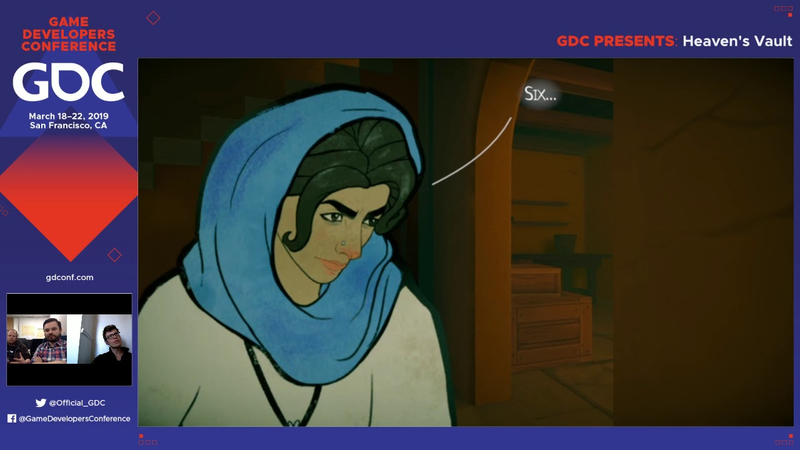
Game Developers Conference · 2019