1 free read left. Create a free account for unlimited reading + AI research.
Create free accountWhitepaper Amsterdam University of Applied Sciences
1 free read left. Create a free account for unlimited reading + AI research.
Create free accountWhitepaperAmsterdam University of Applied Sciences
This paper introduces ArkaNet, a browser-based game built in JavaScript that explores the relationship between two seemingly opposed senses of emergence: emergent gameplay, in which interacting mechanics generate new, partly unintended possibilities for players, and emergence as a restrictive self-organizing process, such as the flocking behavior seen in birds and game NPCs. The authors' central thesis is that the constraining nature of emergence is not at odds with the creative essence of emergent gameplay but actively supports it. The paper is a short conference contribution from the Amsterdam University of Applied Sciences, presented at the 1st International Joint Conference of DiGRA and FDG.
ArkaNet adapts the mechanics of Arkanoid by adding a network of locally interconnected blocks through which energetic signals propagate when the ball strikes a block. Because the network's recurrent architecture allows signals to recur locally, and because nearby blocks are more densely interconnected, the visible pattern of destroyed blocks reflects emergent energetic dynamics. These patterns are unlimited in variety yet bounded by the network's structure.
The key finding is that players experience this constraint as a regularity, and that regularity opens up room for expanded tactics and further emergent play. The paper's evidence is primarily argumentative and illustrated through a single prototype, with one figure showing gameplay; it does not report playtesting data, sample sizes, or quantitative measures of player behavior. As such, the conclusions are best read as a design-theoretical proposal supported by a prototype rather than an empirically validated result.
Each row is a game or company this document names, each column a document, oldest first. A mark means that document names it. Select a row to see those documents.
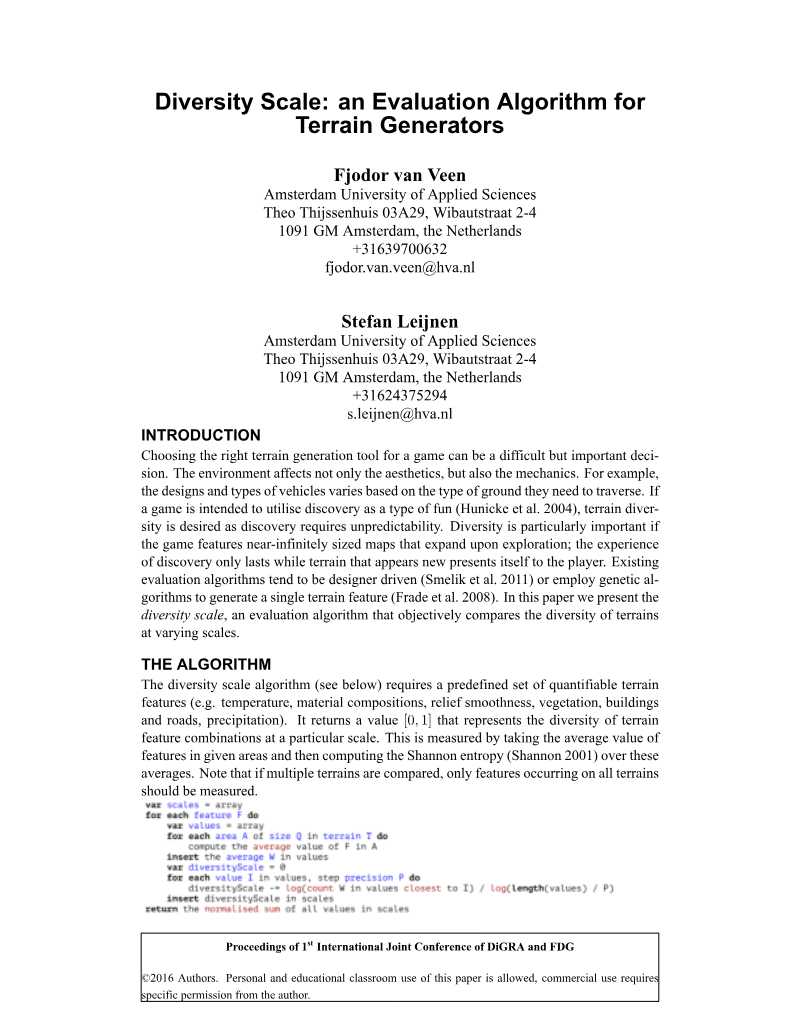
DiGRA · 2016

PocketGamer.biz · 2026

Extra Credits · 2026
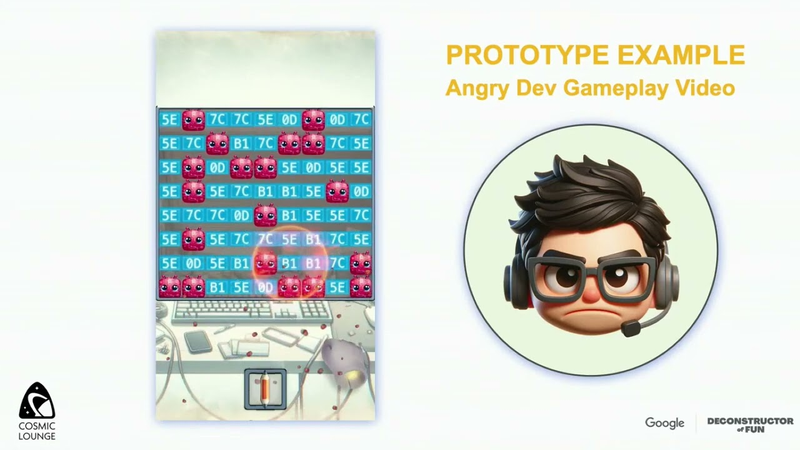
Deconstructor of Fun · 2024
Game Developers Conference · 2018
DiGRA · 2016
DiGRA · 2016



DiGRA · 2016
DiGRA · 2016
DiGRA · 2014
DiGRA · 2014
Singapore-MIT GAMBIT Game Lab · 2011