1 free read left. Create a free account for unlimited reading + AI research.
Create free account
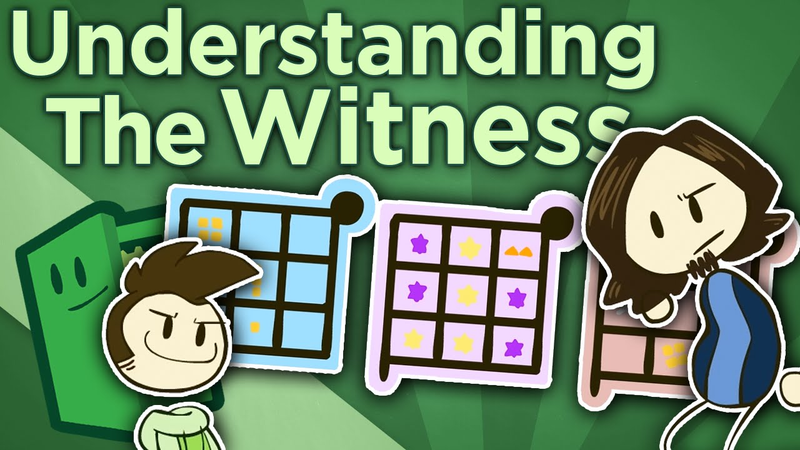
Understanding the Witness - Mechanical Transference and You - Extra Credits
Key insights
6 takeaways- 01The inclusion of a film clip from Andrei Tarkovsky’s 'Nostalghia' serves as a thematic anchor, comparing the player's repetitive puzzle-solving to the film's depiction of agonizing, self-imposed struggle.
- 02By framing puzzles as tasks without external stakes, the game forces players to confront the irrational, internal drive that compels them to achieve completion.
- 03The Witness uses mechanical transference to mirror the developer's creative obsession by compelling players to solve arbitrary, meaningless puzzles.
- 04The game’s conclusion reveals the developer’s own neurosis by showing him perceiving everyday objects as puzzle patterns, effectively transferring his mental state to the player.
- 05The primary value of the game's mechanics lies not in the utility of the puzzles, but in the psychological satisfaction derived from the act of solving them.
- 06The experience functions as a study in how interactive media can bridge the gap between creator and audience by inducing a shared state of obsession.
Ask AI about this video
Transcript
As James began his journey through The Witness, he reveled in the puzzles, but his one disappointment was that they seemed to be devoid of meaning. There was no narrative for him to understand, nothing for him to latch on to, just a group of seemingly random puzzles scattered throughout a pretty, but ultimately empty island. But then he found a theater buried in a group of tunnels dug out below a windmill and stumbled upon a film clip of a man struggling to carry a candle across an empty pool without it going out. And it gave him a whole new perspective on the game. The clip is from the end of a film called Nostalgia by Andrei Tarkovsky, the same man who directed Stalker, which would later inspire the Stalker game series. To understand its relevance to The Witness, we have to talk a bit about the clip. As I said, it shows a man desperately trying to cross an empty pool while keeping a candle lit in his hands. He tries to cross and the candle goes out. And you can see him pause. He's thinking of giving up. Then he looks around. He's looking to see if
anyone's watching. No one would notice if he cheated. He thinks about it, but then he trudges back to the far wall, touches it, and starts again. This time, ever so slowly, he makes his way across the pool, patiently waiting for the winds to calm. Finally, he makes it to the end and collapses. The scene cuts and we have one last shot of him sitting in front of a house that pans out to reveal that he and the house are inside the remains of a giant bombed-out cathedral. This clip is frustrating, excruciating to watch, but it's perfect because that's you. As a player, you are that man trying to cross that pool. His struggle is your struggle with each of these puzzles, from the hasty beginning to the frustration, to the temptation to cheat, and finally the starting over until victory is at last achieved. But there's more to it than this, because in the film, the man is trying to cross the pool because of a promise he made to a madman. Early in the film, the character we see in the clip runs into a man who believes that if he can just cross the pool while keeping a candle lit, he'll
save the world. At the time, the pool was filled with water, and every time he tried to enter, the locals would drag him out, thinking he was trying to drown himself. And so, he asks the main character, the one we see in the clip, to do it for him. The main character lightheartedly agrees, but by the end of the film, where we see him in The Witness, this promise has gained a new sort of importance for him. It's perfect because it so mirrors playing this game. Solving these puzzles is, to any outside observer, a completely meaningless task. It's an action that's totally arbitrary with no reason behind it beyond simply doing the task itself. But to the one doing it, it takes on an immense personal importance. It becomes an obsession, a need. There are all sorts of shortcuts you could take, and you could walk away without it actually costing you anything, but you have to complete the task. It becomes personal and meaningful, and yet it's still is as arbitrary as trying to cross an empty pool with a lit candle before the candle goes out. But then, and here's the genius of the design, then comes the last scene of that clip. Because as the
clip plays and the camera pans back and back, you can't help but notice that the back wall of the cathedral is designed like one of Jonathan Blow's puzzles. And you can't help but solve it. Even after he's just pointed out the futility and the meaninglessness of these puzzles, even after he's shown you how arbitrary what you're doing is, he presents you with another puzzle and says to you, "I know you can't resist the obsession." Because he's right, you can't. How does he know? Well, that takes me to what I believe is the true narrative of this game, though perhaps narrative is the wrong word. Because in the final film clip, after the game is all done, you see through the eyes of what we can only presume is Jonathan Blow as he gets up and wanders around his studio, seeing puzzles in all things, from the signs on the restrooms to the spoons. When he at last stumbles out of his studio and out into his garden, you can't help but see parts of The Witness in everything there. The way I read these two clips, this game isn't about a narrative in the traditional sense, but rather about getting you the player to experience
Jonathan Blow's obsession in a way that only a game can. He's bringing you into the neurosis that drove the years of development on this game. He makes you follow him down that mental rabbit hole that made him see these puzzles in everyday things, that made him not be able to go out to a restaurant or look at a pattern in a carpet without seeing pieces of The Witness. More than the lasers or the people in encased in stone or even the island itself, this is a game about obsession and the obsession of development. It's about trying to convey a mental state and getting you to understand the feeling that comes when something that may seem meaningless becomes a compulsion. But it's also about the genuine satisfaction this arbitrary compulsion may bring. I find it compelling as this is something so hard to do in other media and yet it 100% had that effect on James. I hope that at least gives you an interesting new perspective on The Witness and something to think about while you play. Did you solve them all? See you next week.
Summary
The Witness functions as a profound exploration of mechanical transference, utilizing the player’s engagement with arbitrary puzzles to mirror the developer’s own creative obsession. While the game initially appears to lack a traditional narrative, the inclusion of a specific film clip from Andrei Tarkovsky’s Nostalghia serves as a thematic anchor. This scene, depicting a man’s agonizing, repetitive struggle to carry a lit candle across a pool, acts as a direct metaphor for the player’s experience: the frustration of failure, the temptation to abandon the task, and the eventual, self-imposed compulsion to succeed despite the lack of external stakes.
The game design intentionally highlights the absurdity of this behavior. By framing the puzzles as meaningless tasks that nonetheless demand total focus, the experience forces players to confront their own irrational drive to complete them. This is further reinforced by the game’s conclusion, which depicts the developer perceiving the world through the lens of his own creation, seeing puzzle patterns in everyday objects. This transition effectively transfers the developer’s mental state to the player, transforming a series of abstract challenges into a shared psychological journey.
Ultimately, the game serves as a study in how interactive media can communicate a specific neurosis. By inducing a state of obsession, the experience bridges the gap between the creator and the audience, demonstrating that the value of the puzzles lies not in their utility, but in the genuine, albeit arbitrary, satisfaction derived from the act of solving them. Through this mechanism, the game successfully conveys the intense, all-consuming nature of the development process itself.


















Comments