Key insights
6 slides
Monetization Shift
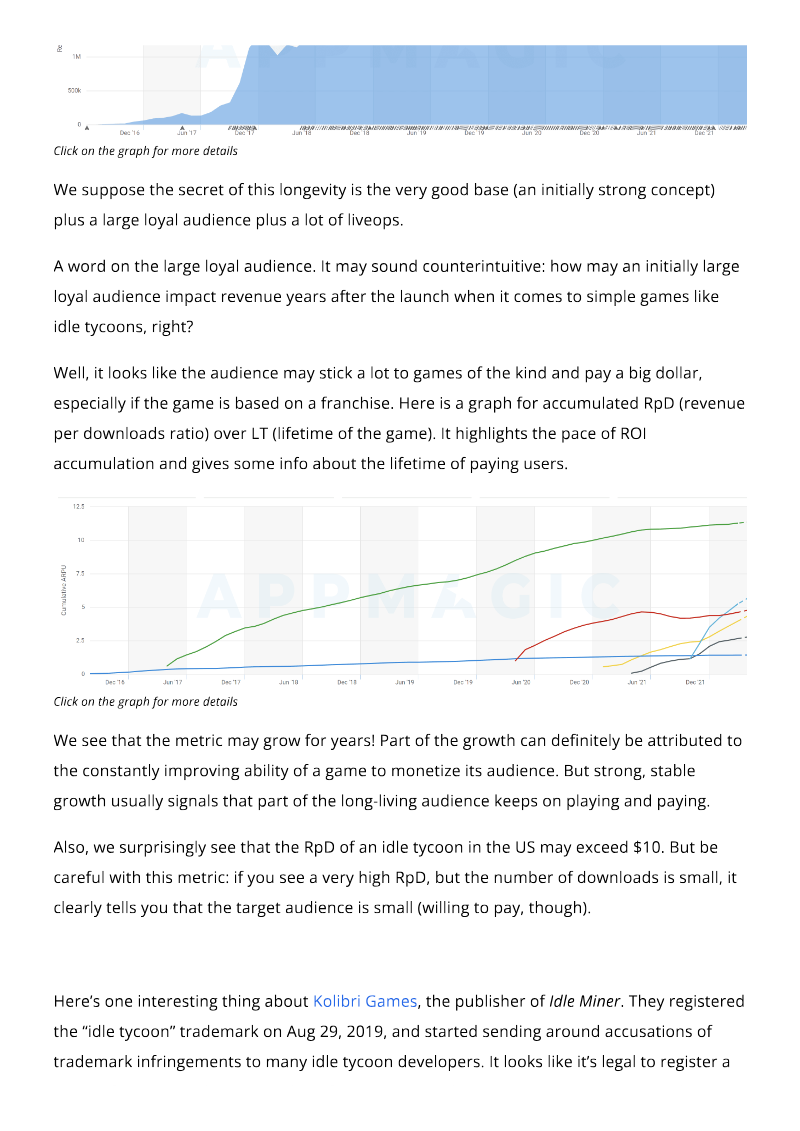
Market strategy has shifted from ad-heavy monetization to robust in-app purchase models.
The genre is moving towards more sophisticated revenue generation.
Gameplay Evolution
The genre is evolving beyond simple production loops toward complex mechanics.
Newer titles incorporate direct control, social interaction, and sophisticated metagame systems.
New Sub-genres
Newer sub-genres favor persistent, world-building experiences over traditional reset mechanics.
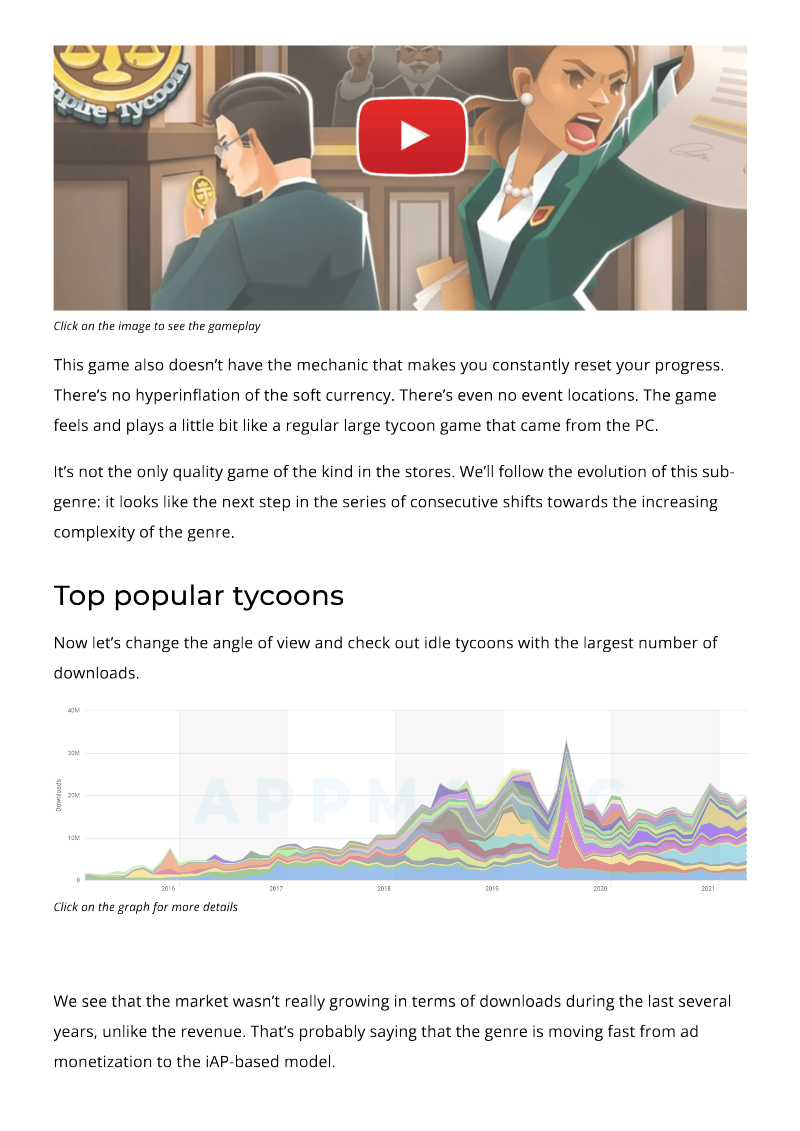
Titles like Cats & Soup and Law Empire Tycoon exemplify this trend.
Persistent Worlds. Newer sub-genres are moving away from traditional hyper-inflationary reset mechanics in favor of persistent, world-building experiences.
Scaling Success
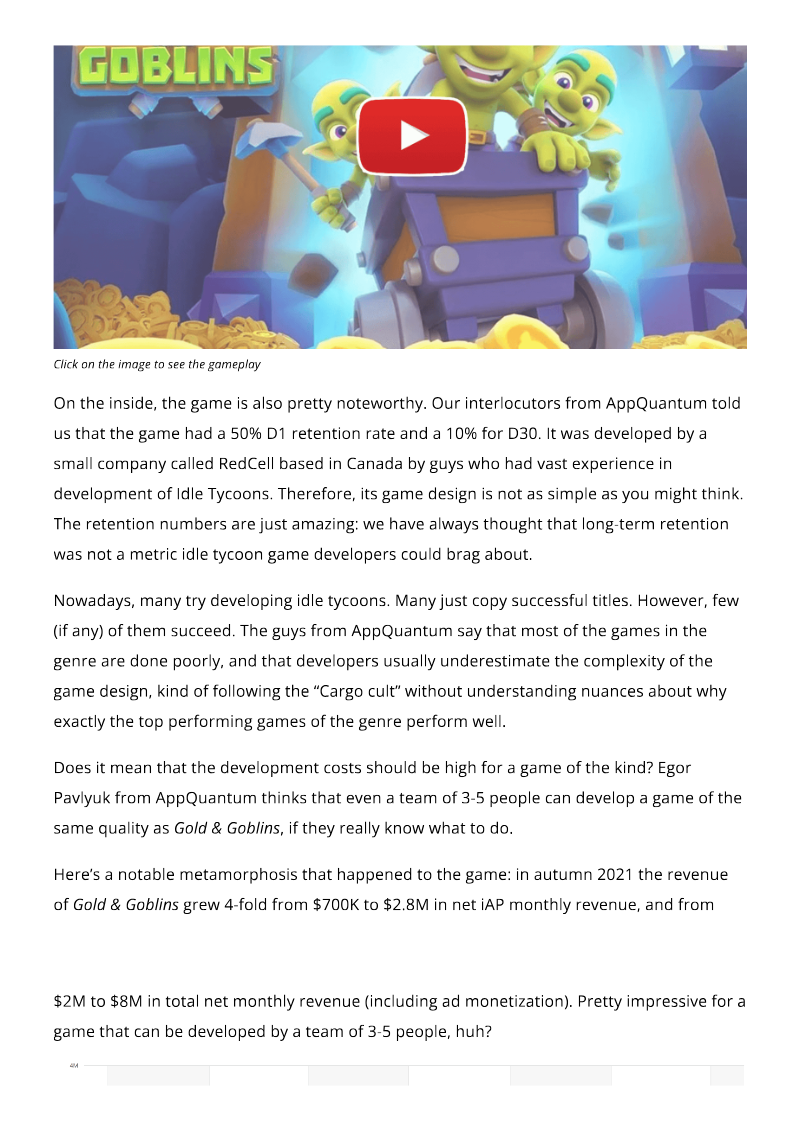
Small teams can achieve massive scale through strategic partnerships and deep live-ops integration.
Leading titles like Gold & Goblins, Idle Mafia, and Idle Lumber Empire demonstrate this. Aggressive creative testing also contributes to their success.
Competitive Edge
Competitive success requires a data-driven approach to balancing complex economic systems.
This approach must also consider long-term retention metrics and player-centric content.
Market Dynamics
The market landscape is increasingly defined by intellectual property battles.
Established publishers are leveraging franchises to boost retention and monetization. Trademark litigation is also being used to secure market share.
1 / 6
Ask AI about this report