1 free read left. Create a free account for unlimited reading + AI research.
Create free account
How to Organise a Business
Key insights
5 takeaways- 01Many studios fail to secure capital due to disorganized corporate structures and a lack of rigorous financial planning, necessitating a more sophisticated approach to business operations.
- 02Pitch decks must be treated as professional products, utilizing standard currencies like the U.S. dollar and backing all claims with concrete market research and historical performance data.
- 03Studios must demonstrate financial rigor by maintaining clean legal entities, clear ownership structures, and comprehensive, month-by-month operational budgets.
- 04Securing investment requires transitioning from a creative-only mindset to a disciplined, analytical business model that prioritizes scalability and profitability.
- 05Investors evaluate project risk and scalability primarily through unit economics, specifically the relationship between Lifetime Value (LTV) and Cost Per Acquisition (CPA).
Ask AI about this video
Transcript
you it's good morning everyone and yeah thanks for joining for this talk as Oscar said this talk is about stuff like how to organize as a business and also like explain a little bit sort of like why I volunteer to do this talk and before that it's probably good to solve like understand sort of like Who I am Peter I'm one of the partners at triple dragon and we are a london-based games finance and investment firm so we specialized in in financing and investing in games and so we see lots and lots and lots of developers and we want to invest in finance game developers and unfortunately we see a
lot of pitches and projects that are not really sort of investable and we'd like to sort of see that improve see more projects where we can actually say well yes we love it and it looks good let's go ahead with this so that's why I thought well it would be good to have a talk about and how to organize yourself as a business and it's all very good that you just walk like to make a beautiful game and but you want to get it published if you need to have funding in place to look like get the project completed and it's part of your job and part of your profession to be able to deal with publishers and investors and hopefully and you'll be able to take away a few points during this talk on on how to sort of like improve that or at the very least understand what publishers and investors are are looking for and and more specifically why am I talking about this here and I was at an
event four months ago here in Amman literally across the same sort of like venue across the street digital miss rec for and it was my first visit to Jordan and first sort of like proper visit to the MENA region and we saw lots and lots of technology businesses a few games company but all looking very promising and talented entrepreneurs I was getting really excited about it but unfortunately we didn't invest in any of them and that sort of brings us to the reason why I am because if you if you sort of like to look at the opportunity there was a lot that we really really liked and that we really liked about the region and so for example and there's lots of favorable conditions for for game developers here in Jordan and the wider MENA region I mean you're
operating in a very large and relatively speaking so if like homogeneous market and mobile and web is growing really really fast demographics are really favorable lots of sort of like young populations and growing populations and what we love most look like the first pull very talented people and we also see sort of like lots of things on the business side improving we start to see sort of like the first u.s. VC firms coming in investing in technology businesses here in the region which is a really good sign and quite a lot of support from governments and the World Bank so it was a lot that we liked and that brings us a little bit sort of like what was our problem what was preventing us from investing in companies here in the region and it sort of broke down on sort of like two aspects really the
first one is what we call sort of like business and organization so I would like to talk a little bit about that this morning and and the other one was was data and mostly sort of like analytics and unit economics those concepts and can be much improved on and bit starting at like business and organization and a few things that we saw flex all if the startups that we met and some similar experiences of meeting companies here and it's I mean it's not intended as criticism I'm trying to help them on how to improve them and investors expect to see a company which is like properly organized as a as a legal entity if you're starting out as an indie we're probably not organized yet as a company but if you get serious and you start to raise some investment and those are the things that you need to do so have a good sort of like a company structure in place and before you look like go
pitching to investors and when you start to pitch to investors and try to sort of like put some I mean put a lot of thought in what you're gonna solve like put into your pitch documents and they've been talks on like how to pitch to investors here at this conference if you have a de tenant and try to get the slides and but what we saw was with sometimes vague mostly on well how much funding do you need well if you don't know that's not really a good sign if you're pitching to an investor and and how are you gonna use the money and another thing that we saw back noticed in a lot of was financial planning and budgeting was quite often a bit lacking and I get it if you're not experienced with that that can mean to work the fairly difficult topic but it's what investors want to see you need to get organized be disciplined try to sort of like get your head around how much
money I'm gonna need not just next year I mean break it down month by month and and the other thing and this was really for us the one that sort like stood out most was and this is especially for people in the games industry and because at the last event there was like a wider subset of like technology startups but analytics and unit economics are so important if you're a game developer and that is really the one thing that we sort of like missing most when we saw meeting companies here in the region and if you don't have historic data available how are you going to look like explain to an investor how much installs did you do how much revenue did you what were your total costs last year a very very basic historic information that you can easily have available make sure you have it
available when you speak to investors and and the other things of like analytics we'll talk a little bit more about that I'm one of the other talks that was given here yesterday by Alexis it was very very clear I mean yes games industry is a creative industry but it's also it's a data-driven business so you need to get a firm grip on analytics try to spend time on understanding how analytic packages work and how to use them what kind of information you can get out of that and what information is is useful and we'll talk more about that the other thing that I've found sort of like a bit surprising and so like meeting companies is if you're pitching a really sort of like cool game idea and chances are there are games that are somewhat similar that have been published I'm so try to get that information and try to so if I make sure
that that sort of like market research around so of like comparable games that you have that available ideally in your pitch deck if you're pitching for project financing and you're doing say a zombie horror game well I would like to know what three or five other sort of like zombie horror games with roughly the same budget don't compare to a triple-a game have been soaked like published how well or how not so well did they do because that's information I would like to see is this an investment proposition is something that is a relatively small niche game or is this something that could do really really well so have that information available the other thing that I've found sort of like a bit surprising is unit economics and because games is really sort of like data-driven and I would expect game developers to have a very very sort of like clear grip
on all right if you're making a mobile game what is lifetime value what is your day 30 lifetime value what is your day 90 like that value and because if you don't know that and if same thing how much does it cost to so if like acquire a user what is your cost per install if you don't know those numbers like very user very install you know you'll not be able to tell whether your game is going to be profitable but its scalable and and those are very very important aspects for it for investors so what can you do to look like improve on that because that's why we're here we'd like to see more companies that are actually investable for us so company structure and when you start a fundraising process think about this prepared is if you need to sort of like tidy up or set up a
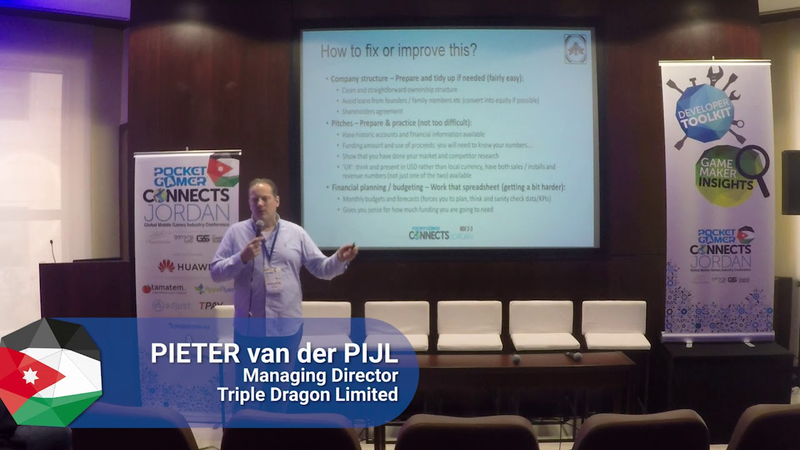
company do it in advance make sure you have them so quickly clean and simple to understand ownership structure and make sure it's sort of like properly capitalized so if everyone is investing make sure they have shares and not sort of like one has shares one has loans and it becomes messy and make sure that all assets are in the company that there's not sort of oh yes we also had this game but that was partially financed by someone else and it's actually not in a company I mean that really gets complicated confusing investors don't like that and and have shared all these agreements in place and it's something investors will want to see because we don't want arguments between founders or founders and earlier angel investors and investors don't like it it's also not good for you if we invest in a company we want you to focus on making games not sort of like haggling about legal
agreements with with angel investors or other sort like share with us so try to do that in advance the other thing about pitching again it's a little bit about organizing prepare it practice and do a dummy run it's it's not too difficult and make sure you go to a pitch prepares I mean once you're sort of like more organized as a business and you have your financial information available have it at hand worst case scenario have it at a laptop soon you can pull it up during a pitch meeting if necessary and make sure that you fools about very very clearly about the funding amount that you're after and how are you going to use the money and and include in in your pitch when you're presenting it that you've actually Falls about all these are sort of like the CIM so if like the nearest games in the market they did really really well they sold this many copies made this much
revenue because it shows that you understand sort of like what your competitors are in terms of games for studios and it shows that you've done your market research and you become a lot more credible as a business to receive investment the other thing is we're in the games industry we talk about ui/ux all the time now try to do that when you pitch to an investor try to make it easy for investors to understand what the proposition is so if you are from a company or from a country with a currency other than a dollar and don't make me think about how to convert it into dollars I'd like to sort of like instantly so if I understand oh yes that's two hundred fifty thousand dollars in a game you will be doing exactly the same you're making everything as frictionless as possible do that when you solve pitching and presenting so avoid local currency if
you can everyone in the investment community so if like counting and analyzing and dollars presented in that and also have the information available of like in different call it formats if if you're looking at revenue an investor might actually want to know the installs or the other way around so have both sets of data available when you're meeting with investors the other points financial planning again it's about preparing and organizing if you are budgeting what your studio needs for the next say two years and and if you do that on a month-by-month basis you'll get a lot more disciplines on ok yes I need to do this and in Oh in that month we have a lot more expense because we're attending game SCORM and we've got a lot
more travel I mean you get much more disciplined on how much funding do you need and when and it also sort of like gives investors a lot more confidence that you're carefully and properly planning and organizing and and importantly if you do it that way you'll know pretty much exactly how much money you're going to need and so did that was mostly about like getting organized and sort of like organizing your financial information and back to the point about unit economics and why do we so if I keep going on about that why do we care so much about unit economics I'm I met companies tech companies games companies here and they said we oh we're looking for investment we've got a very cool app we've got a very cool game and we made X amount of dollars last year sounds great and I mean you've delivered a product
you've delivered a product that people want happy to spend money on and it can support a studio really good and but that information in itself is just not good and as an investor we would like to understand who it's nice that you had some flack to in a thousand dollars revenue last year but how much did you spend to generate those two hundred thousand dollars if you don't have that information you don't know whether your game was actually profitable and equally and we would like to understand how much of that revenue was generated organically but just stuff like putting the game out putting it on Steam but again on the App Store get some organic traffic or how much was generated with marketing or user acquisition and it's very very crucial to understand and and know the difference between those two numbers because if your game is
profitable and you're spending quite a lot of marketing and it probably means that your lifetime value exceeds your cost per acquisition by quite a bit and you have a scalable game and and scalability is really what investors are after so unit economics in that respect are very very important so it's important to figure out yes my game is my studio going to be profitable is it going to be scalable the other reason why unit economics are so important is investors will compare your investment proposition to probably a hundred others so I would like to understand well am i investing into something we're sort of like the unit economics are sort of like LTV over cost of acquisition is maybe two hundred percent in this case here's another opportunity it's 120 here's another one it's 220 whatever we are
comparing opportunities and we're assessing risk and so if we don't have the unit economics information or estimates we won't be able to look like compare your investment proposition if you can't compare it if you can't assess the risk guess what happens we'll have to pass and that's really shooting yourself in the foot and so those unit economics very very important and the same for my research and because it's really sanity checking whether your game is going to be profitable it's nice to after unit economics even better to know well for this particular game genre there's actually this number of games coming out every year they are selling this many copies so you're tapping into a market which you can sort of like estimate the size of the market and and that's really useful information so try to get that number and get those numbers and as I
said before it's the type of data that will sort of like give us an understanding where your game is scalable and we can compare it to others we can compare to previous projects well yeah you may think your numbers are here these two other games that came out last year the numbers we're either here or here maybe your assumptions are off and it's just sort of like doing our diligence and for that we need data and also if you have accurate numbers you can pretty much sort of like pinpoint how much funny you're going to go to need and web so before you so far go out and pitch and make sure you're organized and have you're sort of like sort of the shopping list ready so what should be on a shopping list we'd like to see game related metrics so retention data purchase metrics are tau our crews are BP use especially for mobile games would
like to know lifetime value trying to get some test data I'd like to see an LTV curve is your lifetime value building up sort of like everything sort of like really early on and then it sort of like tapers off really quickly or is it more stable and for PC console games estimated sales prices what are you going to charge in early access what are you going to charge your release also look at comparators and check did they do lots of bundle deals because that can really sort of like confuse numbers I and also look at so like UA and media related sort of like analytic and try to get an estimate for cost very install and have a look at sort of like how things are performing in a store and market research we already touched on that and getting a nudge so it's really all about we'll get to questions getting organized get
disciplined on budgeting and for budgeting you need to get a grip on unit economics and if you Soph like pull that all together and you'll first of all you'll know whether you're sort of like starting something that's scalable and profitable you can actually explain that to an investor convince him to invest and if you can do that we'd love to have a chat with you but it's stuff like make sure you look like get to master that questions I would say just ask yes definitely thank you very much Peter that's great quick question for you good what do I don't even get a microphone to you maybe Peter oh thank you bringing my friend over here richer or burgundy share No yeah you said that what do you have on your shopping list yeah so you said LTV so what is that what is that refer
to LTV so with LTV we mean lifetime value so I don't know whether you're making mobile games or PC or console games mobile so on mobile if you you doing free-to-play so with free-to-play I obviously it's free to download and you'll be monetizing with ads and with in-app purchases so if you have a sort of like have some soft lance data for example you view and let's say you've got 10,000 installs you figure out how much revenue did those installs generate advertising and in-app purchases and if you divide that by the number of installs you have that's the amount of revenue that you can sort of like on average that you have generated per user so that's their like lifetime value and that number will tell you what if you
could get another 10 files at installs you probably get that amount multiplied by the LTV of revenue and that's a very important metric because if you know how much it will cost in marketing or user acquisition to require those users you can figure out all is it profitable to spend the money or marketing or if it isn't then it's not worth spending the marketing budget on an LTV itself is a incredibly complicated calculation it depends on who you ask and how you measure it and we could probably we have actually had whole talks just on how to calculate LTV but Peters point is I think really absolutely entirely valid which is what is the value of each customer bringing in and how is it cost to get them if you don't know those two parts how are you gonna be able to get someone like him to give you money to be able to scale a business because he can't work it out let me says yeah but I just a let's say if I have a game so my lifetime value just a say forever
okay I can't change it so every Machane j-- and and that's what developers always try to do and for example if you've got a game with them i mean lifetime value it as Oscar said calculating it is there's different ways to do it it's fairly complicated you can go online and find a few tools that will serve like an estimate LTV for you it's not a static number and if you bring your game out and you see well my day thirty retention is a bit low and you you're adding content you're improving the game and you see two of like retention going up your LTV will also be going up so it's it's a function of monetization and retention so it's not a static number it's a number you can work on and and that's why so if like companies do self launches yeah they'll bring the game out how are LTV is here well we want it to be here well and we see our retention numbers being a little
bit below where they should be that they'll keep improving on the game Duras off plans to hit those numbers and then scale when they're ready you
Summary
This analysis outlines the essential requirements for game developers seeking investment, focusing on the necessity of professional business organization and data-driven decision-making. The primary thesis is that developers must transition from purely creative mindsets to disciplined, analytical business operations to secure funding. Investors prioritize projects that demonstrate clear scalability, profitability, and a sophisticated understanding of market dynamics, yet many studios fail to secure capital due to disorganized corporate structures and a lack of rigorous financial planning.
Key findings emphasize that investable studios must maintain clean legal entities, clear ownership structures, and comprehensive financial records. Developers are urged to move beyond vague funding requests by creating detailed, month-by-month budgets that account for all operational expenses. Furthermore, the industry is identified as inherently data-driven; therefore, studios must master unit economics, specifically Lifetime Value (LTV) and Cost Per Acquisition (CPA). Understanding these metrics is critical, as they allow investors to assess the risk and scalability of a project by comparing it against historical performance data and market comparables.
The scope of this guidance covers the global games industry, with specific observations drawn from the MENA region. The methodology relies on the professional experience of a games finance and investment firm, which evaluates hundreds of pitches annually. The analysis concludes that developers should treat their pitch as a professional product, ensuring all data is presented in standard currencies, such as the U.S. dollar, and supported by concrete market research. By mastering these analytical tools and organizational disciplines, developers can significantly improve their credibility and increase their likelihood of successfully securing project financing.


















Comments