1 free read left. Create a free account for unlimited reading + AI research.
Create free account
Why Finland is such a hotspot for free-to-play mobile games
Key insights
5 takeaways- 01Finland’s small domestic population of 5.5 million forces developers to design exclusively for international audiences, ensuring products are culturally aligned with global markets from inception.
- 02The Finnish gaming industry prioritizes lean, flat organizational structures that eliminate bureaucratic processes and internal politics to maintain high execution speed.
- 03A high-risk, high-reward professional culture enables Finnish developers to challenge established global competitors through iterative development and faster time-to-market cycles.
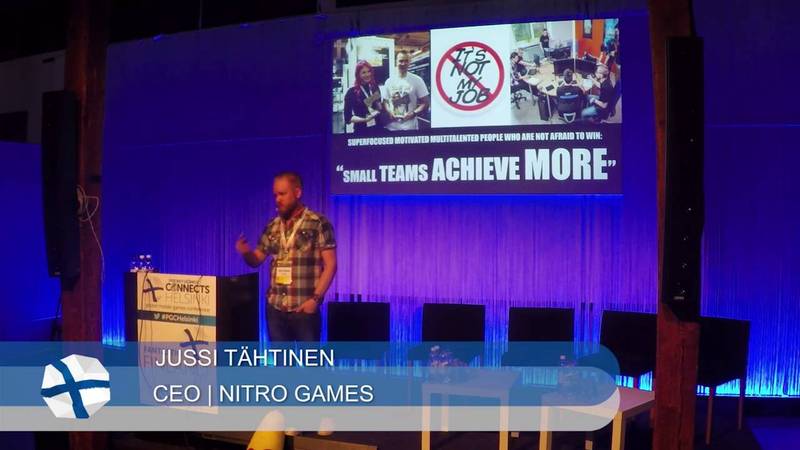
- 04Small, agile teams—sometimes consisting of as few as three people—consistently outperform larger organizations in delivering polished, high-quality products.
- 05Operational methodology centers on rapid prototyping, where teams focus exclusively on core gameplay mechanics before addressing metagame or monetization strategies.
Ask AI about this video
Transcript
[Music] good morning everybody um next we're going to talk a little bit about sausages and uh why that makes Finland so great wilhelm already went through all the numbers so we're gonna skip the boring part and focus on fun stuff like eating um so Who am I long story short I am the CEO of nitro games I've been doing against my whole life I've been in a lucky position that ever since I was born I had access to video games and that's how I basically played through my life thus far and um I've been making making video games for more than 10 years as a business and more than 20 years as a hobby and during those years I've launched more than 20 games overall and one day when I was really bored I I
started counting and I realized I had been in more than 1,000 business meetings so I've seen seen few of the industry trends so far from the consumer and both from the development and publishing point of view but that's it about numbers on the company I have a pleasure of working with it's called nitro games and uh we do mobile games and making mobile games is obviously something that's very hip right now we are two studios in Finland or 25 25 people from six countries and on something of a challenge for a Finnish mobile game company is that how do you get your games out there how do how do you make something that stands out and that's something I wanted to wanted to focus on in my talk that why actually Finland is such a great country when it comes to making mobile games what do you see so many good mobile games and mobile game companies coming out from Finland and on here's the thing
that you normally see or Wilhelm already went through this so I wanted to wanted to do something a little bit different so I thought that we should dig a bit deeper in the dr behind the numbers behind the actual written history and go more into about that how do we things actually work how do we how do we actually make games so we're only 5.5 million people and as you have seen helsinki here are beautiful nice european city but outside of health and get it looks very different if you go up north enough you have all the reindeers but between reindeers and housing there is a lot of places like that that's my my hometown which looks very much like this one city from ya might be the wrong way around
so we live in those concrete hills here and they're scattered around in the farm side and up honestly there's nothing to do on when we are born we don't have anything that you would call as a Finnish culture so what you actually do is you suck in all the cultures are that come from outside the Finland so since we're so small country there really is no home market not for games or anything else what we do is we add up to what is hip and what is going on in the world and on my generation was all about United States of America so obviously in TV we watched all these great series from us all these movies from us and that that means that are the so-called Western culture Western market is very much in our DNA despite the fact that we don't have any market here in Finland and in the end of the day what that has led it
is that actually finish companies who create IPS are naturally creating IPS that are successful in the large Western markets because that's where we have taken our learnings from so that's one one trick why what Finnish mobile companies have been so successful the other other angle to this is that up since we don't have any home market of our own if you want to make any kind of money with games you better go outside of Finland so it's not like Germany or or UK or Korea or Japan or China or the US where you can make a decent size of living simply by selling games in your home country so we always need to take into account that we need to go outside of England if we want to succeed the second thing due to the fact that our Finnish teams are relatively are small and the games industry as an industry is
relatively new it sort of created this atmosphere where almost in every company are what you see is quite flat organizations and on the positive thing about that is that typically in a games company all the people who work inside that company actually know something about games whether it's publishing them or developing them or marketing them or whatever it might be but they actually know their stuff about games and on what that has led into is that the finished mindset is very execution oriented so you have very little politics you're very little meetings you have a very little planning and the focus is pretty often on the on the topic that okay but how do we get that done and then just do it so so that that means that the Finnish companies are are truly a child and that gives them an edge when it comes to reacting to what's happening on the market and reacting to the changes in the industry and then being able to
sort of be on the forefront of new things happening next thing is that on since the teams are small um we tend to be really picky when it comes to the people who are working in the company so so what you need to have is some super focused people who are multi-talented so in Finnish development teams because most of the companies are developers instead of publishers here are you have small amount of multi talented people who can really pull off several things throughout the development cycle that basically basically combined with the mindset that people here are not afraid to win so we don't have this mindset that I was born as a programmer so I will die as a programmer but we have this mindset that I was born as a programmer and I might die as a billionaire so so the attitude that the teams have is that we can really make it
if we really try hard enough we can beat whoever is the number one at the moment and that's the driving power behind all these big success stories in Finland of course once the smaller team succeed then you see those companies ramping up with stuffing and everything but it really all boils down into having small teams with super talented people working together and completely ignoring the risks and sort of blockers on the way and only focusing on making the best games out there so as I end result small teams in Finland achieve way more than in our competitive countries so on having that said I wanted to also talk to you a little bit about what does all that mean in practice and since a work at nitro games thought that that's a good example to use here so on we set a challenge for us in in tune this year and we basically wanted to
create social real-time multiplayer on mobile and we very well understand that that's a rising market trend which which is something that hasn't really sort of been saturated yet you don't really know what type of games and what challenges exactly are going to be the winning ones but we figured that that's what we want to do so we approach this problem or challenge in the following way on in a prototyping way that's something we love to do a lot or you have small teams that that try to churn out the core of something that's fun on screen as fast as possible which is the typical way you do do prototyping and our way of perfect in that process is that it's all about the act an execution so let's talk it's pointless to design something if it's not needed yet under
our take on this places that are theoretically you can splice any any good mobile game into three parts which is the core game and the metagame and then also the so-called free-to-play social monetization layer and in prototyping or focuses in the core game exclusively we don't worry about the metagame yet or the monetization but only about the core gameplay especially when it's multiplayer it's crucial that what you feel when you do the correction feels good so you don't need the plan that you just do it and you know when you have it on and then 11 important mindset that we have is that if someone has an idea it needs to be on screen afternoon the latest so we don't want to talk about something for too long because when you keep talking about it I might have something in my head you will read it in a different way in your head and we're not talking about the same thing but when we see it on screen we're actually seeing and talking about the same thing so getting stuff on
screen is crucial and on what we've also learned is that basically the smaller the team the more you actually achieve at this point oh it tends to sound sort of ridiculous and uh sometimes it sounds a little bit like somebody's just preaching but but it really so during this summer we basically worked on three different our prototyping project and a few of these projects had somewhere between four to six people involved with them overall and are roughly roughly six me weeks of time which means that we had something relatively developed on screen and several features and so on but one of these projects we started very late and we only had three guys basically one producer designer of the type of car sort of the idea mastermind one art guy hold it all that's to be done in unity and one code
guy hold it whatever programmers to and one week was all they had time and the result of that our prototyping was actually the best version of the game that we did during the summer so so it's it's sometimes very hard to believe but but at least that's what we've learned several times that the smaller you can put the team in this face the better ah then when we moved the production side so once you have prototype found the phone you have created the perfect IP you have good understanding that this is what we want to do then when you go into production phase you need to throw all of that mindset are away and focus into a completely different type of mindset which is all about delivery so you need to make sure that those things that have been planned to put on screen fight their way on screen as fast as possible you know in a way that you don't need to return to those topics ever again so you want to do it right for the first time
and you want to deliver stuff on screen as fast as possible because time to market is crucial in today's mobile gaming what we are seeing when we are looking at the numbers numbers that how the market is our training at the moment and what's happening behind those are forecast is that these market rents are going to be shorter and shorter the cycles of the new charges are going to be shorter and solar moving forward so we don't expect to see too many games coming out that will rule the market for three years anymore but rather have this type of form shoulder birds we're one game is hit game for six months and then it dies off so it's crucial that during production you deliver you deliver fast and you deliver with the right quality so trying to get this button of here to work there we go so the wrap-up what's so fantastic about Finland are in a nutshell behind all the cool numbers
and so on I think it's very safe to say that our in Finland small is the new big thank you ladies and gentlemen [Applause] [Music]
Summary
Finland has emerged as a global leader in the free-to-play mobile gaming sector, a success driven by unique cultural, structural, and operational factors rather than just market size. With a small domestic population of 5.5 million and no significant local gaming market, Finnish developers are forced to design products for international audiences from inception. This necessity has resulted in a deep integration of Western cultural trends into the Finnish creative DNA, ensuring that local intellectual properties are naturally aligned with the preferences of large, global markets.
The industry is characterized by a flat organizational structure and an execution-oriented mindset that prioritizes speed and agility. Because the Finnish gaming sector is relatively young and small, companies often rely on multi-talented, highly focused teams that eschew bureaucratic processes, excessive planning, and internal politics. This lean approach allows developers to react quickly to shifting market trends. The prevailing professional culture encourages a high-risk, high-reward mentality, where small, agile teams are empowered to challenge established global competitors through rapid prototyping and iterative development.
Operational methodology in Finland emphasizes the importance of "getting things on screen" as quickly as possible. Prototyping focuses exclusively on core gameplay mechanics, delaying metagame and monetization considerations until the core experience is proven. Experience shows that smaller teams—sometimes as few as three people—often achieve superior results in shorter timeframes compared to larger groups. As market cycles for hit games continue to shorten, this ability to deliver high-quality, polished products with rapid time-to-market has become a critical competitive advantage. Ultimately, the Finnish model demonstrates that in the modern mobile landscape, small, focused teams are often more effective than large, traditional organizations.