1 free read left. Create a free account for unlimited reading + AI research.
Create free accountArticle Overwolf
1 free read left. Create a free account for unlimited reading + AI research.
Create free accountArticleOverwolf
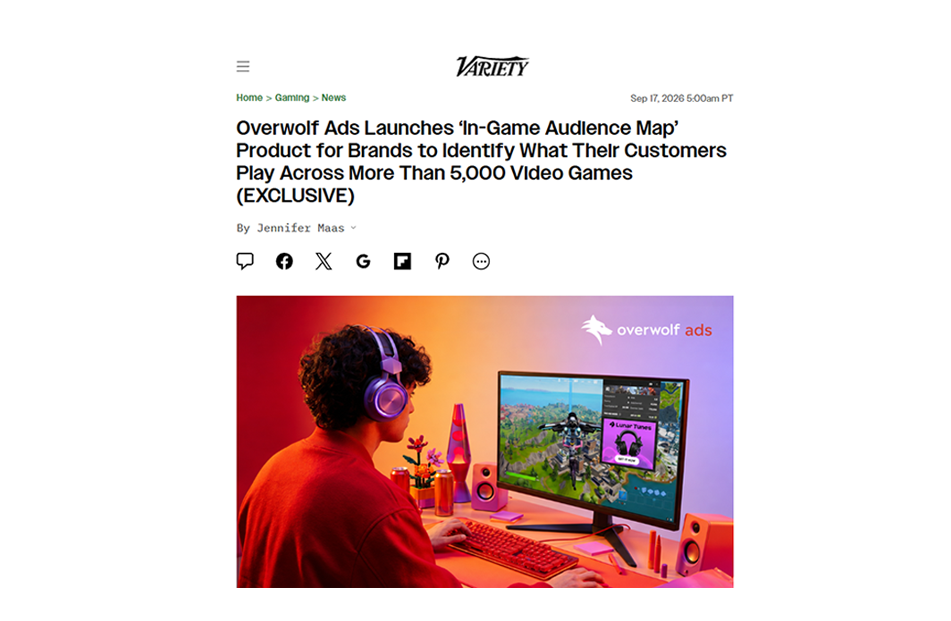
The average US consumer spends over an hour daily on digital gaming. In-game advertising accounts for only 2.3% of total US digital ad spend.
The primary objective is to provide a strategic framework for marketing professionals to justify the inclusion of in-game advertising within broader media plans. The thesis posits that gaming should transition from an experimental budget line item to a core channel by shifting the conversation from speculative enthusiasm to data-driven proof. By addressing specific requirements for incremental reach, attention quality, and measurable performance, marketers can effectively secure budget approval from finance and leadership teams.
The industry context highlights a significant disparity between consumer behavior and advertising investment. While the average US consumer spends over an hour daily on digital gaming, in-game advertising accounts for only 2.3% of total US digital ad spend. Despite this, the market is expanding rapidly, with US gaming ad revenue projected to exceed $10 billion by 2029. To bridge this gap, the framework emphasizes four pillars: demonstrating that gaming reaches unique, incremental audiences; proving high-quality attention during active gameplay; providing credible campaign performance benchmarks; and establishing a rigorous measurement plan using media mix modeling or geo-holdouts.
The analysis suggests that gaming platforms, such as Overwolf, facilitate these requirements by offering large-scale reach—over 113 million monthly players—and third-party attention validation. Standardized media formats allow for easy integration with existing programmatic workflows, while custom activations, such as branded mods, provide specific, high-impact results like purchase-intent lifts. By prioritizing these evidence-based arguments and aligning them with standard corporate budgeting frameworks, marketers can successfully position gaming as a reliable, high-performance component of a modern media strategy.
Overwolf · 2026
Overwolf · 2026
Overwolf · 2026
Overwolf · 2026
Overwolf · 2026

Overwolf · 2026
Overwolf · 2026

Overwolf · 2026

Overwolf · 2026

Overwolf · 2026

Overwolf · 2026

Overwolf · 2026