1 free read left. Create a free account for unlimited reading + AI research.
Create free account
How developers are combining physical toys with digital worlds
Key insights
7 takeaways- 01The boundary between material production and digital services is dissolving, shifting industry focus toward value networks that prioritize interconnected experiences across physical and virtual domains.
- 02The hybrid toy-digital market underwent a period of rapid expansion between 2012 and 2014, driven by the commercial success of 'toys-to-life' models like Skylanders.
- 03The scope of hybrid product development has expanded beyond children's entertainment to include adult-oriented gadgets, programmable robotics, and professional performance-tracking tools.
- 04Technological advancements in 3D printing and sensor miniaturization are enabling new methods of personalized manufacturing and rapid prototyping for physical-digital products.
- 05New business models are emerging, including 'toys-as-a-service' and the application of free-to-play monetization mechanics to physical goods.
- 06Cultural trends such as the 'do-it-yourself' movement, the gamification of daily life, and the 'quantified self' are primary drivers for the increased demand for ludic, interconnected experiences.
- 07Product design patterns for these goods are categorized by their level of synchronization and openness, ranging from digital anthropomorphism to tangible user interfaces for tablets.
Ask AI about this video
Transcript
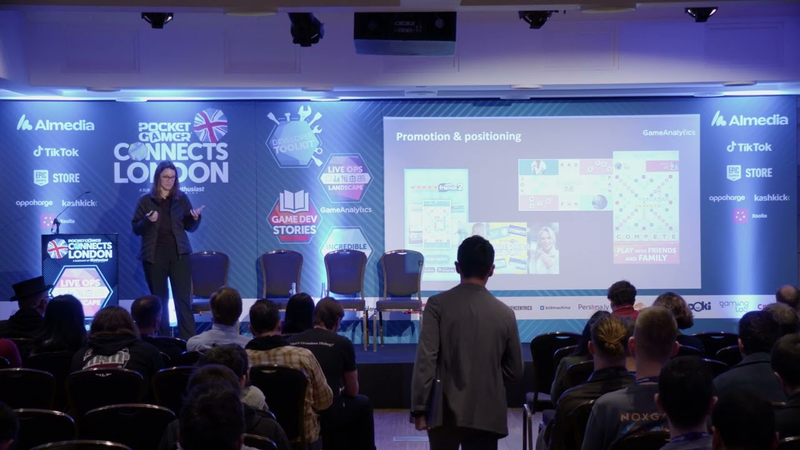
[Music] so hi my name is Annika Zach altima and I'm from the University of Tampa game research lab I'm also running a game jam in the f1 hole so that's gonna be for your next stop at three o'clock to come and see the games but this is my day job so we've been doing research on several different kinds of trends in game industry and in the game cultures for the past 10 and more years this project we started 2012 and it's about toys and games so when we kind of plan on new research projects we try to look on kind of a silent cues what's gonna happen and so on and this was 2011 when we started to
think that well there's a lot of things that happen right now as an innovation in the material production to eat yourself cultures and in the games as well so we were thinking about hybrid future which would be that the most kind of important products of an innovations of the future will be made at the borderline of physical in may end in material so digital services and material products kind of forming different kinds of value networks and new innovations so we kind of looked into this area and what is most relevant for this conference would be the huge trend of things coming with an app so it's not all about kind of game industry innovations is more from the toy industry side the material material production side where people are looking
into the success of digital products so we've seen a lot of toys and other gadgets like toys for adults that comes with a nap and the kind of creates extra value for that so this is already closed two years ago but which has recently published our research report for that which is available today but we looked into the games and toys industries and what kind of intersex in between that did an exploratory study and when we started in 2012 we were thinking that there isn't that many things but within two years of period there was like a huge expo explosion of new products and innovations within that area so we not analyzed those products different kinds of services as well and we created a report on that and also a brainstorming deck if you are interested in kind of exploring that area
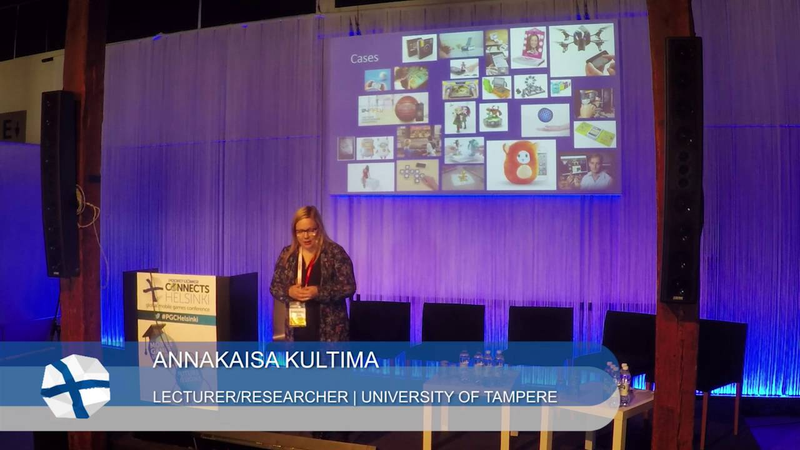
so the cases are there still quite a lot of things coming some of them are already dead so that's what happens in the new areas but there's tons of different areas to look for different utilization of the smartphones as part of the toys for instance so that it provides the face to otherwise kind of a stable physical toy but then there's other things like augmented reality has been researched quite a lot so we didn't look too much on that but we know that there's a huge success currently during 2012 2014 there is the huge success of Skylanders and then a couple of cases that were emitting imitating their success and that came out of the blue voted for the game industry but things like for instance shifters play cubes which is already acquired the technology is already acquired by someone else there is a
board game assistance with apps there are programmable toys like the hacker ball here whether the blue one so the kind of a also the trend of teaching coding to kids and so on then there's more professional stuff like a 9450 so kind of providing data for professional basketball players so more or less from the from the kids side to the adult side and all sorts of different things like interactive pin cheese [Music] all toys like fur be used now with an app and so so there's tons of examples and it is there's there's much more happening right now it's becoming more mainstream what we looked into the end analysis which you can also read from the book is that there is certain catalysts that are
working kind of towards this future so technology oriented catalysts like 3d printing so for instance make eidos which are printed after the the customer has created an avatar if they choose to have a physical product miniaturization of technology so it is much more available for people to even do prototyping since the technology provides you new opportunities to kind of more be more playful with material and then obviously Internet of Things and and things that we looked at it's more of an playful Internet of Things then the game since their game related catalysts that are much more known for for you service paradigm so we can say also see toys as a service when there is a digital and a kind of connected model for that then adult play in terms of not the well maybe also the sexual thing but but adult play in terms of all the gadgets and toys and also us adults use
in our everyday lives gamification ludic society sodic society meaning that we have much more playful stuff happening around us then the model of free-to-play is also in the material side which is an interesting combination and then the trend of designer toys which goes together with the adult play trend and then some social catalysts such as crowdsourcing we can have much more adult playful stuff that can have a contribution also too much wider sensed and then just entertain and do-it-yourself culture which is bringing new innovations and kind of playful attitude for for creation of new products and services and then quantify itself that the utilization of sensor technology and different kinds of data that you can get from yourself and kind of know for instance how you exercise but other stuff too and then well
there's tons of other catalyst also but these were the main catalysts that we were thinking that works towards the future right now then we looked into the products and kind of the patterns so it's not only only certain parents not only comes with an app or app toys or it's not only things like Skylanders so there is a different kinds of patterns how the hyper play is is kind of carved or designed so for instance the product camp is synchronized in terms of the material and digital so it goes together let you play together the material side and the Digital side or a synchronized so you can have a toy that kind of continues the digital experience or vice versa I can't be dependent or independent so that the the material play is highly dependent on on the digital product like in Skylanders or independent that that you can actually
play them separately open or closed meaning that sometimes some toys provide you more kind of game for like a structure play and some of them are much more the traditional play style of things that you use your own creativity dematerialization and re materialization so we can see digital products going to material and material products to come into the sphere of digital and we have products and services that utilize the model of born digital so for instance make it all which is printed only after the digital play has happened so you designed your own avatar and decide then that okay this might be interesting dull for you two to play later as a physical product and then we have with a lot of like apps used for the for like robotic toys or so and it can provide a face and more of a kind of a personality for inanimate objects so there is a
digital anthropomorphism happening photoplay is specifically for for instance figurines and dolls it is a huge trend happening so people actually use their physical toys to take photographs and be playful with the photograph taking so for instance having all the marbles heroes doing something may be unconventional and it's funny to take a picture because it seems like they they are in motion digital games market merchandising which is the most known modern model for us in the game industry so that's hugely obvious tangible users user interfaces for instance using different kinds of porns which have physical that have for instance to the three dots to touch their that their pads are tablets obsessor ease the similar way a smartphone slip ins that i already explained and then obviously the things that are now much more kind of adult hot
wearable technology so not only watches but teachers or or different kinds of clothing that you might wear that provides you data and you can read all the details in the book which you'll be getting soon what we are going to do now from for one year is that one of the kind of a concepts that we created in this research project was called murmur and murmur is the talking tickling laughing chair and that's something for you to perhaps look for so I'm not going to keep you away from the lunch too long if you have any questions I'm here a couple of more hours you can see me at that gem area too and you can send me email or tweet to me if you have any further questions but I'm gonna hand you the games if you if you learn the books if you want to thank you thank you [Music]
you
Summary
The intersection of physical toys and digital services represents a significant evolution in the gaming and toy industries, driven by the emergence of hybrid playful experiences. Research conducted between 2012 and 2014 identifies a rapid expansion in products that bridge the material and digital worlds. This shift is characterized by the integration of smartphone applications with physical objects, the rise of augmented reality, and the success of "toys-to-life" models like Skylanders. The scope of this trend extends beyond children’s entertainment, encompassing adult-oriented gadgets, programmable robotics, and professional performance-tracking tools.
Several catalysts are accelerating this hybrid future. Technological advancements, such as 3D printing and the miniaturization of sensors, enable new forms of prototyping and personalized manufacturing. Simultaneously, social and cultural shifts—including the rise of the "do-it-yourself" movement, the gamification of everyday life, and the "quantified self" trend—have fostered a more ludic society. These developments have introduced business models like "toys-as-a-service" and the application of free-to-play mechanics to physical goods.
The study categorizes these hybrid products into distinct design patterns based on their level of synchronization, dependency, and openness. Key interaction models include digital anthropomorphism, where apps provide personalities to inanimate objects; tangible user interfaces that utilize physical accessories for tablets; and the "born-digital" approach, where physical products are manufactured only after a digital design process. Ultimately, the research concludes that the boundary between material production and digital services is dissolving, creating value networks that prioritize playful, interconnected experiences across both physical and virtual domains.



















Comments