1 free read left. Create a free account for unlimited reading + AI research.
Create free accountArticle G|A|M|E – The Italian Journal of Game Studies
1 free read left. Create a free account for unlimited reading + AI research.
Create free accountArticleG|A|M|E – The Italian Journal of Game Studies
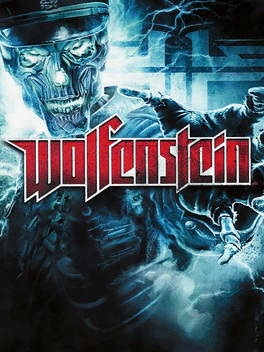
Wolfenstein: The New Order (2014) builds its alternate-history setting partly through its music. The article examines how the soundtrack constructs that world.
The article examines how the soundtrack of Wolfenstein: The New Order (2014) constructs an alternate-history setting in which the Nazis won the Second World War. Its central argument is that the game's "Nazi rock 'n' roll," a set of German-language parodies of 1950s and 1960s American hits released under the fictional label Neumond Records, creates a mythologized and selectively authentic world. Drawing on Planells' semantic-pragmatic model and concepts of fictional particulars, authenticity, and historical resonance and dissonance, the author contends that the music's apparent departure from historical knowledge paradoxically strengthens the game's verisimilitude.
The analysis finds that the game relies on cultural shorthand, chiefly the association of the German language with the Third Reich, while largely avoiding explicit Aryan supremacist content. Lyrics are kept ideologically "aseptic," softening and parodying fascist themes, as in the lunar conquest song "Mond, Mond, Ja, Ja." The article also complicates the popular mythology that Nazism suppressed popular music, noting that jazz, swing, and Schlager persisted in Germany, and that American rock 'n' roll has come to stand in for liberation, a framing the game exploits.
Taking a broader view, the author situates these choices within a long history of appropriation in which Nazi signifiers and 1950s–60s rock have been mythologized and commercialized. The author finds that the diegetic music carries authenticity but plays a comparatively limited ludic and narrative role next to games such as BioShock, Fallout, and Grand Theft Auto, and that its marketing use yielded modest audience reach, with roughly 35,000 YouTube and 25,000 SoundCloud views. The article concludes that the soundtrack anchors the fiction to real cultural memory while naturalizing an American-centric narrative of progress and reinforcing stereotypes of German-sounding music, even as parody framing may shield the game from criticism.
G|A|M|E – The Italian Journal of Game Studies · 2026
European Conference on Games Based Learning (ECGBL) · 2026