1 free read left. Create a free account for unlimited reading + AI research.
Create free accountWhitepaper Utrecht University
1 free read left. Create a free account for unlimited reading + AI research.
Create free accountWhitepaperUtrecht University
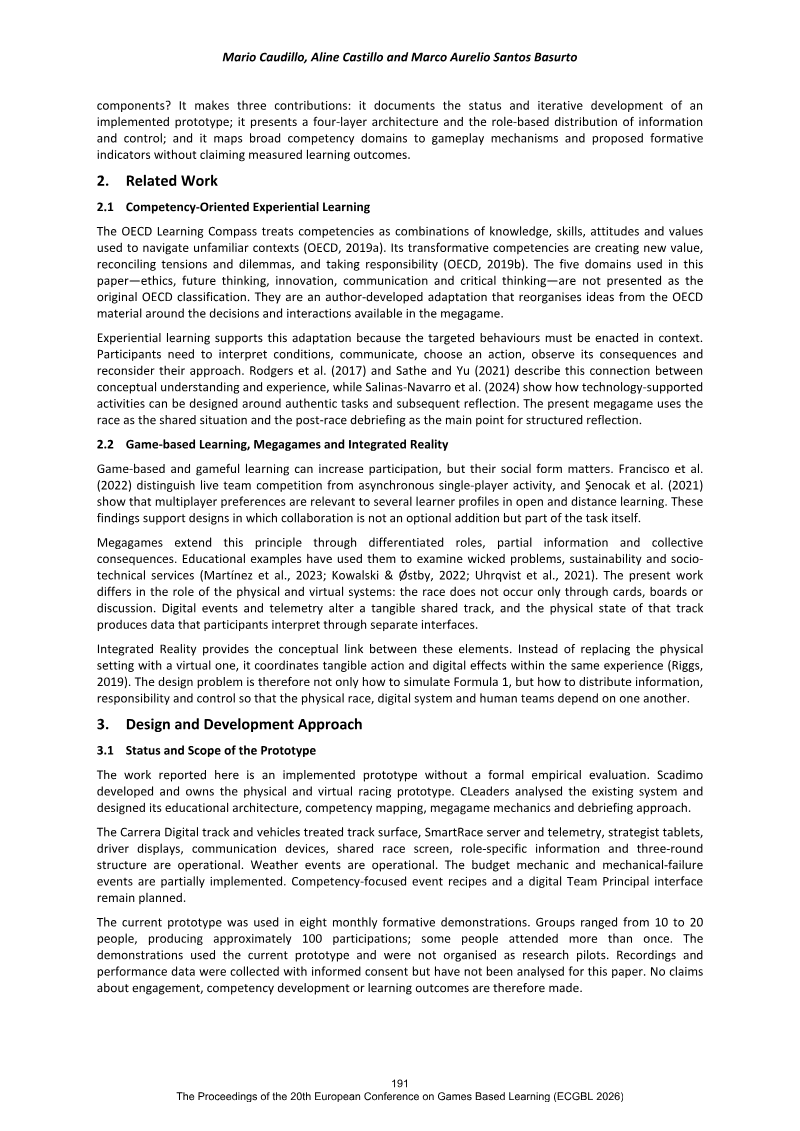
The paper focuses on the hidden curriculum, the unwritten social and cultural rules governing higher education.
This paper examines how low-key analogue game design exercises can expose and question the "hidden curriculum," the unwritten social and cultural rules governing higher education. Its central thesis is that translating implicit classroom norms, behavioural expectations, and power dynamics into the formal language of games makes them visible and open to negotiation, allowing more equitable access for students who lack familiarity with university conventions, such as first-generation, working-class, and ethnic minority students. The author frames this approach as "discursive game design," in which students and staff collaboratively create and recreate small situational games, using game design materials as a shared boundary object rather than relying on a single pre-designed game.
The empirical basis is a set of classroom exercises involving a cohort of 170 first-year BA students and eight staff members at a Dutch university, drawing on participant reflections and classroom ethnographies. The study addresses three questions: the value and challenges of discursive game design in the classroom, the movement of participants across play frames or "spheres" (reality, imagination, and staging) as implicit expectations are laid bare, and the rule negotiation processes involved in redesigning a fairer classroom dynamic. Its theoretical grounding draws on anthropology, developmental psychology, and game studies, including work on playground rule negotiation and the materialization of oral rules into rulebooks.
The author's key argument is that writing rules down transforms them from flexible social practice into prescriptive regulations, which paradoxically prompts reassessment because the rules now appear fixed and therefore contestable. The study's findings are reported as qualitative, with no quantitative statistics presented in the excerpt provided. The paper is framed as a contribution to inclusive pedagogy, positioning game design as a method for interrogating whose strategies count as "winning" in education and for reshaping the rules accordingly.



European Conference on Games Based Learning (ECGBL) · 2026
European Conference on Games Based Learning (ECGBL) · 2026



European Conference on Games Based Learning (ECGBL) · 2026



European Conference on Games Based Learning (ECGBL) · 2026



European Conference on Games Based Learning (ECGBL) · 2026



European Conference on Games Based Learning (ECGBL) · 2026
European Conference on Games Based Learning (ECGBL) · 2026
European Conference on Games Based Learning (ECGBL) · 2026



European Conference on Games Based Learning (ECGBL) · 2026
European Conference on Games Based Learning (ECGBL) · 2026
European Conference on Games Based Learning (ECGBL) · 2026
European Conference on Games Based Learning (ECGBL) · 2026