1 free read left. Create a free account for unlimited reading + AI research.
Create free accountWhitepaper DiGRA
1 free read left. Create a free account for unlimited reading + AI research.
Create free accountWhitepaperDiGRA
Morrowind's barren island terrain, reliance on walking and textual directions instead of map markers, and limited fast travel encourage players to attend closely to the landscape.
Andrea Piano's ecocritical retrospective on The Elder Scrolls III: Morrowind (2002) argues that a game never designed as an ecogame nonetheless offers instructive lessons for sustainable game design. The paper's central thesis is that Morrowind's world-building, landscape representation, and human-nature relationships foster deeper player engagement with the environment, and that these qualities can inform how developers approach environmental themes today. The analysis is primarily interpretive rather than empirical, drawing largely on secondary sources for claims about the game's reach, including sales of roughly four million copies worldwide.
The analysis identifies several specific design choices as central to this engagement. Morrowind's stark, barren island terrain, its reliance on walking and textual directions in place of map markers, and its limited fast travel together encourage players to attend closely to the landscape. The paper contends that these decisions position the environment as something to be experienced rather than merely traversed.
A second line of argument concerns the treatment of flora and fauna, which the game presents as meaningful rather than as backdrop. Handcrafted environments, named plants with hidden alchemical properties, and combat mechanics that discourage needless violence against wildlife, through disease from creatures, unrewarding fights with low-level enemies, and the absence of achievements, are read as a model for non-glorifying environmental design. The author notes that this approach predates the heightened climate awareness now common in games.
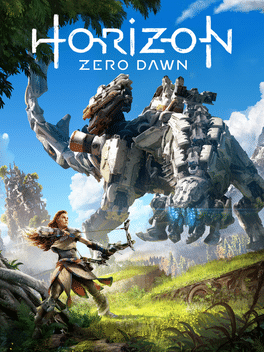
The paper also acknowledges a tension within this model: richer digital ecosystems require greater computational resources and thus a larger carbon footprint. The retrospective's bibliography situates its argument within ecogame studies, environmental communication research, and critical game theory, with comparative references to titles such as Horizon Zero Dawn, Breath of the Wild, and Ghost of Tsushima.
Each row is a game or company this document names, each column a document, oldest first. A mark means that document names it. Select a row to see those documents.

DiGRA · 2026

DiGRA · 2026



DiGRA · 2026
European Conference on Games Based Learning (ECGBL) · 2026