1 free read left. Create a free account for unlimited reading + AI research.
Create free accountArticle G|A|M|E – The Italian Journal of Game Studies
1 free read left. Create a free account for unlimited reading + AI research.
Create free accountArticleG|A|M|E – The Italian Journal of Game Studies
Poole positions himself between uncritical celebration of games as socially redemptive and the older view that they are harmful or incapable of artistic merit.
This document is an interview with journalist and author Steven Poole, conducted by Marco Benoît Carbone and Paolo Ruffino and published in a 2012 issue of a peer-reviewed games studies journal. The interview centers on the polarized public and academic discourse surrounding videogames, with Poole positioning himself between two extremes: the uncritical celebration of games as socially redemptive and the older dismissal of them as harmful or incapable of artistic merit. Its central thesis is that games constitute a genuinely new art form whose value should be judged on their own terms rather than by imitating cinema, and that "gamification" has been oversold.
Poole offers a sharp critique of Jane McGonigal's Reality Is Broken, arguing that its claims that reality is "too easy" and that games could solve global warming and poverty are hyperbolic and trivialize the problems at stake. He notes that London transit "gamification" was more about selling advertising than civic benefit. He observes that games have gained mainstream cultural acceptance since his 2000 book Trigger Happy, yet the "is it art?" question persists, and he argues that the academy and specialist journalism increasingly overlap, with the best writers working across both fields.
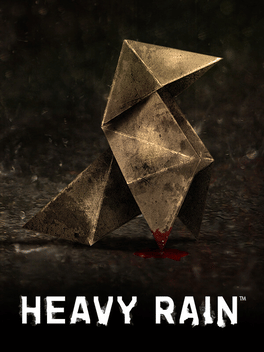
On methodology, the interview is qualitative and based on the interviewee's reflections on his own published work and on titles such as L.A. Noire, Heavy Rain, Red Dead Redemption, Shadow of the Colossus, Defender, and Joust. Poole's key conclusions include a call to hold humanistic critical traditions and game-specific approaches, such as ludology, in productive tension, and a warning against "cinema envy" in game design and criticism. He ends by describing contemporary play as an "age of ambient play" spanning Facebook and smartphones, a development that makes gaming a pervasive activity rather than a niche subculture.
G|A|M|E – The Italian Journal of Game Studies · 2026
DiGRA · 2023