1 free read left. Create a free account for unlimited reading + AI research.
Create free accountWhitepaper European Conference on Games Based Learning (ECGBL)
1 free read left. Create a free account for unlimited reading + AI research.
Create free accountWhitepaperEuropean Conference on Games Based Learning (ECGBL)
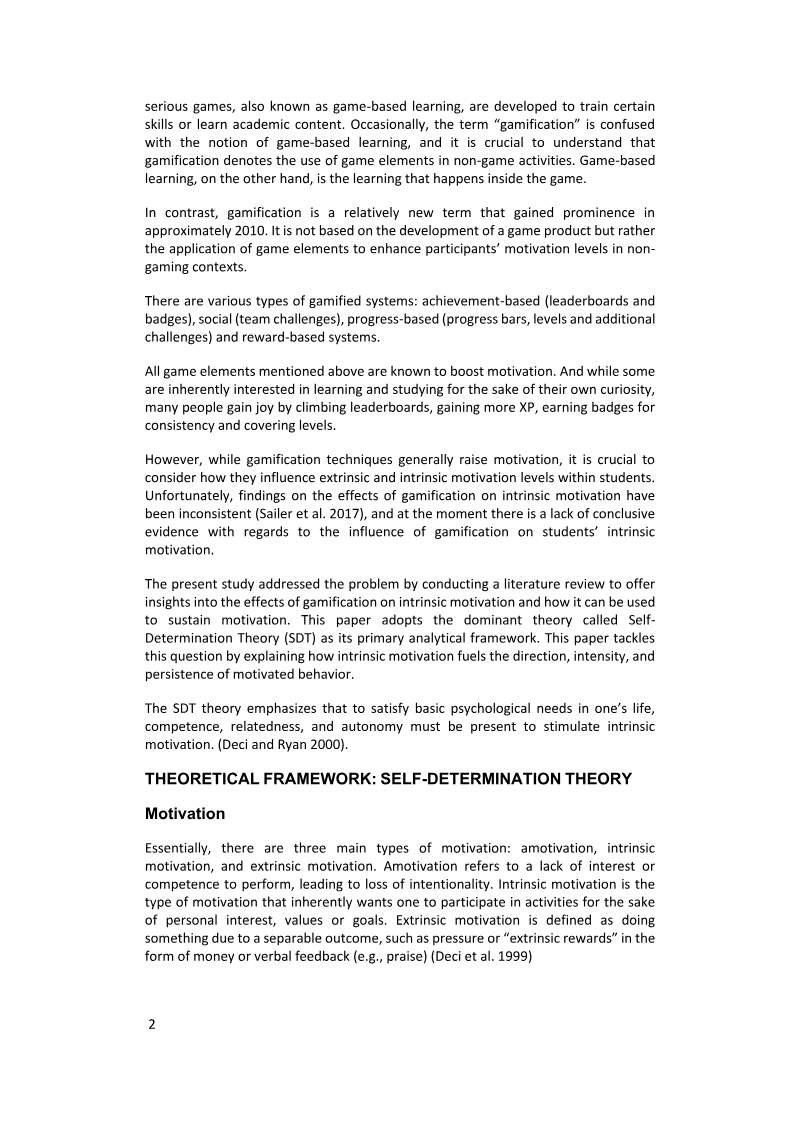
The study tested whether achievement badges affect response behavior and survey experience among volunteers of Swedish non-profit organizations.
A controlled experiment examined whether digital achievement badges improve engagement and response quality in online surveys completed by volunteers of Swedish non-profit organizations, asking if such gamification affects response behavior and survey experience in a population driven largely by intrinsic motivation. Fifty-seven volunteers recruited through four organizations were randomly assigned to a gamified survey with five core and three bonus badges or to an identical non-gamified control version, with 41 completing the survey. The sample was predominantly female (81%) and mobile-heavy (56%), and the study relied on custom-built platform logging of time, word counts, badge interactions, and completion, complemented by Spearman correlations, PCA, and qualitative feedback.
The central finding is that badges produced no statistically significant difference in completion, which stood at 76% for the gamified group and 68% for the control group (Fisher's Exact Test, p = 0.565). Gamified participants finished faster, with a median of about 7 minutes versus 9.5 minutes, but wrote shorter open-ended responses, with a median of 45 words versus 72 words, and few participants engaged with badge descriptions. Only three gamified respondents clicked to read badge explanations, and a post-hoc analysis suggested control participants would have earned slightly more badges based on their behavior. PCA showed engagement patterns tracked completion status rather than condition, and survey-quality ratings were nearly identical across groups.
The authors conclude that isolated badge elements offer limited benefit where intrinsic motivation is already high, and that aligning survey design with purpose, autonomy, and impact may be more effective. They acknowledge key limitations, including a small sample, a highly motivated population that limits generalizability, and minimal badge interaction, and they call for larger, more diverse studies and multi-element gamification strategies.

European Conference on Games Based Learning (ECGBL) · 2026



European Conference on Games Based Learning (ECGBL) · 2026

European Conference on Games Based Learning (ECGBL) · 2026



European Conference on Games Based Learning (ECGBL) · 2026



European Conference on Games Based Learning (ECGBL) · 2026



European Conference on Games Based Learning (ECGBL) · 2026



European Conference on Games Based Learning (ECGBL) · 2026



European Conference on Games Based Learning (ECGBL) · 2026



European Conference on Games Based Learning (ECGBL) · 2026



European Conference on Games Based Learning (ECGBL) · 2026



European Conference on Games Based Learning (ECGBL) · 2026



European Conference on Games Based Learning (ECGBL) · 2026
European Conference on Games Based Learning (ECGBL) · 2026