1 free read left. Create a free account for unlimited reading + AI research.
Create free account
Games in 2020 – The future of entertainment, esports and beyond

Key insights
6 takeaways- 01The gaming industry is transitioning from local, hardware-dependent play to a cloud-native ecosystem that utilizes server-side rendering to bypass local processing limitations.
- 02Cloud-based infrastructure enables the creation of massive, persistent simulations featuring thousands of synchronized AI agents and real-time physics accessible across any device.
- 03The 'Experience 3.0' model dissolves the traditional barrier between passive viewers and active players, allowing audiences to influence live game events through real-time inputs.
- 04Future gaming platforms are evolving into shared, interactive entertainment hubs that mirror the engagement dynamics of traditional sports and reality television.
- 05eSports serves as the primary catalyst for industry evolution, transforming spectator modes into interactive broadcast tools that open new monetization channels beyond traditional cosmetic sales.
- 065G technology is a critical infrastructure requirement for this shift, providing the low-latency connectivity necessary to offload complex compute tasks from consoles to the cloud.
Ask AI about this video
Transcript
[Music] [Music] thanks for the introduction yes my name is Chris Cataldi and I'll be speaking about games in 2020 a very exciting title I hope the presentation you will be meeting that expectation and I'm gonna go quickly through it my company's name is Jenna Jenna it comes from two Latin roots Jen meaning birth vid viewing eSports we think is the beginning of a really interesting time in games and I'll be talking you through why we think that a little bit about my agenda today start off a little bit of my bias why I think the things I do why now is the right time to be thinking about this describing a little bit about
what we call experience 3.0 and then why you step eSports is the first step towards that by the way I'm from New York New Yorkers speak very quickly how am i doing on speed so far can you yeah that's good okay great it's post-lunch it's post-lunch so keep it fresh so I spent 11 years in Japan towards the end of my time there I worked for a company called Square Enix might have heard of it I ran a business called Shinra technologies which was the square enix's cloud gaming platform you've heard of Shinra you might not have heard of Sheela technologies we were doing cool things there you've probably not heard of me but you should listen to me because I have a corgi and therefore I have good taste and I can read trends what we're doing at was cloud gaming whenever I talk about cloud gaming I often get asked is it like Gaikai or are my for any of those companies that took games that could run locally put it on a server encoded them and streamed them to devices the answer to that is no it's completely different cloud gaming in its essence is taking a
game that could only run on the cloud that means process renderer is designed to be written run on a server and stream that out to Bisset devices and the reason you do that is you can really power brand new experiences that don't exist today so I liken it to imagine if you had a local multiplayer player experience right you could fit a thousand people into a room all playing the same game but instead of it being an Xbox or even this most souped-up computer can think of imagines a supercomputer right what kind of new experiences could you as a game developer enable through that and what kind of ways can you interact with that give you a little bit of example of what that means this is a example of a demo we announced the GDC many years ago called the dragon demo this is a huge map 17 times the map size of Skyrim in it we populated with over 16,000 AI all synchronized there's no streaming from
memory we had real-time terrain deformation none of this is by the way pre-rendered is all rendered real-time when we brought a pipe maps they had real physics consequences into the world again there's no synchronization because it's one instance one simulation and so every player was a viewport a render view port into that one simulation and you could do all kinds of crazy things like fly around it Mach 1 and you could have real-time water physics that's being done simulated on the particle level so all kinds of crazy things none of this is scripted none of this is is it's all pretty much emergent and when you take things like real-time trained information crazy AI and you put it together you have emergent behavior that's not only interesting to play but interesting to watch and the only difference between a player and a viewer we talked about cloud gaming is latency and actually real-time cost to bandwidth but that's getting into the business side of it so from the very beginning Shinra we are starting to think about well if we're making these really cool
new kinds of content that are interesting to to watch how do we kind of empower our viewers to also interact with it so we were making all these games that had a very core player dynamic to it but also interesting viewer dynamic a viewer up until now when you're watching a game you have no input into the game you're watching you're literally passively consuming that information you know we're in a connected world now where viewers could input into it if you create the right platform for it so with that so that makes you really reconsider how people interact with games and today we are here you've got a game you've got a player maybe you have a player who's watching locally and as you put that out to streaming or eSports which is the first kind of instance of that yet people who are fans of the game we're watching the game they may be players any of people who are fans of the personality of the influencer or you know the player who are watching that experience economy you guys have read
the news right you know we're about to the robots gonna take over there you're gonna take our jobs you're gonna be sitting very much like wall-e in our seats getting pre processed food and we need things to consume and games are gonna be what they are right because games are the biggest entertainment in terms of revenue ever they're huge and they're all gonna get bigger we're seeing and by the way what I'm talking about here isn't just me ranting although it is me ranting what what we do at generators we speak to game publishers Hollywood the brands you name it the people who are creating this content and and monetizing this content and what we're seeing from all of those places is a kind of focus on not only owning the concept and owning the the customer experience and the customer is transitioning from not just the player but also the viewer and it's not just a player who's viewing it might be a viewer who used to play or it might be a beer who's never played and if you think of sports which is in many ways apocryphal too it's or what eSports
is there are some interesting parallels if you think about it so we're seeing a convergence of games who have been spectating that web beacons a connectivity specta coming and creating a very new kind of experience that will be I think some of it in a second so games I'm gonna talk a little bit about the evolution of the game initiative because it makes a lot of sense we all have heard of arcades even if we all haven't played in arcades the older amongst us have actually played in arcades and watch people watch the spectacle there at coin ops I'm gonna inter spice the growth of the game industry with with these steps game arcades are still a thing some places not all places in Japan it's still a major thing and in America you have amusement as well it's still a multi-million dollar business you just don't really see it as much but location-based is a big thing you hear with VR but what's interesting about the arcade is spectators and players coexist right you have people who go to play any of people who go to watch and not everyone wants to play the game in front of other
people but everyone likes watching the game in some way or shape or form right there's no strong tie between skill in the game and attending an arcade at all you need is interest barrier entry to go to an arcade is low if the arcade is rightly designed they monetize you even if you're not good at the game right it's amusement park you go there you buy things you enjoy your experience there and the game arcade wants you to play the game but as long as there's a minimum amount of people playing the game who are creating an atmosphere to go everyone goes and has a good time as we went from arcades to console everyone kind of took their game experience home now you had to buy a console right so what happened is spectacle of going to an arcade kind of died down the arcades kind of died and the only way you experience the game was buying the console or going to a friend's house who had and I grew up in that age where you went to the friend's house who had Final Fantasy 7 and you watched him play the entire game because I was really bad at Final Fantasy 7 and I enjoyed that the
problem is that publisher the game developer doesn't make money from the person who is just a fan of the game look and so they're not creating any kind of experience for that person or I'd be beyond the coolness of how it looks right to try and convert you into a player if they convert you into a player then you're monetized I'll skip over a guy named Ray Bear but if you haven't heard of Ralph Baer you should definitely come up he's the guy who created anyone know who is yeah the brown box right he's the guy pretty much created Paul and what'd he do he took a game he took a device that was meant for consumption of passive TV pretty much and put it an overlay on top of it and pretty much created pong I'll show this because it's not cool so it was licensed by Magnavox to make Odyssey literally you have a non interactive overlay over these pretty much to light sticks that just move around why that's hockey I don't know but it's pretty much pong in many different levels and this was kind of the birth of games as we see it right you take
something that was meant to be view you make it interactive and now people have another way to interact with with their their screen he didn't really make a lot of money off that because arcades came into took it but anyway consoles were huge and consoles really grew the game industry until something came which was network cop consoles right and what we're seeing here is a in a way as gamers self-identified from in the beginning corn op there is no such thing as a gamer right everyone is a person they go to a game arcade they find out if they like games or not because they didn't exist until then gamers then bring the console home they they play those games and that work multiplayer even you know you get more core as the higher up you go there but the more you go there you really generate more and more revenue from the same people right because you're distributed everywhere and the people who are playing the games are paying more money into it so again huge influence right last but not least games go on for everyone right so 2007 you've got smartphone come out you've got games
that are made for that screen and you've got the idea that there's no such thing as a core gamer or casual gamer world that we call themselves at the everyone's a gamer in some way shape or form so create game content around that and monetize it and design it in a way that people want to play so that's games web has a similar strata you have communication in the beginning very much slow broadband no broadband Samwell right then you go information-based you you go to a curated thing you have people who creating that information social you have user-generated content your look your looking to both generate and and go through that and then right now we have the streaming a lot of people are watching everything right Netflix makes money you know that what is coming low-latency streaming is coming low-latency everything is coming cheap server-side rendering is coming if you've ever looked at probably you haven't but if you've looked at the the economics of a cloud gaming platform you would see that
everyone thinks that the main problem is render power and and and it's really real-time cost of bandwidth but it's latency to end-user right and depending on what you're living in and you're how old your router is you have massive variance in end-user experience with 5g and coming to 20/20 you'll see a lot of changes in that and I'm gonna talk a little bit about what that means so how many of you looked into the specs of what 5g means it's a buzzword we hear about a lot oh you know 2018 2020 great you know 4G 5g it's again we're still in early testing in America and other places but it's at least 10 times faster than LTE or 4G if not many times faster and if you're talking about downloads you know you can download the entire I mean you can download crazy things crazy quickly but it's not the speed right
it's latency and again these are theoretical probably it's gonna be more like 10 milliseconds not 1 millisecond because you know you have interference but if you think of massive downloads that are happening very very quickly you can start thinking about offloading parts of the render parts of the compute from local to server and it's not as crazy right a lot of people don't think about the cords cables as a really big innovation right but if you think about a screen all right the screen is only as powerful of what you can put into it but if you have an hdmi 3 port you can now take what would up until not be in that screen process it somewhere else and you have very fast throughput that changes what you can consume in that string so spectating we all expected we were all spectators right if you've ever been in a traffic accident you see people going by everyone rubbernecks everyone looks at everyone else we like spectacle even though sometimes don't like admitting it there's a lot of oldest things in the
world and it's been used for for good and for bad and now we have sports which is kind of the same thing reality TV which is I think up until now one of the best examples of how you can take a property make it so that people watching it are emotionally and in many ways monetarily investigated they'll keep watching it again Britain is you guys have been doing this for ages and the idea is what happens when you have streaming involved what does that do for games so everyone likes bringing up twitchplayspokemon switch they spoke Aman is good because it shows that people will watch a game it's bad because it's a game that wasn't designed to be watched and so it's very difficult to replicate you know virality of it so I'm gonna talk a little bit about the experience 3.0 which we're here so if experience 1.0 is local taking a game whether it's local multiplayer single-player an arcade game an experience two-point 2.0 is playing that
same game in various different places on the same device it experienced 3.0 is the idea of ubiquity of distribution but also having access to you know limitless processing power and anyone can interact anyway and what does that do for games what does that do for how we consume and interact with with content in in essence it's the idea you can play anywhere now if you can play anywhere and anyone can play the question is how do we play and we all have different tastes and up until now we've been very much categorized by you play this kind of game therefore you will play that game right but if you look at how more traditional content is music isn't you listen to music that you're good at playing right you listen to music you like right and how you how kind of deep dive you do it really depends on how much you love that music you listen the top 40 or you learn how to play it or you learn how to sing it etc right games will become like this as well
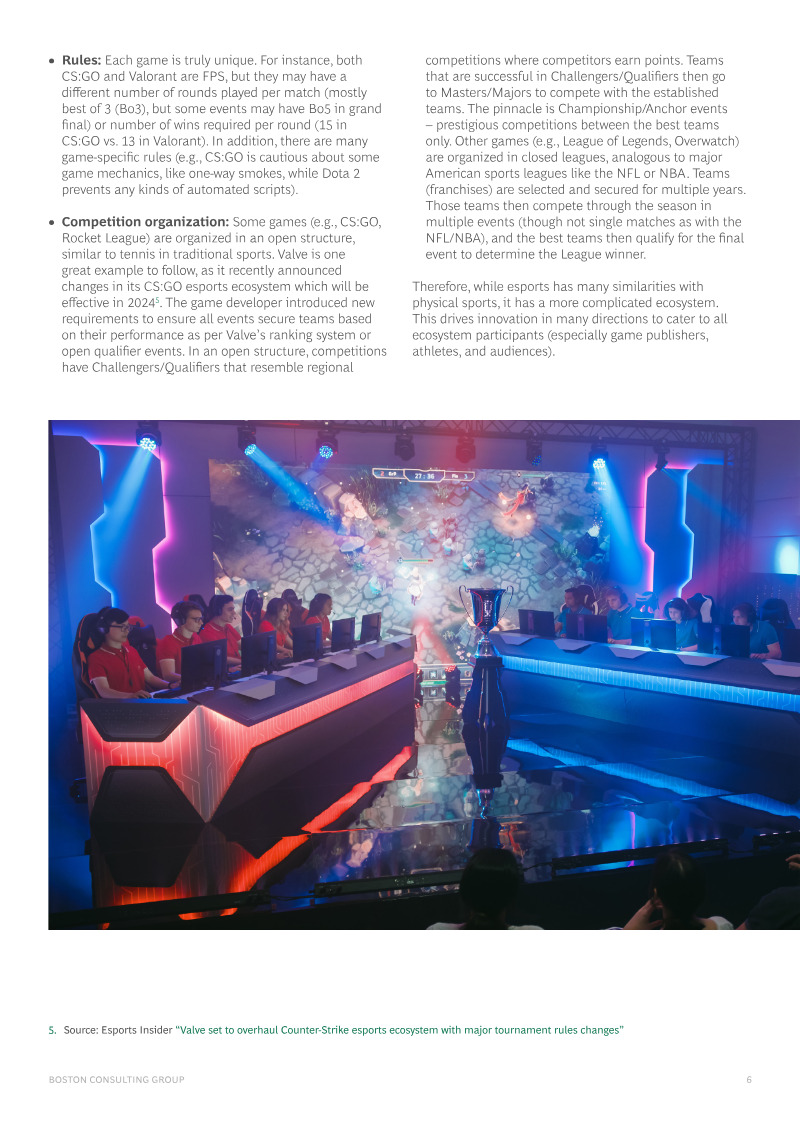
because we'll have multiple levels of meaningful engagement that everyone will be doing and we kind of create these huge events and I'm gonna talk I'm stop talking for a second and kind of show you so how many of you are avid eSports viewers today okay great how many of you watched on Twitch does okay how many of you watched that same eSport in-engine okay where do we think the best esports viewing or consuming method is okay I would say all things being equal it would be in engine but it's also the hardest to get into right if you're watching counter-strike in engine and go TV you get access to all the camera angles you can follow the players you like you can see replays all of that real-time but it's also the highest prior to entry right and it's also very difficult to put it in the commentary and listen to it and watch at the same time what we're gonna be seeing in very
near term is the ability for you to watch a game and actually interact with the game that you're watching on a platform of your choice so what we're seeing here is a demo I've been showing for a long time because the the actual projects were working on I can't show because they're on their NDA but um this is Unreal Tournament that we're streaming live to YouTube and I'll show if I can you'll see YouTube live and what you can do is they can actually interact with the game that they're watching so I've just clicked on that player I get all the information about that player and each viewer is able to do that click on a player they can do things like cheer for a player so we just change camera angles so Jenga saw cheer for jenga's again this game is not running on my PC I'm just streaming it from youtube and if if my device can render and in decode on youtube I can watch it and I can interact with it eSports again this is just watching and enjoying the co-creation of spectacle but what about games that were built for
the ground up for interactions from viewers what if a viewer could you know press the button and kill a player that would be really weird right you wouldn't wanna do that for an eSport but there's no reason you'd have to make any support you can make a game that was meant to be played and meant to be watched and meant to be interacted with and so literally that's what I'm doing I'll press the button this is a live game by the way it spots so I'm not pissing off people at epic I'll press the kill button and all the players will die I can watch any camera angle I want what you're seeing again these are cloud deployed spectator modes that are connecting the same multiplayer session so I'm can watch whatever there you'll see that Pepsi add that Pepsi add is localized to me but it is juxtaposed against the video behind it at a specific angle you can start doing things like you did web 2.0 right you can have user specific content again that's not the Erica trade-off and we can do the same thing for just about any kind of game because literally what we do is we connect to the multiplayer session and show it so with people watching games
more than ever before I can tell you for a fact that game publishers are seeing game viewing as not just promotion not just a way to keep people coming back but keeping bringing people in and not necessarily converting them into players and so I have a whole bunch of projects from Hollywood to two major publishers that are making spectator mode for viewing if you think about the history specular murder wasn't built to be broadcast right it was built to keep you in engine so that when you died earlier in a counter-strike match you didn't just log off and then then break the matchmaking or I didn't meant to keep you in there so if you repurpose it you can do all kinds of cool stuff so broadcasts are crazy because you know you can up until now you've been thinking of players now you can think about viewers and it becomes not only viewers can actually be a completely new demographic that you're marketing your game to not just as a player I've got a couple minutes left am i over I got one
minute I'm almost done everyone I expect to get spectating we should be thinking about UI we should be think about camera angles from what spectators should be singing out what players should be seeing think about real sports we don't we don't necessarily want to be watching you over the shoulder because you know that's very confusing it's growing and if you start thinking about the ecosystem is not akin to broadcaster and kin to real sports but as a part of the game ecosystem and you make it interactive which is what game developers are really good at creating interactive content then you can do all kinds of cool stuff everyone will no longer have this bifurcation between a player and a viewer we're gonna have all different kinds of strata and what that means is you can have many different kinds of layers of interaction it's no longer buying a skin that a player has it can be buying something or a player it can be dropping an NPC in the middle of a map things that are no longer scripted right it's very emergent and keeps players coming back and keeps viewers coming back and they're all different kinds of markets you can bring it so I'll stop there because I can go on
forever and I'll take a question if you have it and if not I'm around afterwards and thank you for your time [Applause] [Music] [Music]
Summary
The presentation explores the evolution of gaming toward a future defined by cloud-based infrastructure, interactive spectating, and the convergence of players and viewers. The central thesis posits that the traditional bifurcation between passive viewers and active players is dissolving, giving rise to an Experience 3.0 model where cloud-native games allow for real-time, interactive, and emergent experiences that transcend local hardware limitations.
Key findings highlight that the gaming industry is shifting from a model of local, hardware-dependent play to a ubiquitous, cloud-driven ecosystem. By leveraging server-side rendering and low-latency streaming, developers can create massive, persistent simulations—such as environments featuring thousands of synchronized AI agents and real-time physics—that are accessible across various devices. This transition is supported by the rollout of 5G technology, which reduces latency and enables the offloading of complex compute tasks from local consoles to the cloud.
The analysis identifies eSports as the primary catalyst for this shift, serving as a bridge between traditional passive media consumption and active participation. By repurposing spectator modes into interactive broadcast tools, publishers can engage audiences who may never play the game themselves but are willing to participate in the spectacle through real-time inputs, such as camera control, data access, or influencing in-game events. This creates new monetization avenues and demographic segments, moving beyond simple skin sales to dynamic, user-driven content. Ultimately, the industry is moving toward a model where games function as shared, interactive entertainment platforms, mirroring the engagement levels of traditional sports and reality television while maintaining the unique, emergent interactivity inherent to digital gaming.