1 free read left. Create a free account for unlimited reading + AI research.
Create free accountWhitepaper DiGRA
1 free read left. Create a free account for unlimited reading + AI research.
Create free accountWhitepaperDiGRA
The authors argue that developers should explore non-photorealistic rendering (NPR) and other artistic styles. They describe this as the paper's central claim.
This paper, by Maic Masuch and Niklas Röber of the Otto-von-Guericke University Magdeburg, argues that game graphics should not be limited to photorealism and that developers should explore alternative, artistic rendering styles, particularly non-photorealistic rendering (NPR). It surveys graphical styles across the history of games, from text and 2D sprites to pseudo-3D and fully textured 3D engines, and examines elements such as dimensionality, perspective, color, presentation, and realism. The authors contend that gameplay and story drive player enjoyment far more than graphical fidelity, and that as photorealism becomes costlier to achieve, graphics will lose effectiveness as a unique selling point.
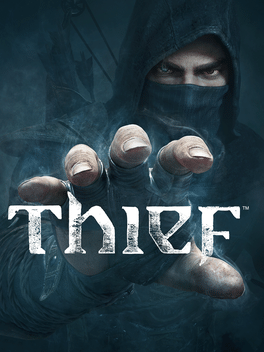
The paper makes its case through numerous examples of cartoon-style and atmospheric games, including Thief: The Dark Project for its use of color to convey mood and Ubisoft's XIII for its comic-inspired visuals. It emphasizes that immersion depends on believability and consistency rather than strict realism, noting that small inconsistencies such as an incorrect shadow can break the illusion of a photorealistic game, while NPR styles tolerate such imperfections more readily. It also stresses the importance of frame coherence in animated non-photorealistic imagery.
The authors survey several NPR techniques and their feasibility for real-time games. These include cel-shading, which is the most widely adopted; pen-and-ink hatching; oil painting simulated through seeded brush strokes; and pencil or crayon drawing. Many of these can run on moderate hardware, and the paper cites prior research and experimental implementations for each. The reference list is extensive and draws on both academic publications and commercial titles.
The paper concludes that photorealism will remain an ideal for high-budget developers, but that NPR offers a route to distinctive visual identities, storytelling support, and artistic expression. Its central claim is that the future of game graphics lies in believability and stylistic variety rather than a continued pursuit of realism alone.
Each row is a game or company this document names, each column a document, oldest first. A mark means that document names it. Select a row to see those documents.
DiGRA · 2016
DiGRA · 2016
DiGRA · 2016
DiGRA · 2016
DiGRA · 2016
DiGRA · 2016
DiGRA · 2016
DiGRA · 2016
DiGRA · 2016
DiGRA · 2015
DiGRA · 2015
DiGRA · 2015

PocketGamer.biz · 2026