Key insights
4 slides
Key number
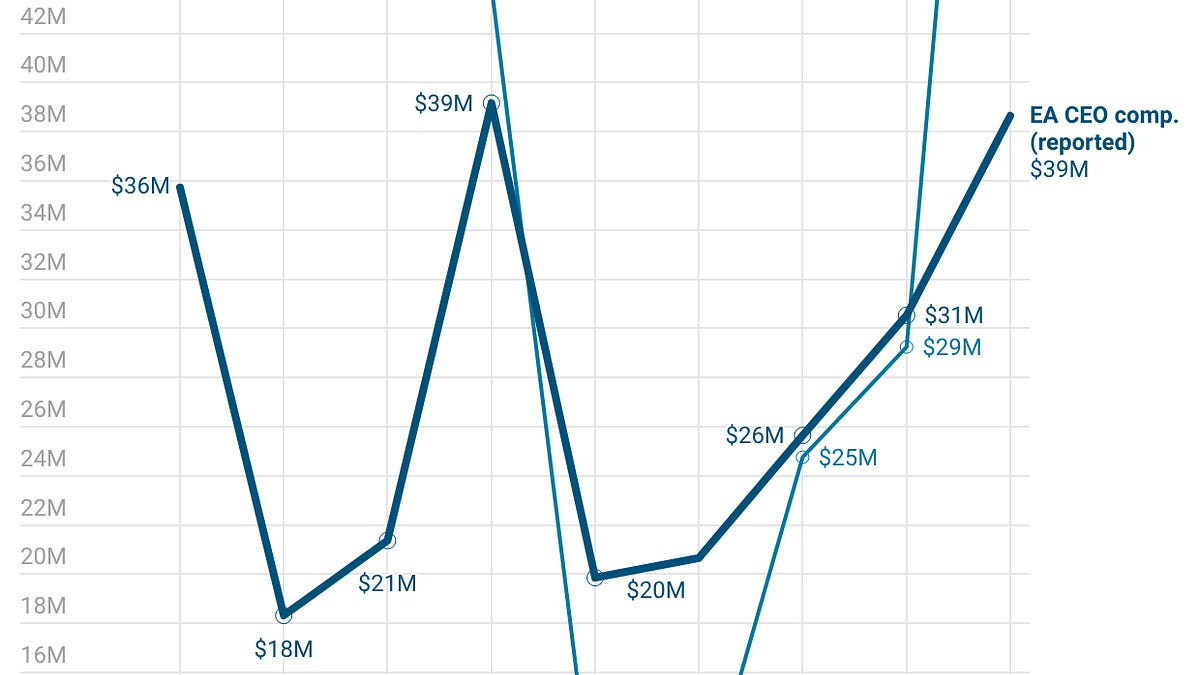
Wilson's 2026 compensation is $77 million under the SEC's CAP metric.
Traditional reporting values his earnings at $39 million. The CAP metric adjusts stock award valuations based on year-end share prices.
What changed
Wilson's package includes a $6.5 million cash bonus tied to the acquisition.
His 2026 package includes a $1.3 million base salary and $28.5 million in stock awards. It also includes $2.4 million in personal benefits such as private jet travel.
Bonus tie. The $6.5 million cash bonus is tied to performance milestones and the $55 billion acquisition.
Employee pay
Median employee compensation increased from $117,000 to $127,000 annually.
The median compensation for EA employees saw a modest increase.
Ownership change
EA was acquired for $55 billion by a consortium led by Saudi Arabia’s fund.
The deal closed in August 2026. Following the transition to private ownership, EA is no longer obligated to publicly disclose compensation data.
1 / 4
Ask AI about this report