1 free read left. Create a free account for unlimited reading + AI research.
Create free accountWhitepaper DiGRA
1 free read left. Create a free account for unlimited reading + AI research.
Create free accountWhitepaperDiGRA
Distilling the key insights…
This extended abstract, presented at DiGRA 2018, examines how game engines such as Unity and Unreal are shaping videogame production in Australia. Its central argument is that the shift from proprietary, in-house engines to a small number of third-party platforms has reconfigured game design as a technical, labour, and economic practice, and that a current, empirically grounded account is needed to complement existing historical scholarship. The author frames engines through three lenses: as technologies reshaping design, as intermediary platforms linking industry groups, and as proprietary economic entities within a wider platform ecosystem.
The study draws on semi-structured interviews of 45 to 60 minutes with Australian professional and amateur designers, along with tertiary game design students and educators. At the time of writing, 15 of an planned 17 interviews had been completed. Transcripts were thematically coded, and the author restricted sampling to Australia in order to support geographically specific claims. The paper is a work in progress, and its findings are preliminary.
Early analysis reveals several recurring themes. Participants often described engines less as contained toolsets than as networks mediating between people, particularly through Unity's asset store and online support forums. Participants also reported that component-based interfaces simplify development and reduce the need for deep programming, yet they viewed this ease as limiting control and customisation. Teams of designers, in particular, described investing considerable time in learning what an engine required before they could work with it effectively, a trade-off generally judged worthwhile compared with building in-house tools.
Participants expressed notable confusion about Unity's legal and proprietary terms, which they attributed to frequent changes in both its terms of service and interface. The author links this uncertainty to Unity's rapid growth and market dominance. The research aims to clarify the economic, legal, and creative functions of engines, the opportunities and constraints facing non-programmers, and how engines might support innovation in Australia and in non-game fields such as VR development.
Each row is a game or company this document names, each column a document, oldest first. A mark means that document names it. Select a row to see those documents.
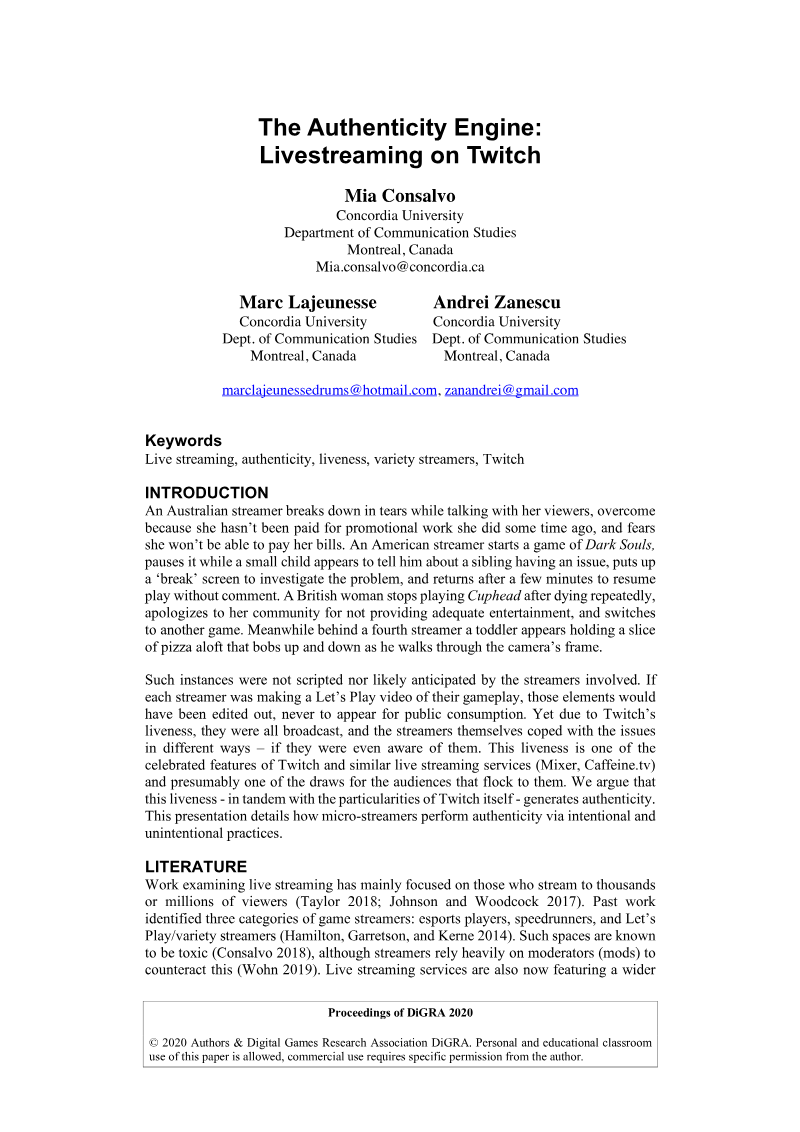
DiGRA · 2020
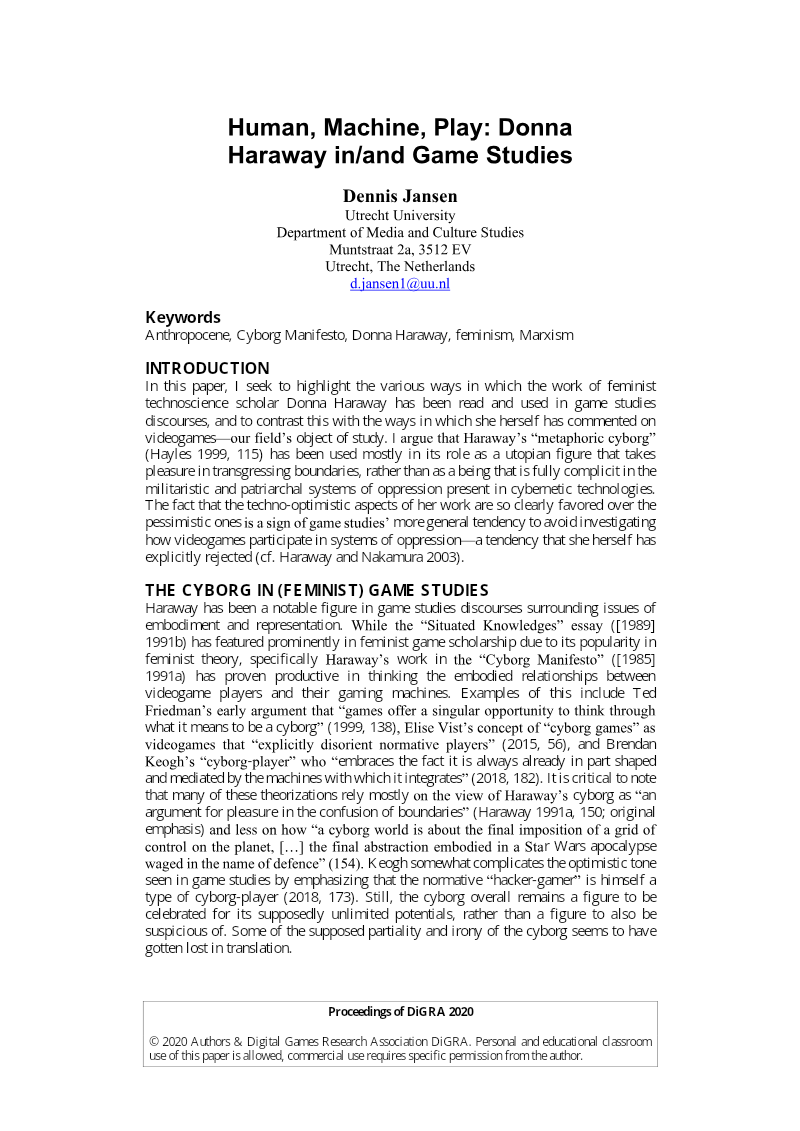
DiGRA · 2020
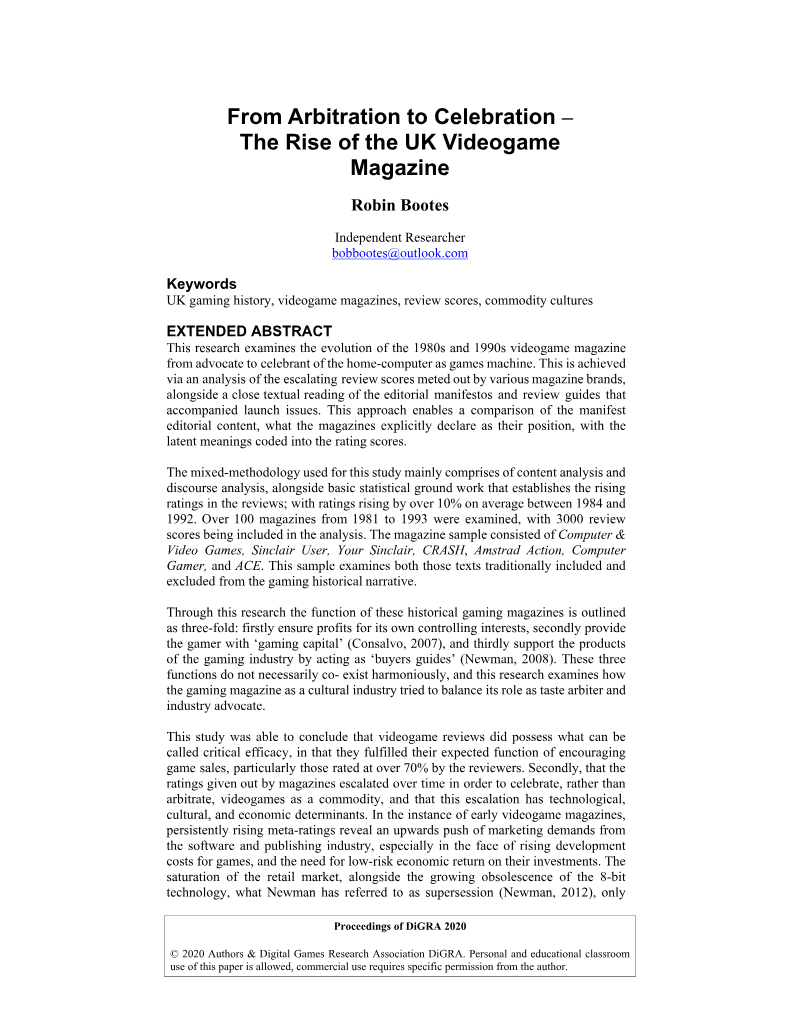
DiGRA · 2020
DiGRA · 2020
DiGRA · 2020
DiGRA · 2020
DiGRA · 2020
DiGRA · 2020
DiGRA · 2020
DiGRA · 2020
DiGRA · 2020
DiGRA · 2020
The Game Business · 2026