Loading the document
1 free read left. Create a free account for unlimited reading + AI research.
Create free accountWhitepaper DiGRA
1 free read left. Create a free account for unlimited reading + AI research.
Create free accountWhitepaperDiGRA
The report treats hair in video games as a meaningful cultural text rather than a cosmetic detail. The meanings hair carries in everyday life are reproduced in digital characters regardless of how realistic or stylized the rendering is.
"Flow It, Show It, Play It: Hair in Digital Games" examines the multifaceted role of digital hair in video games, asserting that hair is not merely an aesthetic element but a potent carrier of social, cultural, and political meaning. The analysis spans various industry segments, including MMORPGs and offline RPGs, drawing examples from both AAA and indie titles like The Witcher, Bayonetta, Grand Theft Auto: San Andreas, and Hair Nah. While not explicitly stating a geographic or time scope, the examples primarily reflect Western and Japanese game development and character archetypes.
A central finding is the pervasive semiotic function of hair in character design. White hair frequently denotes magical power, uniqueness, or a supernatural connection, as exemplified by Geralt of Rivia, where it also visually reinforces familial bonds. Long hair consistently serves as a primary signifier of femininity, with Bayonetta presented as a key case where hair is intrinsically linked to a character's power, sexuality, and ability to subvert traditional gender norms through its active role in combat. Conversely, baldness can symbolize discipline or social control, as seen with Agent 47.
The document critically highlights a significant representational imbalance in character customization. A striking data point reveals that fewer than 10% of MMORPGs and 20% of offline RPGs offer three or more "African" hairstyle options, indicating a widespread default to straight hair textures and a notable lack of Black hair types. This omission perpetuates real-world racist beauty ideals within digital spaces. Grand Theft Auto: San Andreas is cited as a rare exception offering extensive Black hair customization, while Hair Nah directly addresses racial microaggressions related to Black hair. The analysis underscores that player investment in character hair is substantial, with significant fan backlash and commercial impact observed when iconic hairstyles are altered, as demonstrated by the DmC: Devil May Cry reboot. Ultimately, the document concludes that digital hair is a critical lens through which to understand persistent cultural biases and representational challenges within the gaming industry.
 Grand Theft AutoGame · DMA Design · 1997 · 582 documents
 The WitcherGame · CD Projekt RED · 2007 · 285 documents
 Devil May CryGame · Capcom Production Studio 4 · 2001 · 43 documents
 Grand Theft Auto: San AndreasGame · Rockstar North · 2004 · 21 documents
 BayonettaGame · Nex Entertainment · 2009 · 13 documents
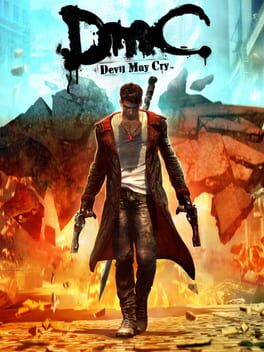 DmC: Devil May CryGame · Ninja Theory · 2013 · 2 documents
Each row is a game or company this document names, each column a document, oldest first. A mark means that document names it. Select a row to see those documents.
DiGRA · 2026
Eindhoven University of Technology · 2026
European Conference on Games Based Learning (ECGBL) · 2026



European Conference on Games Based Learning (ECGBL) · 2026



European Conference on Games Based Learning (ECGBL) · 2026



DiGRA · 2026



International Journal of Role-Playing · 2026
DiGRA · 2026
DiGRA · 2026
DiGRA · 2026
DiGRA · 2026
DiGRA · 2026
DiGRA · 2026





























