1 free read left. Create a free account for unlimited reading + AI research.
Create free account
Evolution of mobile advertising – How did we get here and what’s next?
Key insights
6 takeaways- 01Legacy methods like flat waterfalls and dynamic price floors are being phased out due to bid inefficiencies and a failure to account for mobile-native formats like playable interstitials.
- 02Modern mediation platforms now function as neutral judges that evaluate simultaneous soft bids against historical conversion data to maximize publisher revenue.
- 03Adopting an OpenRTB 2.3 compliant framework reduces latency and optimizes performance by activating only the winning network’s SDK.
- 04The mobile advertising industry is shifting from sequential, static waterfall models to a server-to-server, real-time bidding (RTB) ecosystem.
- 05Maximizing revenue in the current mobile landscape requires a collaborative transition toward a transparent, data-driven infrastructure that treats mobile as a unique ecosystem.
- 06Future industry growth will rely on integrating machine learning to refine bidding processes and move away from desktop-centric monetization strategies.
Ask AI about this video
Transcript
[Music] [Music] hello everyone I'm just gonna try to find a clicker here okay good [Applause] okay Wow not a lot of people left here well thank you so much for staying please stay don't leave me all I mean I know it's not the most exciting topic okay get it advertisement how much else we cannot learn but well the truth be told advertisement although it's not the most exciting topic it is one of the most profitable topics and this is how we all are getting our users or not all but
majority of the apps are getting the users to come in and the majority of apps actually monetize on so this is the topic that we all want to learn on and to perfect it and to do something that we all can participate in and create something amazing and organic so as Oscar said I'm Natalie Portilla and I'm a chief operating officer of Apple deal and before I'm going to jump into the actual future of the ad networks I'm going to just give a little quick over you about the recent sort of the past and current state of the mobile advertisement so at the first and second generation where it actually came from the desktop advertisement was very simple it was very simple waterfall that actually based on the historical data and we all pulled the data from yesterday from the day before from the day week before and based on that based on the data we actually built our over waterfall most profitable at network would go there and the first first
impressions and once that were now it would go to the next and so on so it's pretty simple pretty straightforward just came straight from the desktop nothing changed to improve that some some publisher start separating their traffic into several tiers so the first year would go to the most profitable ad network and the if it's unable to fill then will go to the second and third so that would actually improve the profit of the networks that would mate and that would improve the position of the waterfall that is showed that that networks is able to get which was much much more profitable but both of those but both of those models actually did not were not great they all of them actually relied on the very inaccurate historical data and that is not the data that which we want to work with because that data is that not does not provide
the information about the future advertisers that are coming in or the advertisers they just came in today and we didn't know what it kind of campaigns are going to be filled filling our our impressions so we also don't know the performance breakdown for example if you get a $10 CPM yesterday you didn't know if this is a result of one converting ad at ten dollars and 999 person my hundred 99 ad impressions would just go to waste so you simply didn't know that that means that some ad mediations or some ad networks together as publisher started to juice the static press horse which are quite simple it's very straightforward let's just occur to be working on father-to-be is working the CPM basis we work in the supply basis so simply you set the price floor and you don't accept the the campaign's that come and meet this price for and all the other campaigns just going to be skipped over this a lot at networks actually
starts to participate in to such a call from a model as a flat waterfall so what it means is for example at Network a relies on the historical data which showed here in green and the derby is except in the price floor that are set by publishers that are different so even in a traditional waterfall being built a network a would fill all of the impressions until it runs out of the traffic of the demand and then only the leftover impressions would go to the editor of B but since this flat waterfall been built the network B get a chance to actually enter the waterfall much earlier and get the more for higher quality impressions but there are four quality traffic so this this model although still not very accurate not very efficient this model actually did defeat the historical inaccuracy and the networks were able to get multiple positions in the waterfall the
downsides of this model actually were pretty big and pretty serious some of the ad networks or a lot of the networks were so eager to get on top of the waterfall that they were actually bidding and accepting several positions on the waterfall seven stories up several several price floors even though there were no competing networks that were competing with them so they were all bidding themselves and creating the bid inefficiency and going down the a performance a lot by that so dynamic price floors were introduced next and this this is very similar model but it just has a very has little difference for example where several networks Duke's at the price floors and a few of them enter the auction at a certain level of CPM one of them will actually only only one of them can actually fill the impression
just look this example when we have when you set up the price for $12 $10 and I don't know what we have nine and five dollars there and say you are an ad network with an advertiser that wants to buy impressions for up to 11 dollars and 30 cents and so you're too low to actually come into the 12 dollar federal price floor so but you are okay to come in and fill the impressions for the $10 price floors which is great but there was a ad network that relies in the historical data in answers the auction at the $10.20 and winning the best impressions - the first impressions the most quality impressions but your as Network are able to pay up to eleven dollars and 30 cents so if you are the point is if you are supporting the dynamic price force you are able to see the come the other networks bid at 10
dollars and 20 cents and you are over bidding them by one cent and actually placing yourself in the front of the winning bid by by one cent so this means you position the first position in the waterfall and pushes and gets with the best quality traffic basically so this actually did defeat as well of historical data and it combated and the bid in efficiency as well because you only over bid once and the other networks but it slowed down the a performance so much because the M because this the mediation would send the request to the network's one by one and as the case of their networks would be all activated at the same time and the communication on the server side would be too complex to happen so the depths would be slowing down now all of
the things that I just mentioned came from the desktop or more or less more or less came and performed were just copycats models that used to work in the desktop and this is not what we all want to do this is what sadly majority of people in an ad market in our mobile ad market came from the desktop and I get that that's great and that what would work in the desktop doesn't work in the mobile it doesn't work at all there's different ad formats for example you can't compare a playable interstitial a full screen banner on your app with the header header advertisement on your website this is just apples and oranges just doesn't go together so why you are we building our monetization on mobile ads on desktop what working about testa that doesn't work so the next generation will provide the majority differences
and will introduce the completely new unique model that will only work for mobile and not for desktop [Applause] this model will work with the admonition that we'll be playing the role of the judge here and this model will only work if all of us as a unique organism will work together if the publisher will work by setting up the price floors if the ad networks and advertisers will work with participating in bidding and if the mediation will work on in communication between one and the other side what I mean by that here as a charge communicates on server to server side with all of the demand partners they have around so if it have 30 demand partners the the the the signal is being sent to them similarly honestly at the same time not one by one and then the
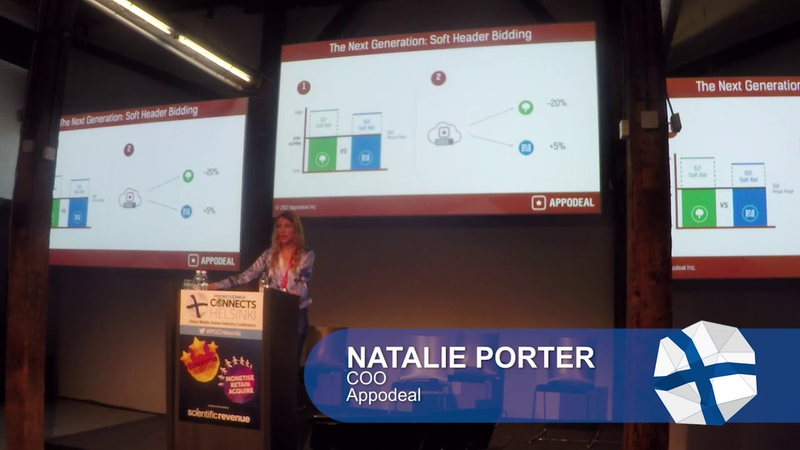
soap bid had been placed by the ad networks for example wanted network places a so bit of $17 CPM and the second ad network places a soft bit of $15 CPM and naturally both of them are great networks with that kind of a CPM but only one of them can win the impression but if both of them do accept the dynamic price floor they're just gonna start over bidding each other well and run out of money so they won't do it they won't over with each other they will just place those soft bits and stop there what happens here is the mediation as a judge mediation looks over the historical performance and the historical conversions of each of the ad networks and they noticed that ad network a that plays a soft bed of the $17 CPM normally pays 20% less than their sofa bed and the ad network B that
plays $15 a CPM soft bid normally performs or pays 5% more than their self bit so by performing a simple math it's easy to see that the ad network B will actually get much well will get higher profitability to pay more for the winning for the villain impression so the event impression goes through the never be so hazard work for this model to be able to perform efficiently an ad network must provide the API which is going to be open are to be API 2.3 compliant to the mediation and all the communications going to happen on the server side not on the client side once the the ad not bad mediation performs and decides who's going to be the wedding who's gonna have the winning bid only then the SDK of the winning network is activated and ad is being pre cached and then the when it gets displayed so
this model will be exclusively focused on the mobile as mobile ad networks sorry yeah bad markets no more desktops and it will it will provide the efficient and fair bidding to all of their networks no matter what their historical performances and / no matter what their current advertisers are and because it all it's all done in real time similarly it's not gonna hold out their performance so this was our vision and this is what we see how the mobile market is evolving and but you can learn more at the link provided on the screen or you can just write to us at hi at Apple deals that come and you would love to help you out more thanks so much that was great do we have any questions anyone got any questions out there oh I know ask one because so well that's kind of my job and I actually think this is kind of
fast thing because we always seem to be getting is a really only level of sophistication in terms of how people are able to sort of manage the portfolio of partners that they want to work with to get revenue for their game I'll be getting kind of support we're running out of like tricks or if you think this is just a start of of more I mean I'm particularly thinking or when we start bringing in you know machine learning and all this other stuff that's coming in what what we it's the start of this process so that's the thing we are not running out of tricks we actually have been so caught and the desktop advertisements so much that we just have been to this day have been copy copying and pasting everything that was working in Mobile desktops sorry on the digital platforms like desktops and not at all focusing on the unique organism as the mobile advertisement so this is this actually the first step the very the babies that we are trying to grow here and trying to grow it together with the publishers and advertisers and mediation here is going to hopefully be a
revolutionary there's gonna bring two worlds together because I think that's all the things we we always assume that we're ahead of everything in these things because we have such a unique kind of mechanism I mean who advertisers in their competitors product I mean you just don't do that in other industries and yet we can and it's proven to be really successful and you know in fact we actually should start thinking about learning from other industries too I think that's something for me a profound this absolutely yeah absolutely we should we should all learn from our mistakes from the previous industries absolutely but we should also not to confuse and we should not be focusing so much on the other industries and just simply copying everything from them but absolutely what worked in that for them should work also in other ones but sometimes it's something not true we just have to be smart about it yeah well upon that note thank you ask thank you very much thank you very much [Applause] [Music]
[Music]
Summary
The mobile advertising industry is currently undergoing a fundamental shift, moving away from legacy desktop-based monetization models toward a mobile-first, real-time bidding ecosystem. Historically, mobile publishers relied on static waterfalls—a sequential, tiered approach to ad delivery based on inaccurate historical data. While subsequent iterations like flat waterfalls and dynamic price floors attempted to improve efficiency, these methods often suffered from bid inefficiencies, latency issues, and an over-reliance on desktop-centric strategies that failed to account for the unique nature of mobile ad formats, such as playable interstitials.
The emerging industry standard centers on a server-to-server, real-time bidding model where a mediation platform acts as a neutral judge. In this framework, demand partners submit soft bids simultaneously rather than sequentially. The mediation platform then evaluates these bids against historical conversion performance to determine the most profitable outcome for the publisher. This approach requires OpenRTB 2.3 compliance and ensures that only the winning network’s SDK is activated, which significantly reduces latency and optimizes ad performance.
This evolution represents a departure from the practice of simply porting desktop advertising techniques to mobile devices. By treating mobile as a unique ecosystem, the industry is moving toward a more transparent and efficient marketplace. Future advancements are expected to integrate machine learning to further refine these bidding processes. The transition requires a collaborative effort between publishers, advertisers, and mediation providers to move beyond outdated, copycat models and embrace a sophisticated, mobile-native infrastructure that maximizes revenue through real-time, data-driven decision-making.






















Comments