Transcript
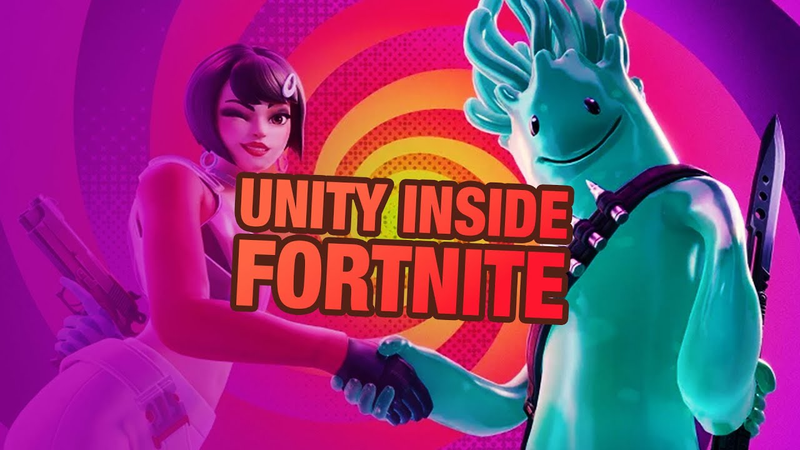
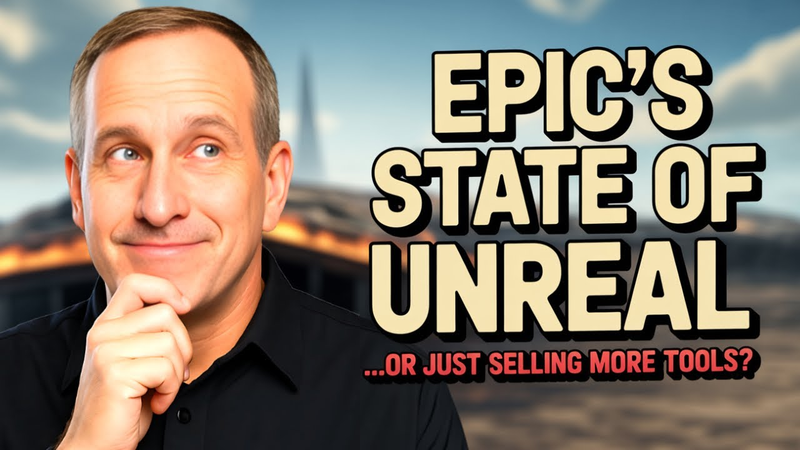
All right, so let's get into it. The first topic is going to be Epic Games and Unity have announced a major partnership that shocked many people. So, first it was Google and Tim Sweeney from Epic showing up to court as BFFs, which shocked everyone, including the judge. And now Tim shows up at Epic Unity's Unite conference and appears on stage with Matt Bramberg as BFFs. I mean, that was just like something I never had on my bingo card was seeing them together. So, here's what was announced really quick for those who want to know. Unity developers will be able to publish their games directly into the Fortnite ecosystem. Games built with Unity will appear in the Fortnite discovery system and the Fortnite creator economy. So, you get a chance to make money with your Unity games. Unity will bring its crossplatform commerce platform, including its inapp purchase SDK to the Unreal Engine in early 26. This was just announced a few months ago
that Unity is partnering with Stripe on payments. Both CEOs emphasize their shared view of building fair and open digital platforms similar to the early days of the web. So for my take, here's what I was really I was just fascinated with the Tim Bromance tour that he's been on for platforms, for engines, for payments. Hell, he even let AP into the Fortnite platform. Bill, I know you're working on that. Get your take on that in a second. 2025 is the year that Tim decided to really do things differently and push his metaverse vision. While everyone else has dropped it, Tim is still a believer and he's not afraid to use the M-word. I've seen he said it on stage at this event. So this is a move towards the open and interoperable gaming ecosystem ahead of what is going to be Unreal Engine 6 which brings UFN and UFN and Unreal Engine together likely he's been talking about that. So in a complete aside because you are so fashionable Mishka and Crest I think I
might recommend a fashion consultant for Mr. Bramberg. I'm not saying he needs a suit, but I'm not sure about the choice of accessories with the black t-shirt.
I love it,
dude. What are you talking about?
Heavy cotton t-shirt, chain with a pendant, a Swiss moth masterpiece. This is the tech mogul look of 2025.
Yeah, this is the same Zuck stylist.
Dude, he looks [ __ ] shredded, dude. Like absolutely shredded, dude.
Look at him.
BMI circular circular French glasses. This is why you have a woman on this podcast. He looks ridiculous. He looks [ __ ] ridiculous.
Oh, come on. No. No.
Well, let's get the Tim Sweeney fashion.
Yeah, the Tim Sweeney look. That's looks terrible. He looks
That is expected. That is expected from Tim Sweeney. He rocks that same shitty outfit everywhere he goes because he's a game dev. He's an engineer.
Pants are like Yeah. totally like baggy and completely.
That's why we love him. [laughter]
That's that's me buying a Clippers. Look, that's that's what it is. Look, [laughter] all I'm saying is the EA BMI factory is turnurning out the successful CEOs and executives constantly, dude. It's unbelievable. Anyway,
it's the gym. I used to go to that gym at EA at ears. All right, Phil, what what's your take on this?
Well, first thing, just as an update, is if you remember, UFN was going to allow V-Bucks to be spent inside of Island. So essentially they were allowing MTX inside of the UGC platform. That was in December and they had not announced a firm date for that. That has now been moved to January. And what I will give Epic credit for is they've been very communicative about when these things happen. They've been doing Q&As's with developers. I personally have been consulting with a couple different devs who are implementing this. And let me just tell you, loot boxes are on the menu, boys. That is what has been communicated to us. And that is something that I am certainly marching towards. But the other thing that you see when you look for instance look at their public trellboard because remember
they have a public trellboard where they have the features things start to slip, dates start to slip. Same thing with MTX. They're building this thing in flight. Remember it took Roblox 10 years. But when I look at this Unity news, I have no idea how this actually works. Like what what happens when I go into UFN and I click a tile? Does it load Unity? Are you going to move an entire Unity game in there? I mean, there just so many questions. It just feels like they're throwing the kitchen sink at things. I just can't even My head is exploding trying to conceptualize this.
No, you that's what they're saying is it'll behave just like any of the other games. When you go and you upload it into the Fortnite ecosystem, it appears in discovery. It's in the creator ecosystem. It's going to
Is it on mobile though? It is on mobile. Like this is the games within games that got banned from the app store. Remember Facebook tried to do this with instant messenger games. Like I just have so many questions.
You said it exactly right. This is like being built in flight. This is crazy. like to implement this type of thing where the platform itself has been completely unsuccessful, let's be
honest, right, so far. And now you're adding another layer of a different engine into the mix and games that in theory the majority of them or like 98% of them actually are predatory monetization mechanics, right? So it's like of which that's supposedly not allowed or maybe it is allowed depending on how you interpret what's going on over at Epic. So, it's like I'm not really clear as to how this is actually going to actually work and function with for the consumer, right? It seems like a complete Frankenstein monster um ultimately and none of what the coverage seemed to articulate really helps me feel better about it, you know? So, I think it's all good on paper and it seems like a very high flutin thinking way of let's bring everyone together Kumbaya, but like the logistics of actually pulling this off seem almost impossible. We'll see. Maybe they can pull it off. Who knows?
All right. Okay. The other interesting things was the
the Unity SDK going into the Unreal Engine games that aren't necessarily inside of Fortnite as well. So, that was like another point that I just wanted to make sure it didn't get missed.
The Roblox CEO I Jen actually boarded me this podcast. I've I had actually never heard of it before. It was It's a New York Times podcast. It's actually quite good even though what I'm about ready to say is going to make me people think I don't think it's good but um so the CEO David Bizooki he was on this podcast um from the New York Times called Hardfork. The goal of the podcast was to talk about the new system and what was happening at Roblox that can basically use facial recognition to tell which is an adult, which is a minor to to determine who is actually speaking to each other within these games. Supposedly, it's going to add more, you know, reliable verification methods compared to the self-reported methods, which I've been critical of forever, right? The podcast got really brutal really quickly. These guys on the podcast were [ __ ]
[ __ ] Like, they were just complete dicks, you know? They weren't they were being super aggressive and super argumentative with him and just rude, right? Um, now I've never really listened to them before, so I don't know if that's kind of their their sticktick. And I did listen to a few others after the fact, and it is kind of their stick. But I want to be clear, like I'm talking on both sides of my mouth on this. Roblox has done more than any other service that I know of in order to ensure safety for children. Like that's been their mo from the very beginning. It took them years and years to de develop what they have, right? And the host had no [ __ ] idea. They had no idea. They had no background. They had no context whatsoever to be talking to David about this about what Roblox track record was on this po this point. So they were just on the offensive. They were just attacking him in every moment. And so when David asked the question specifically about, you know, what research has you done in to these hosts about this particular subject? The host
had no answer whatsoever. They just pulled it back. Well, why don't you answer the question type thing. It was clear that these guys were not prepared at all for this podcast, right? They they had not done any work. They're basically repeating talking points from
Yeah. They even brought up the Hindenburg article and and he's, you know, they went out of business, right?
Exactly. And then again, he actually cornered them and said, "Hey, what do you know about what we're doing on this thing?" And they had no idea what they were talking about. Right. I personally thought the hosts looked like idiots, right? It was embarrassing just to listen to them and how uninformed they were. And these are like real journalists from the New York Times. These guys are no joke. So what's so sad is that David is such a huge fan of the podcast. I mean, he said so himself. And the fact he was pretty much blindsided by their line of questioning. This is not what he was expecting at all. And I'm actually a little bit surprised the PR team let this thing air to be honest. And maybe it's because kind of David did have the upper hand to some degree because these guys just came off looking
like jerks, you know. So, I don't know. That was kind of my take on the whole thing.
I thought you would enjoy [laughter] the the the banter there. Um, and then yeah, so these it's Kevin Roost is and by the way, this is the guy who made the early Clawude version of the AI chatbot. Fall in love with him. And he wrote a whole article about it. And then Casey Newton from Platformer. So these guys are super super wellrespected. They have access to all of the big tech guys. I listen to this podcast weekly. They often interview, you know, like the leaders of all of the tech companies. And so this came on the heels of the Roblox announcement that they're rolling out face verification, which is why he wanted to go on. It's a technology that they're using to improve child safety. So just really quick for those who haven't seen the news. So this is going to verify users age which will restrict communication between age groups and unlock age appropriate features like chat for those 13 and older. Users can now voluntarily complete a facial age check and starting in early December the
requirement will be enforced in certain markets and then globally. The process involves a video selfie analyzed by a third party called Persona with images and videos deleted immediately after processing. If the face scan incorrectly estimates your age, you can verify your birthday with governmentissued ID. And so I think he was trying to say, look, you know, look at what we're doing there. A lot of people are covering us negatively. How about we talk about what we're actually doing? And so the the guys brought up, well, aren't kids showing pictures of video game characters to get around this? I mean, we've talked about this before. I mean, I have now a 19-year-old and a 16-year-old, and they were hacking all of these things at 8 and, you know, six and five. So, kids are going to find ways around things, but Roblox should be applauded for the work that they've already done when you have 150 million DAOU. And [snorts] Chris, you've talked about this before is like, how about we talk about the good things that they're doing? Yes, there's always going to be problems and bad actors, but let's talk about how they are pushing tech beyond
what is currently out there. So, it was super cringey and I was disappointed because I like the podcast that the host didn't do more homework and they used outdated references on, you know, trying to be fair and balanced. I thought that was not the best moment for them.
I'm surprised at these takes. To me, I listen to that podcast and I expect nothing more from journalists. It's always going to be man bites dog stories. That's always going to be the case. There's no sense of proportionality at all. And of course, like the safety issue on Roblox has been growing. If you remember, they banned a vigilante who was trying to catch groomers on the platform, which then triggered a Twitter [ __ ] storm. So, there's been incidents leading up to this, but I don't expect anything more from journalists. What I expected from Roblox was for David to be more prepped going into his interview because of course he's going to get toasted by these guys. And I'm surprised that team didn't do better prepping him. And I would say he did not handle those questions well, and he did not handle the questions afterwards well. And it just reiterated to me that Roblox is not one of us. They are not a game developer. David does not care about games. He's not identified with games. I
mean, he's posting tweets afterwards saying, "Hey, Kevin, thanks for having having me on. Always happy to talk about our commitment and safety to other fun and industryleading stuff that Roblox is working on. Looking forward to next time. High five." I mean, come on, David. Just try to be a little bit more authentic and realistic with PR. That is not a good look.
And he says high five all the time. I mean, give me a [ __ ] break, dude. If Roblox [ __ ] this up for all of us, we're going to be in a much worse position than we have been in the last decade because the salience of this issue is increasing and we need to turn down the temperature on this because the regulars are going to get involved. If you saw Australia, they recently passed a law banning social media for minors and Roblox is not a part of that nor are games and if we start to get back on the menu for regulators, we're going to be in the crosshairs for a lot of these new regulations coming out and we'll be a part of them. So Roblox needs to play their cards carefully because in politics, perception is reality. Doesn't mean what their commitment to safety is. It matters how they market it and advertise it and deal with situations like this.
That's a really really good point. First
of all, David probably should not be on this podcast is is what you're suggesting, Philip. Right. They should have sent the um the VP of economy guy or
they need a PR trained person that's ready for anything, ready for blood because
these bottom beater like New York Times guys are are just out there trying to get headlines and they were successful, right? You know, David is is is a is not the the right guy for this at all. And I met with some of these PR guys, but I think the PR people I met at Roblox are gone now, but like they [ __ ] up. I think it's like actually all on them
that they made this that this happened, right? And then the fact that he's writing this kind of response like [laughter]
Yeah. I mean, dude, he got [ __ ] crucified out there and they're sending out a high five. Dude, [ __ ] them, dude.
He had the upper hand on a couple of the of the pieces that made them sound bad when they were
No, no, but but to Philip's point, I hadn't thought about it from that perspective. Like, he should have been prepped for this, right? They they he should have known what they were going to ask and not got blindsided by by this [ __ ] that they brought up, you know,
with the [ __ ] Hindenberg report, which is completely outdated and completely the guys went out of business. You know,
CEOs are usually really really well prepped. Like I I have hard time imagining that he wasn't prepped. And then again, like when you watch it, you can walk away from that seeing that, hey, he had an upper hand. He had good points. Nevertheless, the sort of a thing that we get out of it is him saying that the pedophilia on the platform is actually an opportunity, which was was quite the quote. They really rode with this, but I think they were rude and they were attacking him in that really small recording room, which is kind of like interesting setup. And when it comes to the confidence of your attacks, I watch a little bit different type of podcast [laughter] mainly with African-American hosts and the attacks are really good, but they will watch you in the eyes when they insult you. In this type of a setup, they were kind of like like watching to a different direction when when attacking the person, which is not nice. Like when you talk a [ __ ] about about a guy, watch him in the eye when you say it since he's sitting in front of you. Anyways, I
think the good part about this type of a thing is is that they challenge these CEOs. It's like most podcasts are softballs, pre-written interviews, and they kind of go in and do their, you know, talking points and get out and nobody gets anything interesting out of it. But the bad thing is is that they take these sound bites out of context and then these quotes go everywhere and people are requing the podcast, without getting the context, without understanding the conversation. And that again leads to PR team who was probably shell shocked at Roblox for you know not putting their their executives to these type of setups which again leads to less transparency because now we can't hear a CEO of a company you know kind of like free you know unhinged founder talking about unhinged founder stuff. So, I think, you know, clicks are important, sound bites are super important, but this one felt quite manufactured based on the outburst and what's in the ether afterwards.
So, Mishka, is your takeaway that as
podcast interviewers, we need to be more assholy to get more clicks or are we not being [ __ ] enough?
I I don't know. Like, maybe you have to be New York Times to to bring it in. But but I wish that if you are an [ __ ] and you're in the same room with the person you're insulting, watch him in the eyes when he [ __ ]
Oh, that's interesting. I Yeah, I I listen I actually listen to podcasts. I didn't watch it on YouTube, so I didn't get the same.
It's a tiny room. It's such a small room. When they film you, they fil like there's a back of the head of David and the guys are there and then they switch to the other camera which is in front of them. So, they're really close and you can see the the journalist. I forgot his name. God bless him. But he was kind of like, you know, when he was putting the attacks, he was looking up or to a different direction, kind of squinting his eyes. And I'm like, dude, if you attack a guy, attack him. Like, let's go. Like, watch him in the eyes and say your platform is is not good. And, you know, I'm not going to
The New York Times should be held to a
different standard. and the fact that they were being such [ __ ] about how they were pursuing this and again quoting things that were completely you know discredited like months ago years ago now right I mean when pressed they couldn't even respond they had no response to actually what he does they do for privacy what they do for protecting kids and whatever like they had no idea what they were talking about right this is the New York Times dude we can't compare it to people like us that are just out there like talking [ __ ] on a podcast these guys are real like journalists.
What? I mean, our journalistic integrity is well, it's absolutely zero.
Yeah. I think they were [laughter] they were they were just basically trying to stump the chump and and that's just not the way real journalists should be. They should be tough, you know, and ask tough questions, but know what the [ __ ] they're talking about. All right, let's move on.
[music]
Auto-generated captions from YouTube — names and numbers may be misheard.


















Comments