1 free read left. Create a free account for unlimited reading + AI research.
Create free account
#ElevateYourGame: Improve Revenue & Retention With the Right Ads Approach
Key insights
6 takeaways- 01Approximately 65 percent of developers now utilize a hybrid monetization model, integrating in-app advertising alongside in-app purchases to improve both revenue and player retention.
- 02Developers should leverage granular per-impression revenue data to inform user acquisition strategies, ensuring that monetization efforts directly support long-term player lifetime value.
- 03Rewarded video is the industry’s fastest-growing and most player-accepted ad format, making it the primary vehicle for integrating ads into the player experience without disrupting engagement.
- 04Publishers should diversify demand sources by incorporating high-impact brand video alongside traditional gaming advertisements to ensure monetization strategies remain competitive.
- 05Maintaining high standards for ad quality and strategic placement is essential to ensure that advertising provides genuine value to the user rather than acting as a disruptive afterthought.
- 06Transitioning from traditional waterfall structures to a unified auction model using real-time in-app bidding increases operational efficiency and maximizes gross revenue by allowing demand sources to compete for every impression.
Ask AI about this video
Transcript
speaking of interest we've been hearing all day about how it may be a different approach to ads getting the right ads thinking about revenue and player retention that's what this session is all about it's about how you can talk about how you can progress rather looking at incorporating in-app ads to increase overall retention and revenue that's the big and so both of them two wins and we have our speaker who is ben kaplan product manager at mo pub also a sponsor of this session and i'm excited to hear this because of course we've been talking about this all day so understanding quote how to elevate your game improve revenue and retention with the
right ads approach is really something that resonates but i would rather hear maybe a little bit of music potentially from ben because i checked in this and ben you said it you recorded and starred in a mock justin bieber video music uh video uh music video rather for sorry so don't know how that happened but that's a that's a story for another day another another day no no no i didn't want to go there i didn't want to go there i just always want to show the human side of everything but i'll let you go because it's an important panel we've been talking about it take it away please ben awesome thank you so much great to be here everyone uh so my name is ben kaplan uh super excited to take you through our session today uh how to hashtag elevate your game improve revenue and retention with the right ads approach so today i hope to give you a little bit of kind of two major pieces the first is the why why incorporate ads in the first place and the second is the how once i've sold
you hopefully or you've come to understand the why what are the best ways to implement this appropriately just a little bit about myself uh so like i said my name is ben kaplan uh i'm the product marketing lead for bullpup and twitter uh i've been at mo pub in twitter for a little bit over two years now uh but i actually spent about about 12 years or so on the publisher side and in that role i was working with a bunch of different publishers helping them improve their digital ad efforts how to incorporate advertising to drive incremental revenue for their businesses so it's been really great to kind of bring that publisher perspective over to twitter and mopub as we work with thousands of publishers and developers every single day so with that said let's uh let's get into it so again let's start with the why why incorporate ads i think the knee-jerk reaction probably from a lot of folks is likely that as soon as players see ads they're less likely to stay in the game right you know the concept of an impactful ad experience and engaging
games they're mutually exclusive right well actually the data was suggested why the data would suggest that that's wrong if you look at some great surveys and information that our friends at facebook and venturebeat put out last year they conducted a number of surveys that showcased that ads actually augment overall revenues and improve player retention now i'm sure everyone can expect here that ad game revenues have jumped you know over years but i think what's more impressive here besides for the revenue increase is that 65 of developers surveyed see in-app ads is actually complementary to in-app purchases and the majority of them actually see in-app ads driving more in-app purchases so not only are ads themselves incremental revenue they're actually driving increased in-app purchase revenue now the majority of developers surveyed also believe that in-app ads can improve player retention and actually gamers play longer because of ads now that was not
enough three out of every four hardcore players surveyed actually responded they're okay with rewarded ads and then a vast majority of gamers are actually happy happy with the ad supported model so some stats some numbers to chew on there hopefully it gives you a sense of the why why it makes sense to incorporate ads to really augment your game and augment your revenues so now that we've addressed kind of what that why is uh i want to jump into the how and the the critical thing to understand here is really four key themes to consider when implementing an ads approach and the first is rewarded notice how i'm not saying reward to video i'm saying rewarded and with rewarded it's less here about the actual yield optimization or the demand sources it's really about both the placements of those rewarded experience and the types of rewards being offered second demand diversification this is really about moving beyond what i would
call performance demand or maybe set another way ads for games and your games advertising other games so how do you move beyond that not only to improve player retention drive incremental revenue but also give a higher quality experience third unlock smarter user acquisition how can you leverage per impression revenue information both from an ads perspective and iep perspective to better segment your user base and then be more profitable with your user acquisition efforts and then finally once you've kind of gotten those other three right it's really about the yield management how do you maximize revenue ideally at the per impression level but doing it in a way that maybe doesn't take away from or too much of an operational cost for you and your business right you spent all this time creating a game you've done all these other things the last thing you want to do is have to worry about waterfalls and yield management so those are the four starting with rewarded again i'm saying rewarded here i'm not just talking about
reward video and the reason i say this is because especially as we look for more engaging formats it really depends on your game experience it could be rewarded video rewarded playables or to display it doesn't necessarily have to solely be the video format now in doing this we have to consider both the placements and the types of rewards and when it comes to placements publishers have to be really i want to say diligent but really specific about where they're placing rewarded experiences as no single app experience is the same you know i hear this from a lot of publishers who are heavy iap or maybe just starting to consider ads and they say well if i adopt rewarded ads even i'm going to be like everyone else i'm i'm turning into the rest of the environment my game is unique and the way that you place these ads and the types themselves allow you to keep your game experience unique to keep your ads experience unique so you don't have to feel like
you're being like everybody else you know a few key things to keep in mind here the scarcity of the placements you want to limit the frequency of them depending on what kind of retention you're trying to garner and of course a b testing to find the perfect balance just some common placement ideas to keep in mind this could be finishing around or level uh losing a life or a round uh the beginning of a match or level in a game and even some kind of do a daily login bonus a few more examples that are just top mind for me you know you could take one publisher who may not uh show ads until a user reaches a fifth level of the game experience um the reason for this is they want to ensure they've kind of gotten that it's called addicted personality i've gotten involved in the game i'm invested in the game which would reduce the risk of any possible user deterrence once they see an ad experience then you could look at it on the flip side and take another publisher who maybe offers players five rewarded ads in a row to optimize or to maximize on those rewards for
those players as they then proceed in the gaming experience so that's placements when it comes to the types as you're probably getting essentially the types of rewards you offer are as important as the placements for this we find that the most sophisticated publishers really maximize the value of the reward guaranteed or offered to the user with unique rewards again back to that unique experience of the game that are immediately useful for some kind of relevance to the player and their experience and are complementary to the gameplay experience so not interruptive but complementary again we're trying to drive ad revenue here but also do it in a way that we're improving and maintaining player retention some common rewards that you would see here are character upgrades multiple currencies you could do additional lives and rounds multiple options uh an example i like of a of a publisher here is will they actually give players to be
eligible up to three ads per day so they'll hit them with maybe three ads per day as a frequency but those players have to watch those three ads to be able to gain access to some i don't know exclusive coveted reward so i really like the mechanics there uh it's still a user opt-in you're only showing that frequency of three but that reward is so specific and exclusive that users are actually incentivized to watch those ads in order to access that reward so again i'm riffing a little bit here but as you can see there's a lot of range a lot of options what it really is about as i mentioned before it's about finding the implementation both from a placements and a rewards perspective that is unique to your game and unique to your players so now that we've implemented our reward experience let's talk about demand diversification and really where we see a lot of publishers go wrong is hey i want to maximize as much revenue as possible but really they solely have what we would call performance demand
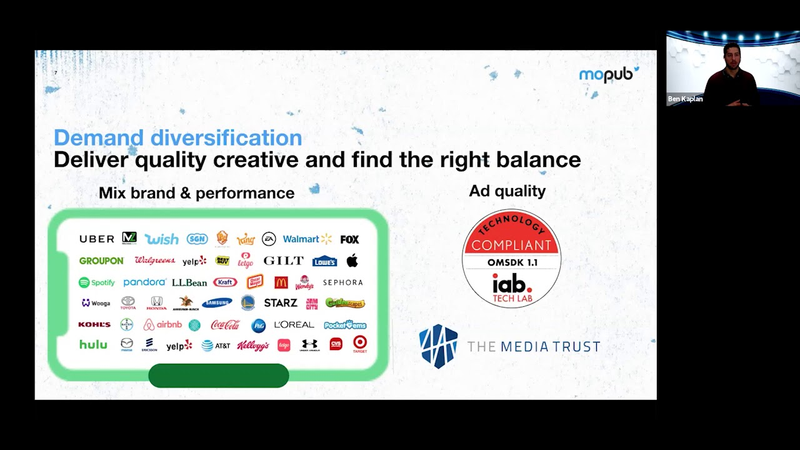
so this is ads for other games running in their game and the problem with this and i'm not saying there can't exist performance demand but if you exclusively have performance demand or just ads for other games if you're taking players out of that experience right if i see an impactful reward experience that's driving me to play a different game i'm going to leave your game and play that game right so how do we alleviate that how do we make sure that we're still maximize revenue without sending our users someplace else and the first way to do this is really about making sure you mix both performance demand so those games or those direct response advertisers with what we would call brand or omnichannel demand so these are big name brands that are more about awareness campaigns familiarity campaigns and really delivering reach creative that keep users in the app experience so by mixing up these different sources you're not only going to get incremental demand because you weren't accessing maybe that brand or that omni-channel demand before but also that creative is not constructed in a way to take the user
outside it's not constructed in a way for the user to leave and install another app or play another game right you're keeping the user in your app experience again we're trying to maximize ad revenue but also improve and maintain player retention so having that healthy mix is important the second piece here is on quality so the on quality i think the first thing to talk about is we talked about those brand advertisers right you see the coca-colas of the world here the l'oreals of the world here you know in order to get or receive a lot of those what we would call fortune 1000 advertisers you want to make sure that you're running a quality uh inventory or have a quality experience and oftentimes you want to make sure you're working with the right measurement partner or white right partners and able to deliver that so for example the ib's open measurement sdk is a great signal on viewability that those fortune 1000 advertisers feel comfortable spending in your app so as much as you would be receiving brand or omni channel demand before incorporating something like the open
measurement sdk actually improves the not only the brand demand you would receive but the quality of those advertisers the second piece on quality really pertains to your users right you really want to make sure that the players in your game are only seeing ads that have been scanned to ensure that they're it's called of the right level to appear in your game right you don't want any sketchy experiences or experiences that might take away from the quality or the perception of what your game has so you really want to make sure you also have partners involved that can help with that scanning further than that you may want to have some customization in the types of ads that show so for example um you want to make sure you have control so competitors don't appear and you may want to segment certain ads that could come in at the app level at the category level maybe at the url level or maybe you even want to go down to a specific ad creative again those kind of controls are going to make sure that as you're opening yourself up to more different demand sources you're maintaining that quality ecosystem for your users
this is a fun one unlocking smarter user acquisition so with ads and being able to understand the performance of ads you can better understand the full value of your users and what i mean by full value right when you think about running user acquisition campaigns um you see this one on the on the right you have the same cpi across campaigns but as you run these campaigns these users will translate to being potentially higher ad revenue predisposed or lower they could be higher iap disposed or lower but being able to run ads help you understand especially being able to measure at the per impression level you have that per impression management to understand hey this user's worth more to me than this this user is what we call potentially an ad whale versus an iep well versus maybe a user who's not as high on on either of those levels but what's critical here is that as you can see
you're making a higher cpm again same cpi across the board but you're making a higher cpm from some of those users now that's critical because what that means is you actually can maintain the same level of profitability but you can go back and increase that cpi in your user acquisition campaigns now you could have the same cpi and have a higher margin but since you're making more on that user and then you can then leverage that as a signal to reinvest back into your user acquisition campaigns it allows you to actually be more aggressive and smarter about user acquisition and ensure that you're maybe being more aggressive having a higher cpi but still maintaining that strong sense of profitability so having that kind of per impression understanding of ads and internet purchases help you segment your users and say hey look i want to serve an ads experience to this user i want to serve an iap experience to this user or you could say look this user hasn't shown enough retention isn't addicted enough to the game yet so i actually want to serve no monetization experience at all this kind
of per impression information is critical and seeing it from the ads perspective is really going to give you a full scope on kind of what users you want to monetize at what levels now talked about a lot of key critical things talked about rewarded talked about demand diversification we talked about how adding ads and understanding from a per impression level can help with smarterua now once you've done those three things the last but also a critical component is the yield optimization and as i mentioned when i was breaking down kind of the four key themes this is one where you want to be able now that you've done all those other aspects to maximize your yield as we can say as much as possible but you want to do it in a way that it's not going to be a huge operational lift for you right you've got enough stuff going on you're running your game you're trying to get your core loops going trying to increase that user retention the last thing you want to worry about is managing different lines different
demand sources what do i need to optimize today so on and so forth and a critical way to do this is through what we call the unified auction so as most of you know or i assume most of you know um in the yield optimization or in the programmatic domain space or just in the demand space in general it's a lot of different sources they bid and buy in a lot of different ways some are cpm some are cpa some are cpi et cetera et cetera some of them the way that they buy driven some are reserved pricing some are in real time you've got all these different demand sources competing in different ways and what a unified auction does is it brings them all to the same playing field has them all competing together in the same way on the same rate which is a cpm or cost per thousand impressions a way to activate the unified auction one of the great ways to activate that unified auction is through in-app bidding and so for those who may be unfamiliar what in-app bidding does is takes the historical what we would call waterfall
where you've got different yield sources and you need to move them in different places and it flattens it and it has all demand sources competing in real time on a per impression level so number one you're going to maximize revenue right because you're creating that per impression competition in real time right everyone competing together but second what it's also going to do is it's one line it's flattened you don't have to worry about the operational headache of i need to work on this line and then work on that and work on another one so what you're going to get is the revenue benefits without the operational kind of drag on your business now this is something that exciting that was introduced back in 2017 as we look in 2021 what's most exciting when i look at the industry is there's more partners than ever operating in this structure operating in this unified auction operating in-app bidding and why that's super exciting is this makes it easier so i don't have to work as much in a hybrid approach so i'm doing some bidding and then some waterfall here um
and i think because of that adoption we've actually seen more publishers both adopt bidding as uh as a mechanism to yield management but what they've also done is they've also seen so much more gross revenue transacted we're talking five six seven x in both adoption and revenue transacted even over the past seven eight months again as more networks come on as more partners see the value in bidding the other piece i want to mention here because right because the tool set's important um but i don't want to leave out the strategic aspect of it and when i say the strategic aspect you really want to make sure you're working with a partner here who's invested in your overall success and what do i mean by overall success i mean you want to make sure you're working with partners who are invested in your overall revenue or your overall average revenue per daily active user or arp down and what i mean by that to go even more specific is you want to make sure that you're working with partners who give you frameworks strategies approaches that are about
maximizing overall revenue not just about maximizing their share of your overall revenue you're really looking for a partner that can be a foundation for your deep rooted growth right you want to make sure that you've got a partner that you can build your business on top of and those partners should be able to give you strategies and frameworks to best optimize networks optimize placements partners you should leverage so on and so forth but doing in a way that is about increasing your overall arc dial your overall revenue trying to find that partner might be a little bit more challenging than it seems but they're there and these strategies can make sure that you have a partner in crime sort of that as you're going to implement an ad strategy you're doing in a way that's focused on your overall business success so that was a lot in about 16 17 minutes but um i do want to leave you with the four key takeaways right i know i covered a lot and there's a lot we can go deeper into all of them but i want to
make sure you walk away with those four key aspects and number one rewarded emphasize placements and types of the ward experience which is going to augment your in-app purchase and retention efforts and because of that customization you can keep your games differentiated you don't have to be like everybody else just because you incorporate ads second demand diversification right moving beyond the games advertising for other games so this is not only going to deliver incremental revenue for you but it's also going to keep players within your game because of those high impact brand creates and third efficiently connect monetization to acquisition so how do i understand the full scope of my users right which are the ones that are more predisposed to ads and better for monetizing that way what are better for iap what users am i really not sure yet and doesn't shouldn't really have an ad experience and then leveraging those signals to reinvest back into more profitable and more
aggressive user acquisition and then fourth leveraging solutions that streamline your monetization efforts right it's enough work to run your game and do these other three things how can we make sure from a yield optimization perspective we're maximizing revenue without really sucking up too much operational time and also ensuring that you work with partners that provide you frameworks that enable your overall revenue or your overall rpl growth both in the short term and the long term so that was it i know there's some questions that i'll take here but if we don't get it in the time that we have today here's just some of my contact information and uh i look forward to continuing the conversation thank you thank you ben i'm a little bit late because i was tweeting your key takeaways loved it love to hear that love to hear that because they were really good that was a very solid presentation particularly the emphasis on the reward and how that fits in there and that's what we have some questions about even
my i myself because i think you nailed it people are very excited you know we're seeing so many brands get into advertising and games really understanding this i mean when you're reading articles in ad week right around how to advertise and games you know it has arrived and that's one of our questions as well because i think you piqued their interest what are some of the top ad networks for brand ads and again anonymous attendee what percentage of revenue top games generate from brand ads so people are interested in that brand option because that's a great way to like mix it up and and you know increase the retention increase the revenue absolutely so absolutely um so i uh so on the first question um i can give you a specific list afterwards but i i don't want to name drop anyone in particular but they are out there and what i really appreciate about a lot of those networks that perform strong with brand advertising is that for the most part they are very adept in adopting bidding
um i think a lot of it is because those networks often have a place in the let's call it the web world whether it be the mobile web or desktop web world and the concept of what they would call header bidding in that world is so widely adopted there that they are more useful in operating that way as opposed to a lot more performance networks i think they're just starting to come into bidding now and they're so much more used to that kind of more reserved waterfall network pricing as it pertains to percentages it's really going to depend on your format mix what i can tell you is the more that you invest into the video format that's really what the top brand advertisers and exchanges want right now um you know when we talk to most of the advertisers agencies and omni channel dsps out there demand side platforms their focus is how do i reach the right user at the right time with the most high impact video created they literally say video creative so again i i said on the reward experience it's not just video but what we see is if you really want to optimize that brand span and get that highest percentage the more you embrace that video format
ideally and rewarded or if you were to do something like an interstitial that's where you're going to see the higher levels of percentages okay so video definitely and then mixed up as you pointed out we have another question here anonymous um what are common causes of low render rate that's is ad impressions uh filled ad requests how to fix it so what are the causes and what to do about it because again that's something that a lot of people are going to be grappling with as they go more to video ads yeah absolutely so there's three things that really jump out to me to improve that i think number one is again the the adoption of bidding is going to flatten that waterfall so instead of me having to go for one level to look for a call then another level right that's going to improve my latency right or or reduce my latency so to speak so that's going to help in terms of rendering um the second is making sure that when you're calling rewarded experiences making sure that um when's the appropriate time to do so so for example if you're gonna call three experiences does it make sense to
call all three of those experiences on the app initialization well that's really gonna depend on your placement so being really smart and diligent about when you're gonna be calling those rewarded experience that um which i'm sure the question is coming from reward is that let's call it a heavier format than a display ad unit so being really smart about those ad calls uh the third piece which you know i think a lot of publishers don't realize is really examine what is about what is being truly about ad being rendered versus being seen and let me show you what i mean by that is oftentimes a publisher an ad may load so there might be a load over a request but there actually may not be an impression now why is that that's often times because there might be a way that the publisher has structured their game that maybe the rew the ad is being shown but it's not in view of the user so what's really important for publishers to look at is i kind of like to call it this is my opinion i kind of like to call it true fill rate or true render is to understand what are my ad loads over my requests not what are my
impressions over my requests right because the ad being loaded means the ads there the impression is that someone may not have seen it so if you happen to have a really high rate of ad loads over requests and there's a delta between the loads and the impressions that means there's an opportunity there for you to understand hey how am i structuring my game where am i calling those ads and can i really make sure that when that ad is rendered and loaded it's in front of the user so kind of those three elements i keep in mind that's a really helpful shortcut the last one i think that's really really good and it's helpful because i see that from our audience you know they want to understand this they want to get onto this and and really get the most out of it so we've got another question like that and just these basic questions that help a lot on the developer side how can one understand if an ad oppression is brand or performance yeah that's a really really good question i thought you know i thought you'd think so yeah so there's there's there's a couple there's a couple ways to look at this i mean you always want to start with the creative
right the creative experience is going to tell you you can often get an indication too from who the advertiser is right you could see that in the url or if the brand comes through you know again i showed you a slew of advertisers and i don't i feel bad picking one or calling one out but there's certain advertisers on that image that i showed you that are probably going to be more brand than they are going to be direct response right so i mentioned coca-cola and l'oreal probably going to be a little bit more brand than let's say some of the games i showcased on that screen right you can i think it's very um i don't want to say always assume but i think you can be really confident assuming that um ads for different app experiences are probably going to be more performance it's going to be more direct response right because they're trying to get that user to install their app or their game experience as you would as a publisher when you're doing your user acquisition efforts that's what your goal is so again you can tell by the creative you can also very much get a strong indication from the advertiser okay people are people are coming to you it's just like just asked really seriously just ask ben here we go
yeah yeah for indies um they've done this in sort of like hieroglyphics so i'll do my best for indies i guess it's minimum minimum dowels for testing arp dowel roast or 100 ad monetized games yeah so the way i interpret that a little bit is okay you know if you're a little bit on the smaller side what's the best way to test this and understand what's working what's not um and again if we don't have time to get to it today we you know just tweet at me at better square kaplan we can continue the conversation but you know i like to see at least a thousand impressions a day just to start testing on some level so a little bit less on dau and a little bit more on just like the activity that you're having in your app experience and well you could say well you know that's basically all my traffic how do i do that and then i would go back to kind of that first bullet that i mentioned that first theme which is all right if i have to hit a thousand impressions a day if i'm that small what's the best way for me to implement those reward experiences in terms of placements and then what's the reward
i'm offering to make sure that when my users see it it's seen as an augmentation to what they're doing as opposed to something that's taking them away from the experience we still have some more questions i hope you're going to be around yes yes i have one because i've been looking at this this is interesting so i've been looking at this over at forbes i wrote an article i should talk to you then but there's more coming because the response to that in forbes which is not as a right with pocket gamer i'm proud to do that but you don't expect that audience to be thinking about rewarded ads right so there's a huge um response to that thinking yeah this makes sense monetization clicks ticks all the right boxes um is there something that you're seeing in the behavior of users now and going forward because um you know you pointed out all the data that says that ads complement the experience which is what we sort of knew but it's great to see it confirmed but you also sort of wonder how this is going to play out because as we add you know it's like when you
adapt a new behavior you tend to stick with it and then that becomes like the new normal or what have you so are you seeing signs that that is going that this is the way it is or even perhaps as i was looking at in in forbes that um you know people are actually expecting this now in a way not that it's like a a cheap way to play the game longer but they just expect this feature because they become accustomed to it so will this be a sense of expectation even demand so i think the answer is the short answer is yes what i would say is i think in general most consumers or most players i would say are have an expectation that ad experiences are coming but even with that expectation i still fear that if you're not smart about where you're placing these experiences how relevant they are to the customer even if they're expecting it it's still not going to perform well and it's going to reduce that retention and reduce that ltv for your users
you know that's why it's so important that you focus again not just on the yield optimization that's a component but that's the fourth component right you want to start with how do these rewarded experiences really augment and help the entire player journey um look i mean when you when we look at it at mo pub the fastest growing format by far by far is rewarded video there's more investment there both from a publisher's side because their players enjoy it and the advertiser's side because of that video component as i mentioned before but even with that i really uh i would say beseech all the publishers and developers out there at the end of the day you want to create an awesome user experience an awesome player experience and ads should be part of that they shouldn't it shouldn't be one or the other right i mentioned the beginning they shouldn't be mutually exclusive so even though there's a player tendency to be more comfortable with it you still want to be smart about how you're implementing those reward experiences yeah well ben this was amazing i hope that maybe out of mo pub we might see some best practice around that because i'm seeing some questions around placement
how often it's going to be different but everybody wants to know those benchmarks maybe you'll have something to share yeah more to come thank you so much thank you thank you so much and we'll get on to the next session so thanks again and have a good rest of the day maybe you'll stick around and discord you
Summary
Modern mobile game monetization increasingly relies on a hybrid model where in-app advertising functions as a core component of the player experience rather than a disruptive afterthought. Approximately 65 percent of developers now view advertising as a complementary revenue stream that works in tandem with in-app purchases to bolster overall retention. By integrating ads strategically, publishers can create a sustainable ecosystem that enhances the player journey while simultaneously driving growth in average revenue per daily active user.
The transition toward a unified auction model represents a significant shift in operational efficiency. By replacing traditional, rigid waterfall structures with real-time in-app bidding, developers allow demand sources to compete for every impression. This approach not only maximizes gross revenue but also reduces the administrative burden of managing multiple ad lines. To further optimize performance, developers should diversify their demand sources by incorporating high-impact brand video alongside traditional gaming advertisements, ensuring that monetization strategies remain broad and competitive.
Success in this landscape depends on the seamless integration of rewarded video, which has emerged as the industry’s fastest-growing and most player-accepted ad format. Rather than treating ads as isolated revenue tactics, developers must prioritize relevance and placement to ensure they provide genuine value to the user. By leveraging granular per-impression revenue data to inform user acquisition strategies and maintaining high standards for ad quality, publishers can achieve a balanced monetization model. This data-driven approach ensures that advertising efforts support long-term player engagement and lifetime value, ultimately fostering a more profitable and resilient gaming business.












Comments