1 free read left. Create a free account for unlimited reading + AI research.
Create free account
What makes an acquisition desirable?
Key insights
6 takeaways- 01Corporate development teams at major publishers like Jam City and NCSOFT West review hundreds of potential deals annually, creating a highly competitive acquisition funnel.
- 02Acquirers prioritize talent quality, cultural alignment, and the ability to solve specific strategic gaps over simple financial metrics.
- 03Studios that demonstrate a proven track record of creative execution and the ability to learn from past failures are significantly more attractive to potential buyers.
- 04Transparency during due diligence is critical, as acquirers use professional networks to verify a studio's history, and hiding operational issues or past failures destroys credibility.
- 05Original intellectual property (IP) development is a primary driver of valuation, whereas work-for-hire studios face lower valuations unless they can successfully transition to creating their own content.
- 06Valuation is increasingly driven by a 'pain-point' model, where the price is determined by how effectively a studio solves a critical business need rather than rigid revenue multiples.
Ask AI about this video
Transcript
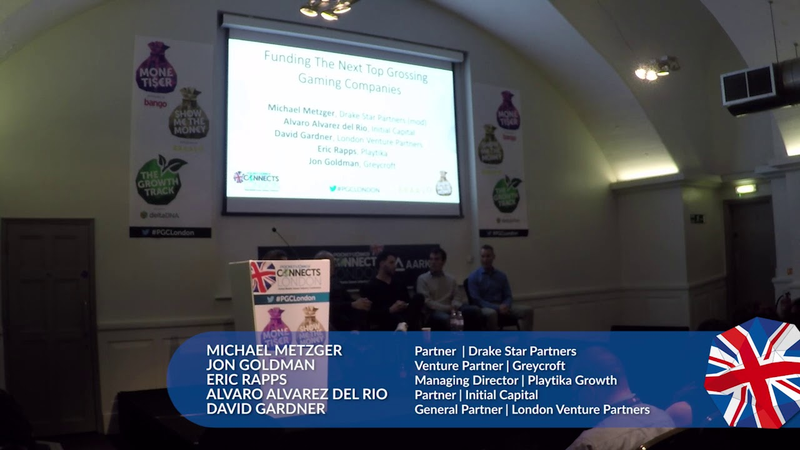
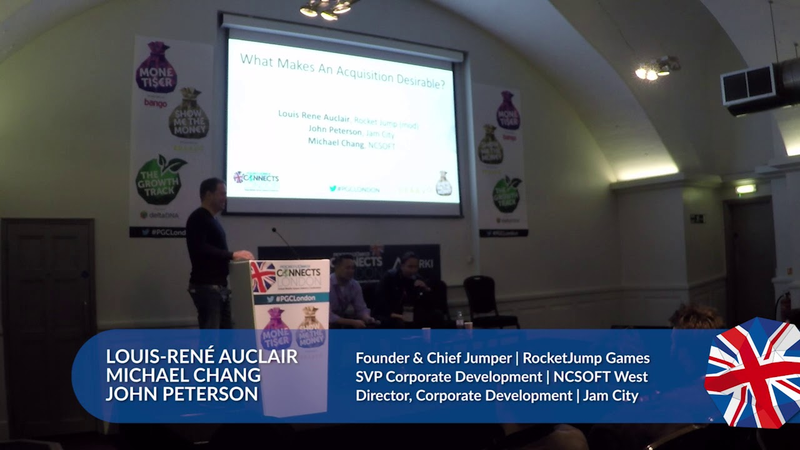
[Music] all right so we're going to get started anybody wants to take a seat now's the time there's room in front where you can ask good questions thank you alright so welcome everybody we're gonna talk positions my name is Louie Randall Claire I'd run rocket jump games out of Montreal a consultant that helps people make better games better pitches hopefully get funding and in the end ultimately get purchased by a big company like John city or NCsoft with me of Michael Chang and John Patterson I'm gonna actually ask them to introduce themselves because I never do it justice so Michael yeah hi am I trying I do investments in acquisitions
Francie soft in the West before this I used to do work for Electronic Arts Louie I'm kind of wondering why there's not more people in this panel so we can talk less and one reminder here in terms of what I'm going to say when I first started speaking on these panels I was a TA and I had to go talk to the head of EA corporate communications to get instructions and the one instruction that carries forward to this day it's not a good thing for a Corp dev guy to get quoted in a paper so I'm probably not going to be as controversial as hey I never get quoted in papers I'm John Peterson I run M&A for Jam City and gem city we had seven offices mostly located in the US and 500 employees and looking for great opportunities thanks guys so to answer a question Michael the reason why there's not more people on the panel is that most of the time when people see I host a panel they get so scared of the
staff that they don't want to join so hopefully these guys it's not the last time we sit on a panel together which might be but seriously the video games market is moving extremely fast three years ago everybody was investing in VR and now about nobody is talking about it so you have to be on top of it so the first thing I'd like to talk about is what is your current focus as a company because things move super fast and can you tell us a bit of examples of the recent acquisitions your companies made through you your support or your team so in terms of where I'm breaking up my time right now obviously we're here at Pocket Gamer I've gone from 100% mobile four years ago to about 30% mobile back to about 50 in terms of where I'm looking for targets for acquisition on the PC side I went from zero PC console to almost all of my time back down to a bit of a balance thrown in there a little
bit of ARV our audio games instant other areas just to make sure that we're seeing everything that's you know a possible opportunity trying to be kind of early find early leaders and small but rapidly growing markets if we can do so yeah so gem City we're pretty darn good at puzzle so we want to focus on that and make sure that we personally are doing very well of that but as for as far as looking for company Studios games that do what we do have great teams and can add to that but then also looking at other verticals that we you know are not good at mid core not very good at mid core you know we just bought a bingo game called bingo pop out of Toronto and we certainly couldn't do bingo honor ourselves and don't don't want to but we want to find it best out
there that can do that so that's why we made that acquisition thank you guys so one of the things that is difficult to understand when you're a studio in the studio depending of your size and experience is how many studios are being considered for M&A right I mean do they meet with hands of studios a year or hundreds of studios a year so one of the questions I'd like to ask is what you feel is your meetings to do versus closing and at the same time what is that key USP you're looking for in a team in an owner in a group of people that you want to invest in actually I'd love to ask the audience to try and put themselves in our shoes let's say for every corporate person you see it a company how many deals do you think they look in a year it can range but how many you think on average any guesses how many a thousand that's a lot that's like three
a day anyone else so I did it go ahead so I did a count among me and my colleague it was it was a couple hundred a year that we seriously consider a lot more in the funnel like 300 400 or so yeah no that's that's exactly about about right not thousands too many I mean that's just this that's calling genera you know three times a day it's that stuff so but yeah I mean that's a couple hundred to three hundred and easily it's a little frightening how shallow that can be right I mean literally how much time talk to knee you want to spend as much time as possible going to give everyone your time and attention you want to play all their games but you literally have this queue and you have to process through it as you can and what are you guys looking for what's the one thing that really hooks you early right obviously because then you have to do the do deal but who is the audience it's the audience the
talent right first and foremost is quality of the people involved with the company could be leaders could be you know rank-and-file but it's all in all the talent of the company you you and the audience today we're trying to find the best people to fellate with who can make the best games who can find that kind of special secret sauce in a bottle that that lightning in a bottle so to speak right so it is you and the audience first and foremost that we're trying to judge get to understand better you know kind of do some dating a little bit to figure out is there a right personality match number one with your studio but also for what we're trying to do with our company as well yeah just to kind of add to that I think Studios very important culture is important you know the team how long has it team been together as a team failed before and are they still together that's that's really important because that happens a lot you see it a number of companies right now they've had you know two to three failures in the past
and then they just absolutely hyper focus on you know single-game and they've been extremely extremely successful so seeing that seeing that the failures in the past and regrouping and figuring out alright we're gonna go for it we're gonna go for it in this vertical in this game specifically and we have specific KPI targets that we're gonna hit and that's that is their number one focus and that is so attractive to us kind of way beyond you know just a good game it's just like you know how you know yeah focus on solitaire actually brings to a point could I ask you by show of hands how many of you worked a large game company before an EA and Activision that take to THQ every company is very different we got Mark Stephens walk in here he worked at EA for a while every company feels very different EA
feels different from Activision feels different from tht well tht no more take to Bethesda the Chinese game companies to Korean companies the Japanese everyone has a different flavor for what they're looking for an acquisition what is the right cultural fit what is the right look and feel what are the right holes to fill and so honestly you should all in your audience in this audience date around you should get up to different different sort of acquires out there if that is something that you want to have happen for your studio or for your team yes I think gathering experience at a big studio is important at one point but who here runs a small indie studio I didn't want to use the word small let's say who here runs an indie studio and contemplating either hoping making that great big hit or getting interest from a major studio for M&A deal show of hands please you don't wants to cash you out yeah so it's one thing that was mentioned is really important to me when you go
through an M&A conversation and you start even before due diligence people try to hide their mistakes they try to hide the fact that they don't have a game that is that so so there's a lot of data out there that can get these guys to know about everything they need to know about your games and if you try to say oh you we didn't make any mistake so it was a publishers fault he didn't put enough marketing in our game and we did at the LTV but they didn't know how to do user acquisition that's not a good reason I mean it's much better to show your experience your key learnings how you grew through it than to pretend that you didn't do those mistakes cuz they're gonna know they're gonna see it and then they're gonna get kind of weird on you if I could on that line there's a phrase in this business success has many fathers failures and orphan the thing is it's a really small business in games we can't pick up the phone and call you it's it's six six degrees of separation here people claim credit for things people throw blame on other people throw shade other people you can very easily
find out the truth of the matter by checking with one two or three people starting to pattern recognize on things I am actually quite amazed oftentimes the people don't pick up the phone and call so when we're looking at different deals oftentimes people I work with you know we'll know people around the table and oftentimes they just take it on faith they don't check to be frank I just have one of these examples yesterday there's a large game company that's looking to be divested from a parent and they represented everything that they're doing they're quite profitable they're growing nicely things are going great I put in one call though and someone's like you know their parent company is going bankrupt and there's a lawsuit with their CEO it would be nice to have been told that a little ahead of time and we will find out eventually so hiding these sorts of issues are not really a good thing because they blow your credibility at some level yeah that totally makes sense I don't know if you guys know the story of Netflix and blockbuster but I think that's probably gonna be my most controversial question which is not that bad
as you know blockbuster was offered to buy Netflix awhile back and they said no they thought that business model was way better so my main question to you guys about this is what is the one that got away what is that deal that you like we're gonna pass on this one and then five years later you're like you don't want to talk about it but now you do it's two years but yeah this one so this guy became a good friend of mine we passed on him early and then a year later he comes back and he says hey we got a good game like okay cool so she shows me the game and I help him out a little bit a little bit what the game I'm like maybe change this change that and he goes okay hey we're getting some good kpi's all right and then see the kpi's fantastic kpi's like oh yeah we're interested yes but you know let's talk at GDC well he signed a deal a week before GDC and it was golf clash so that
one hurts thanks Paul you're here too this is fun how many you play League of Legends or have played League of Legends pretty popular game Riot Games has gotten quite big so in 2010 I was playing a lot of Lee legends and I want to bring it up to the the heads of EA so you would think this is no-brainer right this company that at the time was doing five million in revenue a month three million in profit a month this is October 2011 sorry October 2010 okay should be no problems to get the heads of EA to meet one of the leading free-to-play PC game companies I'm not gonna pick off the names here some but one of these people maybe the CEO of Zynga now what do you think the response was when I asked would you take a meeting to League of Legends it's a copy of a great mod
amazing so again the story to behold there is not it's a funny story but it goes to show you that when people are working on their day to day jobs very focused on making their numbers building up their their games focus on the day-to-day activities company often they can lose kind of the new sight of the broader picture out there right it's very tough to convince people and you have to fight very hard with with conviction when you find something that's really interesting discover out there I'll give another example out here how many of you know a small finished game company called supercell so can you name the games that supercell has released just well what a supercell released so far sorry al clash of clans brawl stars someone said heyday so five games five five mobile games right is there another game that we're all forgetting how many of you remember when supercell was making Facebook games
that's right gunship so-so gun shine so when I first joined EA mobile wasn't where I was spending time I was focused on buying more stuff for Facebook to add onto Playfish we were fighting heavily against Inga it was the Facebook wars right if you didn't do it Playfish would do it or if you didn't if you didn't buy it Zynga would buy it losing it didn't buy it Disney would buy it it was that sort of a time supercell came up with a game called gun shine it was the most beautiful hardcore Facebook game I'd ever seen and actually we asked one of the people who often comes these conferences guy named Paul Hayden to give us an introduction and Paul said sure I've been messing this company I'll I'll give you initiation introduction this guy ilka put on it great so we had sent some folks up there to take a meeting like you know this Facebook game is kind of interesting missing the forest from the trees here right this they missing the fact that this was an amazing company making incredible games didn't matter whether
gun trying to success for not they had the prospects to make something even better for future and obviously applied very well in mobile and what sucks is actually not only do we miss miss at that time they came back again looking for more money and the answer was too expensive I was really hurt how many people here work in the studio that does work for hire okay one two three four five six about other studios they make your own game right there's a huge difference and now you value eight a company that does work for hire versus own IP or other types of work and I think this is a common misconception that people say hey I have a great team or making great games but if you work for hire you always or almost always will get lower valuation by a publisher trying to hire unless they just want butts and seats I'd like to get your perspective on how either people can change that mentality or how to approach this when you're
looking at an M&A deal before work fire vs. own IP yeah that's work for hires difficult for us to value unless the team has actually built some of their own IP that we can put more value on and kind of disregard the work for hire because it's if we're gonna do an acquisition the work for hire is not going to last at least with us so hopefully they have some of their own IP least in the works and if that's the case then then what will value it on that but it's it's difficult for us to put their current work for hire business it's frankly a bit of an unfair behavior here it is true that often times work for hire is dismissed in value it's kind of a cost plus service but actually much
of the work that son has done in the space and I didn't know this eight years ago when I first joined gaming is outsourced is it art is it development infrastructure other areas again success has many fathers failures an orphan and you have to track where success comes from I'm going to pick on I'm gonna pick on Scully for a minute how many of you know Scully pretty large independent company these days how many of you know their mobile game for Walking Dead so licensed from John Gould meadow over there it's at sky bound but how many of you have seen or heard about the scope Lee's Walking Dead game cranks up a ton of cash it spit out a ton of revenue spent on its on a profit did scope we make the game anyone know who made the game you investigate so you don't have to answer so Sean t burgle invested in this company when he was agree anyone know the name of the company good it is a you go a Vancouver studio so it's actually a quite studio that made this game
so we can't actually afford to ignore these were fryer even though it's unfair that we generally have this sort of a bias right yeah it's very difficult to find the the gold star ones out of it Louie actually comes from an I'm sorry I'm gonna pick on a bit of a competitor from your former days he comes from Montreal Quebec area yes so some of us have played a Bethesda or we think it's a Bethesda game called fallout shelter have you guys have played fallout or fallout shelter you know this game who developed fallout shelter anyone no I burn them no no I wish behavior wow that's like a double shot but again and actually this was a company that was very well known for work for hire and mercy and doing a lot of work for hire deals and then they started making their own original IP quite valuable it's their own IP they own it and they get all the profit from that right they're much valuable more valuable company today than they were when they were just purely work for hire there's a lot of money yeah this is an example
where you can kind of leverage the work you've done the experiences that you developed being paid by someone else it's kind of sometimes it's risk free because it's almost like oftentimes you're charging Cost Plus and make some so two minutes ago I got the finger that says you have one minute left but can I cheat and have one more question thank you so one last question guys one of the biggest problems people have is putting a valuation number on their company is it a percentage of revenue of profits is it a amount per people can you give us what you're seeing a range I know it's a range of what you're seeing right now being the the de-facto numbers to start a conversation in the market so I used to have a standard answer when Sean T and I were trying to buy companies to DEA it was two to three times revenue or ten to 15 times he bit off as I get older as I got old I started spending
more time with these Studios I realized that's actually the wrong way to think about this one it's actually about what holes what solutions what problems do these companies fix for me how much I'm willing to pay for them to solve problems for me I will say the one thing that has been interesting in this space for the last eight years I've been doing this oftentimes Studios independents come to us and they're looking for us to solve their problems I appreciate that and I actually do you want to help them but the reason why we're buying your company if we're doing so is because you solve a problem for us and how much we pay for you to solve that problem for us depends on how much pain we feel the more pain we feel the more you can get from us regardless of what the absolute value a ssin numbers should be throughout where they are any comments on that John yeah I think it's it's it depends I'm where the games are where the where the teams are I mean a lot of times we're talking to Studios that don't have any revenue and and Orey bit off for that matter and and you know you can't you can't put a
multiple on it but you you can look at you know where the games at what the experience of the team and you know like Michael said you know what what void does that fill for us and that's that's pretty important so you know a lot of times we won't give we won't keep a multiple it's you know on early-stage companies but we'll make up for it or no [Applause] [Music]
Summary
This panel discussion from Pocket Gamer Connects London 2019 explores the strategic motivations and criteria behind game industry acquisitions. Featuring corporate development experts from Jam City and NCSOFT West, the session outlines how major publishers identify, evaluate, and value potential studio targets. The discussion emphasizes that while financial metrics are relevant, the primary drivers for acquisition are talent quality, cultural alignment, and the ability of a studio to solve specific strategic problems or fill gaps in a publisher’s portfolio.
The panelists note that corporate development teams typically review hundreds of potential deals annually, creating a highly competitive funnel. Key indicators of a desirable acquisition include a team’s ability to learn from past failures, a proven track record of technical or creative execution, and the potential for original intellectual property development. While work-for-hire studios are often viewed with skepticism due to lower valuation potential compared to original IP creators, the experts acknowledge that such studios can become highly attractive if they demonstrate the capability to transition into successful original content development.
Regarding valuation, the speakers move away from rigid formulas like revenue multiples, favoring a "pain-point" model. The price a publisher is willing to pay is often determined by how effectively a studio solves a critical business need or provides a unique competitive advantage. The panel concludes that transparency is paramount; studios that attempt to hide past failures or operational issues during due diligence risk losing credibility, as the industry is small enough for acquirers to easily verify a company’s history through professional networks. Ultimately, the session encourages independent studios to focus on building strong, cohesive teams and original IP to maximize their long-term acquisition appeal.