1 free read left. Create a free account for unlimited reading + AI research.
Create free accountWhitepaper Eludamos: Journal for Computer Game Culture
1 free read left. Create a free account for unlimited reading + AI research.
Create free accountWhitepaperEludamos: Journal for Computer Game Culture
Poremba argues that the meaning and value of art mods depend substantially on the framework applied to them. She holds that none of these frameworks is neutral.
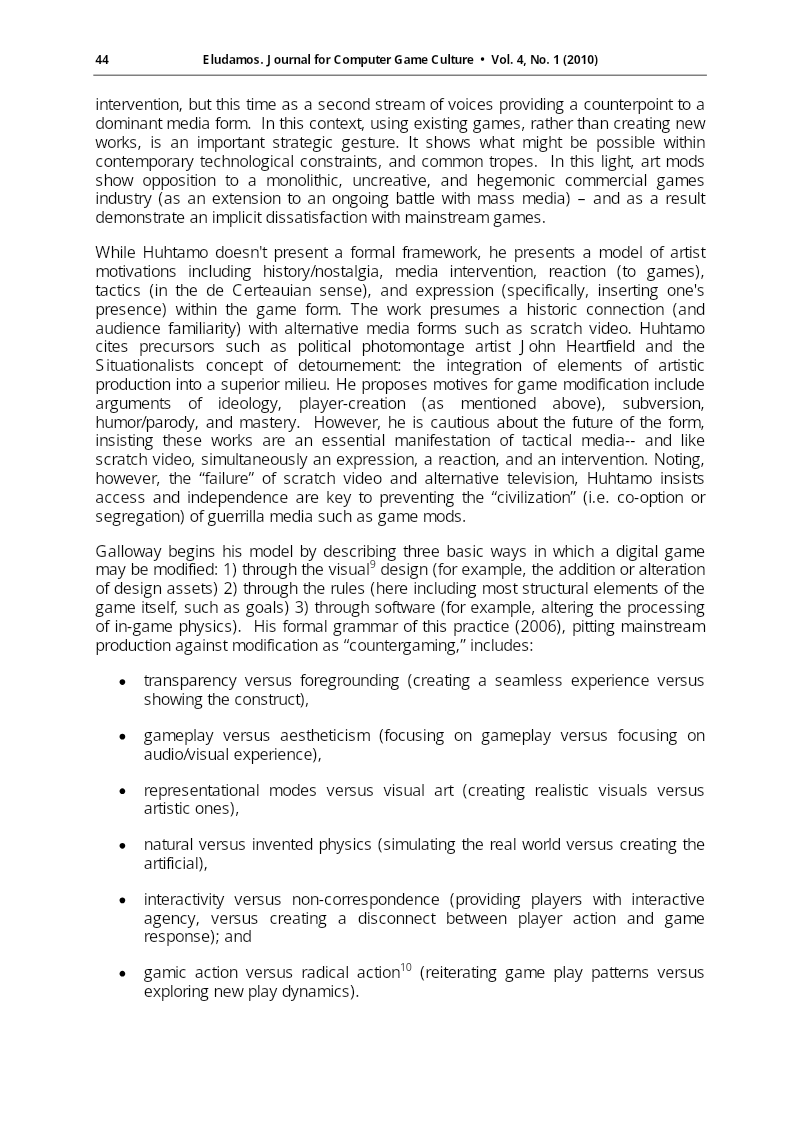
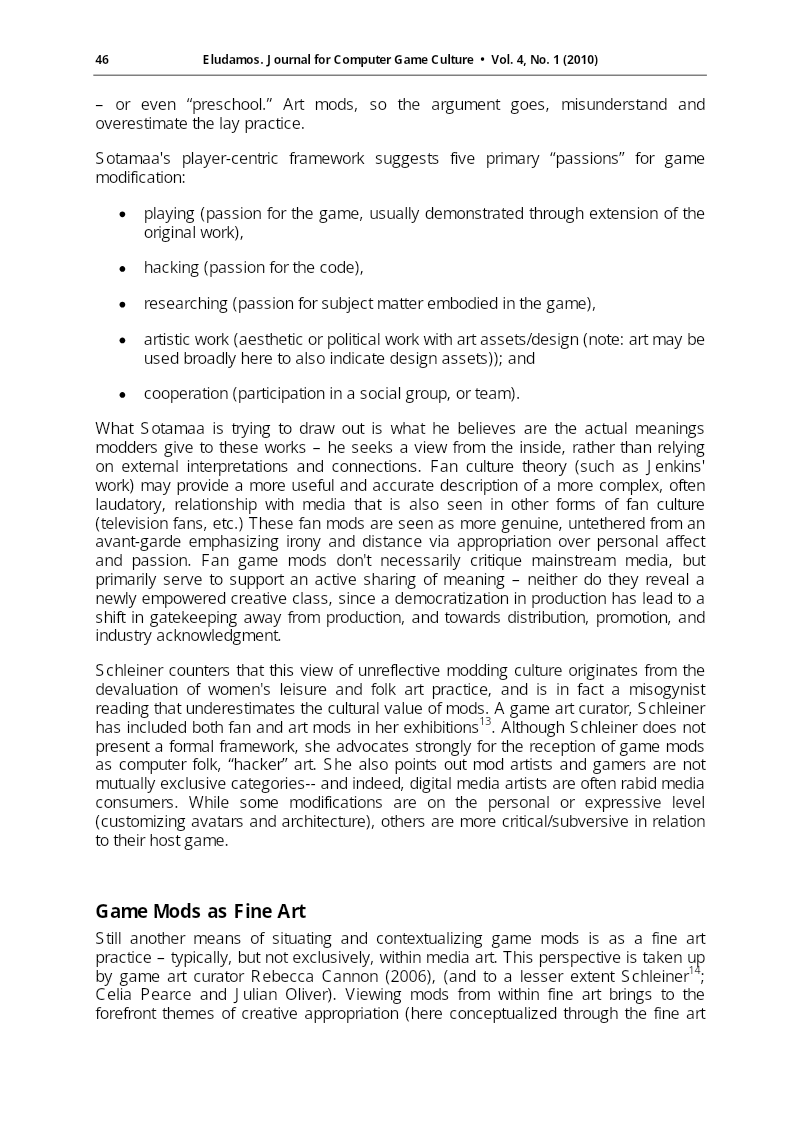
Cindy Poremba's "Discourse Engines for Art Mods" argues that the meaning and value of art mods, modifications of commercial video games created as artistic works, depend substantially on the interpretive framework applied to them. Drawing on her 2010 Eludamos paper and the broader critical literature, the analysis identifies four competing discourses: open authorship, which frames players as co-authors in the lineage of Barthes, Foucault, and Eco; alternative media, which casts mods as countergaming against the commercial industry through Huhtamo, Galloway, and the Situationists; folk practice, which values vernacular modding culture via de Certeau and Jenkins; and fine-art contexts that emphasize artistic intent and appropriation. Poremba's central claim is that none of these frameworks is neutral, and that some, particularly the open-authorship approach, can obscure the distinction between artists and fan-modders.
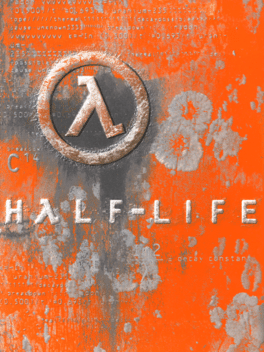
The work's case study is Brody Condon's Adam Killer (1999–2001), a Half-Life modification whose meaning shifts markedly with framing. Readings range from a personal response to media violence, to a formalist exploitation of game bugs, to a critique of the industry, to a performance-art gesture of release and self-expression, with Condon himself resisting interpretations that fixate on violence. Scholars such as Schleiner and Sotamaa reach opposing conclusions about whether the work constitutes genuine artistic intervention or mere fan-culture provocation, illustrating that its status remains contested.
Poremba's analysis extends to broader unresolved questions: whether "art modders" form a unified category, how to handle contested concepts like appropriation, and whether modding is inherently parasitic. The 2008 removal of Wafaa Bilal's Virtual Jihadi from an RPI gallery serves as a case of how interpretive ambiguity can produce misunderstanding and censorship. Poremba concludes that interpretive frameworks are indispensable for navigating such risks, but that they must be tested against close critiques of individual works rather than applied as fixed templates.
Each row is a game or company this document names, each column a document, oldest first. A mark means that document names it. Select a row to see those documents.
Eludamos: Journal for Computer Game Culture · 2026
Eludamos: Journal for Computer Game Culture · 2026
Eludamos: Journal for Computer Game Culture · 2026
Eludamos: Journal for Computer Game Culture · 2026
Eludamos: Journal for Computer Game Culture · 2026
Eludamos: Journal for Computer Game Culture · 2026
Eludamos: Journal for Computer Game Culture · 2026
Eludamos: Journal for Computer Game Culture · 2025
Eludamos: Journal for Computer Game Culture · 2025
Eludamos: Journal for Computer Game Culture · 2025
Eludamos: Journal for Computer Game Culture · 2025
Eludamos: Journal for Computer Game Culture · 2025
DiGRA · 2026