1 free read left. Create a free account for unlimited reading + AI research.
Create free account
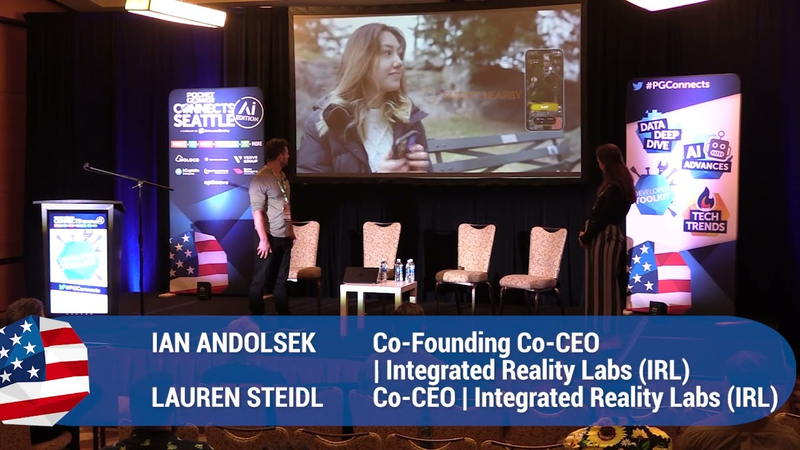
Session: Integrating Games with Reality, Lauren Steidl, & Ian Andolsek,
Key insights
6 takeaways- 01Integrated Reality (IR) is a gaming framework that uses sensor data like Bluetooth, GPS, and NFC to enable screen-free, location-based social play, distinguishing it from screen-reliant augmented reality.
- 02Integrated Reality Labs is developing 'Slap,' a flagship product designed to automate game mechanics like eliminations and proximity tracking for large-scale, long-term social games.
- 03The platform aims to professionalize unstructured social games by replacing manual coordination and self-reported outcomes with automated game logic and sensor-verified interactions.
- 04Technical development is focused on refining sensor fusion between GPS and Bluetooth, with future integration plans for ultra-wideband technology to increase tracking accuracy.
- 05The company is currently in the beta testing phase and targets a commercial launch within approximately six months.
- 06The company has secured intellectual property through patents covering its specific geolocation and sensor-based tracking systems.
Ask AI about this video
Transcript
[Music] thank you [Music] so we're here today on the developer toolkit track and we're going to get started in a moment with Lauren and Ian from integrated reality labs are you guys ready to go we are okay we'll take it away thank you so much thank you all right thank you all so much for coming today uh we are the co-founding co-ceos of integrated reality Labs where we are building games and tools that enhance play in the real world um before we dive in I will give a little background on myself and same
with Ian um so we're we go way back best friends from high school always wanted to start a company together um after graduating from high school I went to Princeton and then worked at a a digital therapeutic startup at the intersection of healthcare music and Technology um was second higher there were lots of different hats helps build the company from the ground up and then just a few months ago started this company and that's why we're here today and Ian you want to give a little background yeah thanks Lauren so my name is Ina Dulce grew up in Portland Maine as well I went to a small little school called Haverford um graduated and very quickly got into Mobile startups before IRL I was the co-founding CEO of my climb which is an industry-leading rock climbing app where I led commercialization and monetization cool um so we are going to Dive Right In in just a second just wanted to quickly ground us all in the agenda for the talk
it's just going to be a quick 20 minute one and we're going to try to leave some time uh for a q a at the end but we're going to start by demystifying integrated reality um we'll go into kind of where we see integrated reality fitting into the broader XR category um and specifically looking at some of the key differentiators between ir and augmented reality uh since they're very closely related but there are some some important subtle subtle differences and also give you some examples of integrated reality tools and games and specifically we'll home in on the product that we're building because as you can probably tell from our name we are really excited about integrated reality and that's what we're focused on building first so to make sense of integrated reality it makes uh it's important to first think about augmented reality so augmented reality superimposes
um Graphics or game Dynamics onto a virtual display that users then interact with integrated reality on the other hand captures real world Dynamics using sensors so this could be Bluetooth GPS NFC and integrates it into the game Dynamics in a way that is fundamentally screens free so the experience is enhanced by the digital device but it's dictated by the user's interaction in the real world so what exactly are integrated rally games some examples in sports for example would be apps like Kaya my climb slopes so if we're going to take let's say rock climbing for example a user may climb may send climbs and the behavior that they're doing is going to
be recorded in the app and automated from there in terms of provision of analytics and so on so it does not require them to change their behavior or their their habits in real life as opposed to um AR so Pokemon go obviously was uh wildly successful AR game uh but subsequent arrogance have not been able to capture the same degree of um interest or popularity and fundamentally it's because uh it's designed around um a single player a single player mode whereas um foreign I think like the main differences when we're looking at augmented reality and
integrated reality are when you think of augmented reality the game is mostly fun insofar as um you're looking at your screen and there are screen overlays on the on the real world around you and as Ian was mentioning you know big difference between AR and IR is you know the technology is facilitating and enhancing the in-person play but it's at the most core moments of the game there's probably uh not even a phone in front of your face um so like the rock climbing apps you can put it in your pocket you can climb it's gamified fitness apps there's a lot of really interesting Fitness games um that you know just are using accelerometers on your phone and your movement in the real world to dictate gameplay um so they run the gamut they come in all shapes and sizes but um the the General through lines but and similarities between AR and IR is it tends to be facilitated by mobile technology so you can put it in your pocket and go about the real world
um and there's potential for social interactions and they generally have a location-based component um so this facilitates better connection in real life uh so this looks like at least in the case of uh slap the game that we're creating and integrated rally Labs um being able to navigate the real world and play uh without um being stuck interacting with your mobile device in the case of apps like my climb Kaya slopes and turf this looks like being able to take part in the recreation that you're already doing whether it's walking running skiing Etc and having the data recorded without having to interface with the device itself and this opens up new types of play so for example in the case of slap users can
play for weeks even potentially months at a time without having to um have the the application or the game experience interrupt them in their day-to-day life or disrupt them so um you might at this point wondering what is slap which is the first game that we're developing um and it looks fundamentally different from some of the integrated reality games that we're we see out there right now as I mentioned like the fitness games running games things like that where you know Bots or fake zombies like might be chasing you which are really interesting um but essentially what we're trying to do is look at how we can kind of like level up in-person social games um and we're when we say social games we're mostly thinking about uh tag based games like capture the flag and large scale tag and Senior assassin has
anybody in the room heard of senior assassin or played it okay yeah so see some hands um for anybody who doesn't know um it's it's this game that's played usually in dozens or even hundreds strong with you know people running around trying to get uh everybody's it they're trying to tag their person usually squirting them with squirt gun or a Nerf gun and once that person's out they inherit their target and so on and so forth until there's one person or a team left standing and it's fun and chaotic but there's also a lot of unfun parts to it so there's there's millions of people that play this game every year but there's a lot of challenges that we thought that integrated reality could kind of help address and the first of which is there's way too many platforms that these players are required to navigate for any of you that might have played senior assassin in the past you're probably familiar with I'll just skip to this is actually
like from the rules of a senior Assassin game that's going on right now you have to use canvas you have to venmo somebody money you have to have um Snapchat uh the map on 24 7 so that you can't hide out in your house and therefore win the game just because you haven't really participated you have to take video evidence because at the end of the day it's all self-reported and uh you know this is it's an inventive way of addressing the problem but it's it ends up really like limiting the participation and it's a huge pain for the organizers to set up um and that also brings us to another issue that we recognized that we think integrated reality can really help ameliorate which is that um the organizers are generally as the games get more fun and bigger they are managing huge spreadsheets with sometimes hundreds of people and we've talked to many organizers who say like it's more stressful than any AP test
that they're taking that year or their final exams they're like I am so much more stressed about managing my senior assassin uh competition um and usually those people it's it's kind of a labor of love they usually aren't the ones playing they're just managing the eliminations and reassignments and everything um another thing that we we thought could really benefit from IR when it comes to these in-person real world games is um just having there be a community that isn't just you know Word of Mouth um if you know right now it's usually kind of like kept specifically within a school system or like your existing groups of friends but there might be people in your neighborhood or um in like the city nearby that like want to play these games and you can imagine that they could be so much bigger um if there was just one unified community and communication platform um and at the end of the day as we mentioned earlier self-reported outcomes never fun especially uh when you are
trying to win a game that might have hundreds of dollars on the line uh one other thing that integrated reality is really going to help with here is get rid of guns in schools even though they're Nerf guns and uh squirt guns if you've looked up senior assassin it's gotten a lot of negative PR from teachers or even police who have shown up on school campuses by accident because they thought that there was something dangerous going on so we're trying to get the the gun iconography out of the equation here and the way that we're doing that is by building this one seamless platform and we figured we could just show you a trailer [Music] okay [Music]
okay [Music] thank you [Music] all right so uh we are looking at the timer in front of us and we see we only
have five minutes left so um hopefully that gives you a better sense of what we're doing and how integrated reality is core to um slap as a game um I should also mention like our broader vision is that we're going to incorporate um lots of different game modes and mechanics even custom ones um that kind of take these tag based games to the next level with this technology um so there's other popular games that people might have heard of like um humans versus zombies and werewolf and Capture the Flag so we really see there being an opportunity to have an entire world of play right at your fingertips um and we also should say again uh just pay homage to the other integrated reality companies that have already existed and uh you know captured uh the attention of millions and millions of players um you know we're not the first and we're definitely not going to be the last but we're really excited for this next generation of gaming and we have time for some questions if anybody has
any I was just wondering based on that video I saw the 10 feet away kind of thing so what sort of sensors are you integrating with presently we're using Bluetooth and GPS but we're potentially going to be interacting with or interfacing with other sensors so I know that the the range on Bluetooth is not reliable let's just basic signal strength right uh are you going to use ultra wideband that becomes more common in the phones so Mark Elgin is actually our CTO I think he can probably yeah we'll kick this over to our rocket scientists up front the answer is yes use a Ultra wide band at some point later right now basically we just have a Sensor Fusion problem between uh GPS and Bluetooth Bluetooth accuracy is actually really quite good if you're up close it's terrible if you're far away but it's actually quite good if you're up close so we're we basically have a set of algorithms that figures
out how much do we believe location services and how much do we believe Bluetooth and up close we believe Bluetooth a lot more than location services as more and more sensors become more and more available uh you know in next Generation devices then yes we'll integrate all that stuff thanks so much for that for the question deaf I think you had a question in the back I was wondering when I saw the video how so if I see someone that is is it a stranger so we're most likely going to at least early on have this be we're probably going to see this mostly played with games of friends but the idea is that if we create a world of people that all have this on the phone you could imagine playing with other other folks but how far away am I when I press that because I press the slap and that person get a notification and then they need to run and I run off there's that parade yes so when do I press the slab button because I guess I could you know walk up to and
press it and then directly we're going to have to test this um but there's likely because we're still pretty early stage we actually only quit our jobs to work on this full-time about three months ago um but that's a really good question and probably will one have to think about it in the context of user testing but um do you want to so to start we're setting a default of 15 feet from there um we've got some hypotheses that perhaps it should actually be triggered by an individual running up and just getting close to someone yeah so you know once you are within three feet you're out these are things that we have to do some some detailed user testing on before we're we can be certain though on the App Store cool and then I was wondering are you
because you said you're planning on sorry someone gave me a microphone and walked away and I was stuck with me for the rest of the day um yeah it will spread naturally but is there like what is people going to win what is the end goal of slapping people yeah so that's that's a great question right now people are actually betting on these games they're they're putting in money into a pot and The Winner Takes out yeah so that that's something that we can we can recreate by means the app if it's uh like a betting free experience yeah then you know we can have skill progression other sorts of things where users uh become say the best in their local area and you know we're taking advantage of leaderboards yeah it's very interesting we've done a lot of social listening and there's um hundreds of accounts like this one um you know
basically uh showing the game progression at schools and like almost every single one has at least like a five dollar game buy-in um up to 20 30 so um just to Ian's point it's pretty interesting what's already happening cool and when are you launching and I'm going to give you back the microphone yes please so we are currently um taking beta testers are wanted so tell your friends uh but um we're still you know we're still working through bugs still uh you know marching toward developing our MVP uh but we could really you know continue to use help and then do you want to talk about commercial launch from there commercial launch uh likely another six months after after that but I think we have one more question from the handsome man yeah well thank you I thought you guys did a great job and it's not just because I'm an investor um is there um is there any intellectual property around this yeah there's yeah there there is indeed intellectual property we've got two patents that we filed around the geolocation uh and some
of the social uh elements of the game thank you very much please give up one thank you [Applause] [Music] [Applause] [Music]
Summary
Integrated Reality Labs explores the emerging category of integrated reality (IR), a gaming framework that leverages real-world sensor data to facilitate social, location-based play. Unlike augmented reality, which relies on screen-based overlays to superimpose digital graphics onto the physical world, integrated reality uses sensors such as Bluetooth, GPS, and NFC to capture real-world dynamics. This approach allows for a screen-free experience where the game is dictated by the user’s physical actions, enabling players to engage in activities like fitness, sports, or social games without constant interaction with a mobile device.
The primary thesis is that integrated reality can professionalize and scale unstructured, in-person social games—such as large-scale tag or capture-the-flag—by replacing fragmented, manual coordination methods with a unified digital platform. Current popular games like "Senior Assassin" suffer from operational inefficiencies, including reliance on multiple third-party apps, complex spreadsheet management, and self-reported outcomes that lack verification. By utilizing sensor fusion algorithms to track proximity and movement, integrated reality platforms can automate game logic, eliminate the need for physical props like toy guns, and provide a secure, scalable infrastructure for community-based play.
The development of the company’s flagship product, Slap, serves as a case study for this technology. The platform is designed to manage complex, long-term social games by automating eliminations and tracking player interactions within a specified range. Technical development currently focuses on refining sensor fusion between GPS and Bluetooth, with future plans to incorporate ultra-wideband technology to improve accuracy. The company is currently in the beta testing phase, targeting a commercial launch within approximately six months, and has secured intellectual property through patents related to its geolocation and sensor-based tracking systems.