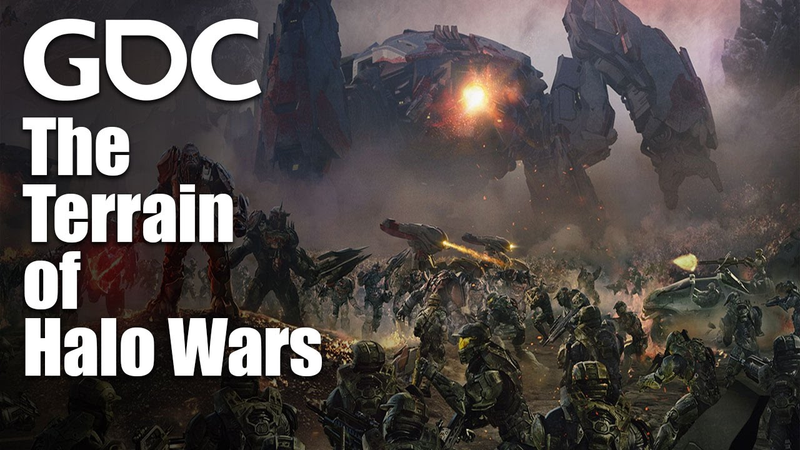
Military training simulations frequently suffer from a disconnect between tactical requirements and technical execution, as instructors often lack the specialized 3D modeling expertise necessary to generate or modify terrain. Current industry tools are either too complex for non-technical users or offer automated generation methods that lack the granular control required for specific training scenarios. To bridge this gap, a declarative, sketch-based framework has been developed to empower instructors to define terrain properties intuitively. This methodology shifts the focus from manual vertex manipulation to high-level intent, allowing for the rapid creation of diverse, scenario-specific environments that meet precise tactical needs.
The framework utilizes an ecotope-based grid system where users sketch rough layouts that the software then translates into high-fidelity 3D models. By integrating advanced procedural generation techniques—including multi-fractal noise, sophisticated erosion filters, and GPU-accelerated vegetation distribution—the system ensures that simple user inputs result in consistent, realistic, and visually detailed landscapes. This layered data structure automates the technical heavy lifting, effectively removing the barrier to entry for non-experts while maintaining the high resolution required for effective military simulation.
Evaluations conducted by military subject matter experts confirm that this approach significantly enhances both accessibility and operational efficiency. By streamlining the development pipeline, the framework enables the rapid iteration of training environments, ensuring that simulations remain relevant and responsive to evolving tactical objectives. This shift toward declarative modeling represents a critical advancement in military training technology, successfully balancing the need for professional-grade environmental fidelity with the practical necessity of user-friendly, rapid-deployment tools.