1 free read left. Create a free account for unlimited reading + AI research.
Create free accountWhitepaper DiGRA
1 free read left. Create a free account for unlimited reading + AI research.
Create free accountWhitepaperDiGRA
Distilling the key insights…
This extended abstract, presented at DiGRA 2018 and authored by Federico Alvarez Igarzábal of the University of Cologne and TH Köln, argues that players perceive and navigate video games through the detection of causal relations, and that Leonard Talmy's semantic theory of force dynamics offers a useful framework for understanding this process. Talmy's model holds that causation is grasped through a basic script in which an agonist tends toward an action and an antagonist opposes or enables it, giving rise to causative, despite, and letting patterns. The author supports this model by pointing to its cross-linguistic prevalence, its resemblance to diSessa's phenomenological primitives, experimental evidence from Phillip Wolff, and its similarity to pre-modern impetus theories of physics.
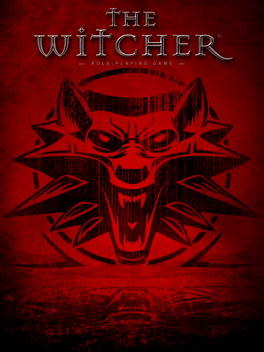
The paper's central claim is that players actively search for agonist and antagonist roles within game worlds in order to make sense of cause and effect. Within this framework, the author identifies "triggers," entities that initiate events only when the player interacts with them. The first problem identified is that triggers make time in games player-centric: events that appear independent of the player are in fact caused by the player character's presence, which the player can detect, making in-game time feel artificial. The second problem concerns open-world games, where a narrative conveys urgency while mechanics grant freedom to ignore the story. The paper illustrates this with The Witcher 3: Wild Hunt, in which the main quest does not advance until the player returns to it, so the protagonist cannot "let" the story's events occur by being absent. The author characterizes this as a case of ludonarrative dissonance.
The study is primarily theoretical and conceptual, drawing on linguistics, cognitive psychology, philosophy of causation, and game-engine design, with a single detailed case study rather than empirical player data. Its scope is therefore analytical: it proposes force dynamics as a lens for both player psychology and design tensions, offering the conclusion that the theory explains how causal intuitions are formed while also exposing mechanical features of the medium that conflict with those intuitions.
Each row is a game or company this document names, each column a document, oldest first. A mark means that document names it. Select a row to see those documents.
DiGRA · 2019
DiGRA · 2019
DiGRA · 2019
DiGRA · 2019
DiGRA · 2019
DiGRA · 2019
DiGRA · 2019
DiGRA · 2019
DiGRA · 2019
DiGRA · 2019
DiGRA · 2019
DiGRA · 2019
DiGRA · 2016