1 free read left. Create a free account for unlimited reading + AI research.
Create free account
Things I Learned on My First Game
Key insights
6 takeaways- 01Prioritize disciplined iteration over constant innovation to avoid overwhelming players and disrupting established conventions.
- 02Apply innovation selectively, as excessive novelty often leads to poor game comprehension and wasted development resources.
- 03Conduct thorough testing of UI layouts and system mechanics early in the development cycle to minimize costly rework by artists and programmers.
- 04Balance creative ambition with the technical and logistical realities of team-based production to ensure project success.
- 05Accept that administrative tasks like managing documentation, spreadsheets, and wiki entries are essential for maintaining project momentum.
- 06Develop a professional habit of analytically deconstructing the design intent behind everyday objects and external media as a long-term skill set.
Ask AI about this video
Transcript
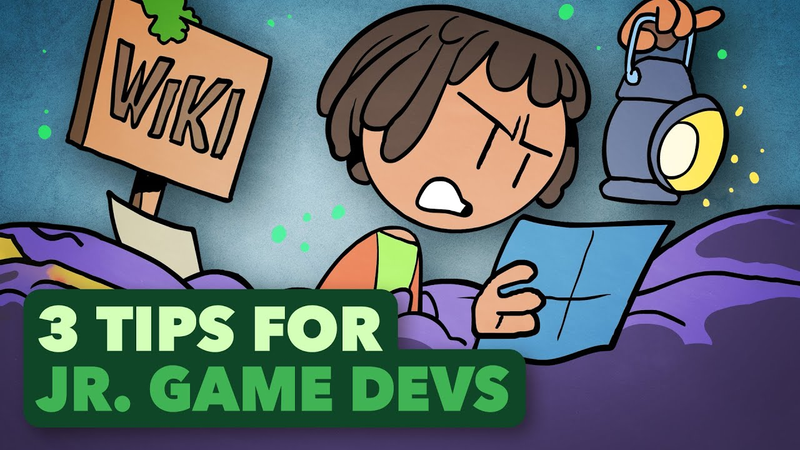
In our Design Land series, you know the one, where James has been writing us letters describing the many design challenges he's facing while working on his new game couched in the narrative wrapper of traveling through a mystical game design themed jungle. Yeah, that one. Well, we realized we covered a ton of topics from the perspective of someone who's been in game dev for a very long time. However, there's actually one really important topic that we haven't covered yet. And it's one that James doesn't really have an accurate perspective on anymore. What it's like developing a game today as a brand new designer. So, for today's episode, we asked one of James's junior designers, Aiden, to write us a letter from Design Land and give us his unique perspective on starting out in the industry and what he thinks all junior devs should know. Thanks so much to Wren for being a simple and effective way to help make a difference in the climate crisis. Learn more about them after the episode. Dear Matt, hi, Aiden here. So, you're a brand new designer and you've been dropped out of a plane into the middle of the Design Land jungle. There's a lot of treacherous terrain
ahead and it won't always be easy to navigate, but throughout your journey, remember that it can be incredibly rewarding. Not to mention, in this jungle, there's all sorts of paths that you can take carved out by the designers that came before you. Or you can even go your own way, innovating and clearing brand new paths. But should you choose that option, be careful because straying too far and too often can be dangerous. So, one of the first things I learned to focus on as a new designer is figuring out exactly when and where to innovate. And of course, it's tempting to want to immediately express the hoard of great ideas that you've been saving up for this first job. Or even want to prove that you've got the design chops to make something that no one else has ever seen before. But one thing to always remember is that innovating takes time. And in Design Land, time is a limited resource more valuable than gold. So, maybe don't spend days trying to make everything unique when that time could be better spent working on specific systems that should be unique to the specific game you're making. Also, something to note,
while people do praise innovation and say they want more of it, in practice I've found that oftentimes they don't. Too much iteration can reduce game comprehension and slow down the play experience as players learn new mechanics, rules, or controls. Seems like what people really want is innovation on a few things that make a game feel unique, but not so much where they have to relearn all of the conventions they've picked up from playing a lifetime of other games. Makes sense. So, knowing the places in your game that are worth innovating on and how much time you have to spend on that innovation is an incredibly important skill to develop when working with a team, which does bring us nicely to the second thing I think all new designers should know. Rather than constant innovation, it's really consistent iteration that's truly the name of the game. You're going to iterate on everything, especially early in the design process, where the iteration is cheap. Iterating on a system allows you to come up with an increasingly robust set of options and allows you to cover more of the "What if my players did this?" scenarios. Iterating also gives you more chances to think about
potential solutions to said scenarios, and all of that work that you do early will save the rest of your team a ton of time because you did the iteration where it was fast and cheap, rather than requiring other team members to spend time later iterating on more developed systems a second, third, or fourth time where it is much slower and much more expensive. And having the team spending less time doing that gives them more time to polish and get other cool stuff into the game, which is always a win. For instance, let's say you're designing a stat display window in an RPG, right? And you're making a mock-up to give to a UI artist. You're definitely going to want to have iterated through a lot of variations yourself to find a small set of solid options before asking anyone else to work on it. Because again, one of the worst things you can do as a designer is to have an artist or a programmer spend weeks working on something just to later tell them that they have to redo it because you missed something obvious. Remember, going with your first instinct is rarely the best choice and iterating and trying new ideas can help you find things your
initial idea was lacking. So, what do those iterations look like you ask? Well, let's try something very small and simple from that RPG stat window as an example. When you're looking at it, check out all of the finer details. Should the ability names be centered for instance? Aligning them to the right is probably wrong, but let's see what it looks like anyway. Okay, let's align them to the left. Now, the ability titles. Top left, top middle. Ooh, what about bottom middle? Nah, top middle looks better. Wait, why is there a colon there? Has it been there the whole time? Geez, get rid of that. Okay. All right. After presenting a bunch of options quickly to yourself, you found your favorite and can pass that along confidently to the rest of the team. Iterating over and over may not sound exciting or glamorous because it's not, but doing this does give you a better sense of why certain choices work better than others. And as you develop this sense, you'll notice your first instincts actually do get better. Just remember that no matter how good they get, you should never stop these trials of iteration. Rather, just become faster at them because without them you won't know if there was a better option. Oh,
and uh speaking of things that aren't exciting or glamorous, the third thing you should know is that as a junior designer, you're going to be doing a lot of something we here in design land call grunt work. Yay. Heck, as a senior designer, you're actually going to be doing a lot of that as well. This is the work that nobody wants to do but that must get done in order to keep development moving forward. You'll spend time traversing the murky waters of the company wiki, mapping out where each entry is, where you'll need to add new entries, and where you'll need to get rid of old ones. You'll spend hours tangled in the spreadsheet vines, changing values and creating functions. And every so often you'll get to grind away days in the game design oasis, designing systems with your fellow designers only to emerge back into the desert where you'll spend yet more time adding design docs to the dunes. Yeah, even when there are those small glimpses, it's not all fun and it can be really hard work, but it's an essential part of the job. Though it does help to remember that grunt work does help move you forward to those oasis moments where
you see what you've spent hours designing implemented into the game, where you see the fruits of your labor come to life. And I got to be honest with you, nothing tastes sweeter than that. And finally, when you emerge from the other side of design land at the end of a project, you'll find that you've left your mark on it, added your own pathways, discovered new vistas, made a small piece of it your own. But what you may also find that you didn't expect is that the process of working through design land has actually changed you as a person as well. Because, and here's the real secret, it'll have gotten into your head. All right, what do I mean by that? Well, the more time you spend in design land making games, the more it kind of changes how you see the rest of the world. Without even realizing it, maybe you'll find yourself picking apart the design of a new coffee maker or something and how easy or frustrating it is to use. You'll find yourself getting more irritated with push doors with vertical handles. Mhm. And as you play games you didn't work on, you'll notice more design choices that would have never registered with you before. It's
incredible. Not only will you start to perceive these things, but you'll also start to understand them and the intent behind them. You'll start to see their design and analyze why it does or doesn't work. And every time you do this, it sort of feels like a revelation. It's just awesome. This is the true gift of design land. It's what makes braving the jungles and deserts worth it. And it's what you get for knowing when to innovate, for iterating whenever possible, and for pushing through the grunt work. Thanks so much for reading my letter, Matt. And to all you future designers out there, I truly can't wait to see what you come up with. Yours truly, Aiden, junior designer. And you know, speaking of the future, I'd like to talk for a moment about a way we can help design a better one for ourselves. You know, as I've looked around for some of the best practices to help out in this space, one method that kept coming up was carbon offset programs. Though, I've always been super skeptical of those. I mean, sure they can theoretically work, but their current marketplace is set up in such a way that many programs seem to be either inefficient at best or at worst, basically incentivize scams. But then we
learned that our Nebula friend, Sam from Wendover, who actually made a awesome video about said skepticisms, by the way, had been talking with a group called Wren, who he thinks is pretty much as good as it gets in the carbon offset market. So, I wanted to learn more for myself. Turns out, Wren is a website where you can calculate your carbon footprint, then offset it by funding a diverse portfolio of carbon reduction projects. Things like tree planting, mineral weathering, rainforest protection, etc. However, again, as I've learned in the past, these sort of services are really only as good as the accuracy of their project evaluations, which is why I really like to see that one of Wren's key differentiating points is actually how focused they are on the small details, and not just at a project's inception, mind you, but also how it progresses over time, which is just really important. For example, one of these well-watched projects that's near and dear to both my and our studio director Jeff's heart is biochar in California, which helps prevent wildfires in old-growth forests by removing dead and flammable trees and then using a cutting-edge process to turn the trees' biomass into biochar, keeping carbon out of the air for like
thousands of years. Which, side note, is just very, very cool. And you know, you can actually learn more about them and all of Wren's projects for yourself over on their super clear website that goes into just a ton of fun minutia. But you know what else you can do on their website? Answer a few questions about your lifestyle to help calculate your carbon footprint, and then learn some nifty ways to help reduce that. Plus, you can even set up a monthly offset to reduce your personal contributions to the climate crisis, which turned out to be less expensive than I thought it would. And this is a cool thing. Right now, Wren is offering the first 100 people who sign up with our link in the description 1 month of carbon emissions offset for free. Look, I want to be very clear here. We all know that our individual carbon emissions are only one small part of the problem, but it really is going to take a lot to end the climate crisis. And you can start helping out today by learning more on wren.co/start/extracredits. Thanks, everyone. A million big old thanks to Skyler Holmes, Kulkoy, Joseph Blain, Dominic Valenciana, Casey Musser, Arclight Games, Angela Valenciana, and Amad Ziad Turk for being fantastic legendary patrons.
Summary
The primary purpose of this guidance is to provide junior game developers with a realistic framework for navigating the professional design landscape. The central thesis posits that successful game development relies less on constant, radical innovation and more on disciplined iteration, efficient time management, and the acceptance of essential, unglamorous administrative tasks.
Key findings emphasize that while innovation is valuable, it must be applied selectively to avoid overwhelming players or disrupting established conventions. Excessive innovation often leads to poor game comprehension and wasted development time. Instead, designers are encouraged to prioritize consistent iteration, particularly during early development phases when changes are cost-effective. By thoroughly testing variations—such as UI layouts or system mechanics—before involving artists or programmers, designers prevent costly rework and ensure that final implementations are robust and well-considered.
The analysis further highlights the reality of "grunt work," which includes managing documentation, spreadsheets, and wiki entries. Although these tasks are often tedious, they are fundamental to maintaining project momentum and facilitating the "oasis" moments where design concepts are successfully realized in-game. Ultimately, the professional journey transforms the designer’s perspective, fostering a permanent, analytical habit of deconstructing the design intent behind everyday objects and external media. This shift in perception is presented as the most significant long-term reward for enduring the challenges of the industry. The insights are framed as practical, experiential advice for those entering the game development field, focusing on the balance between creative ambition and the technical realities of team-based production.















Comments