1 free read left. Create a free account for unlimited reading + AI research.
Create free accountWhitepaperKinephanos
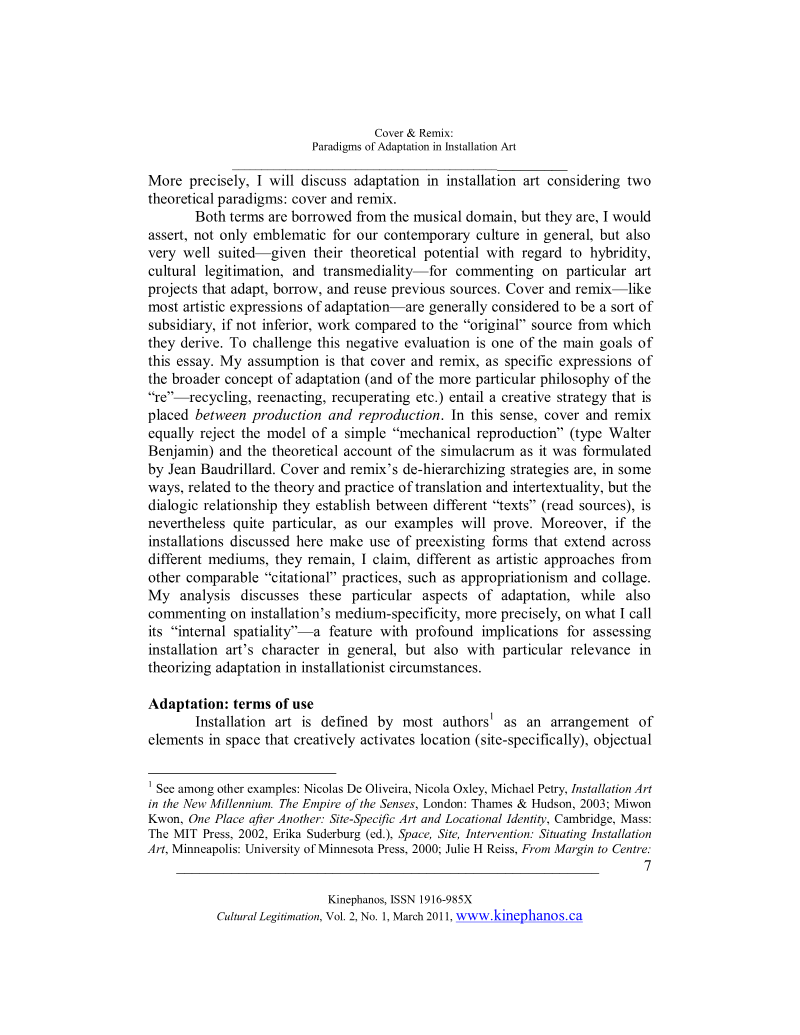
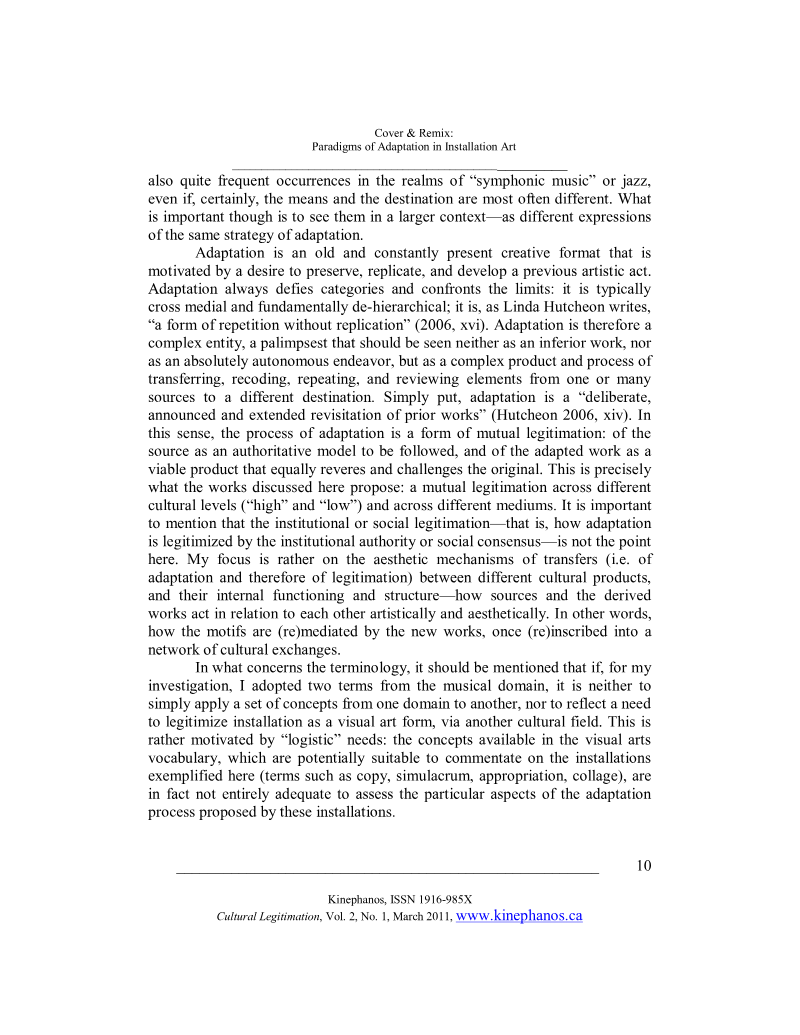
These paradigms treat established cultural motifs as raw material for subjective discourse. This approach rejects the traditional hierarchy that prioritizes original works over derivatives.
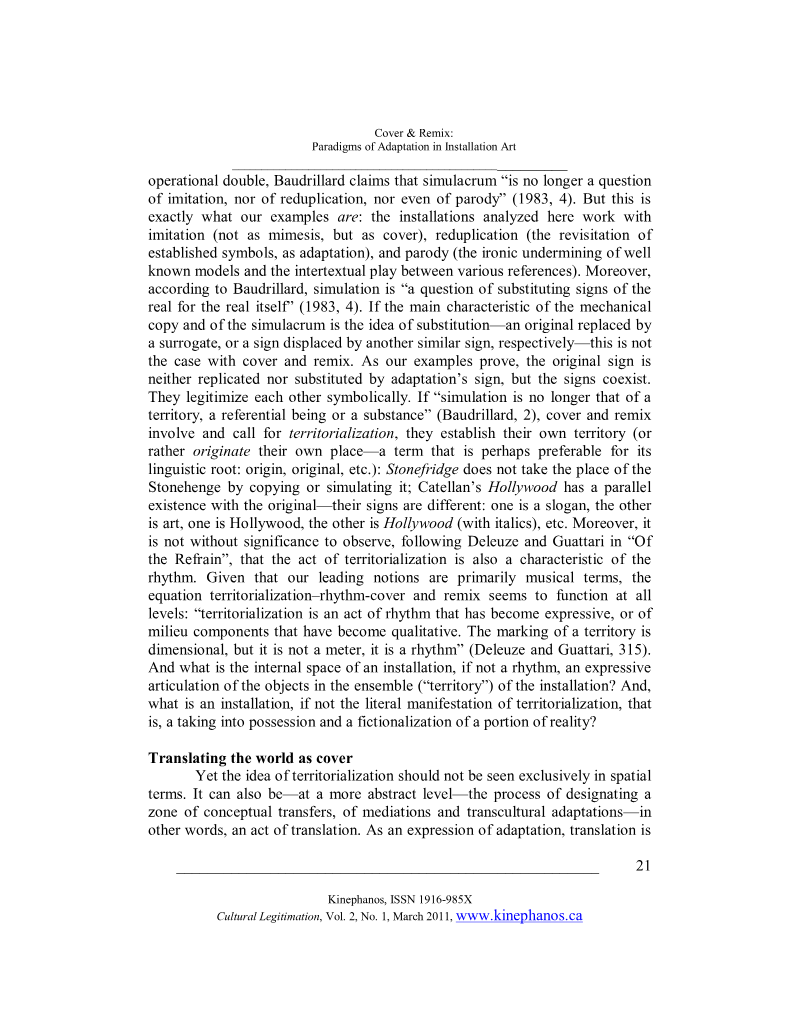
Installation art increasingly relies on the paradigms of the cover and the remix to navigate the complex space between production and reproduction. By treating established cultural motifs as raw materials for subjective discourse, artists move beyond traditional hierarchies that prioritize the original over the derivative. These adaptive practices function as creative translations that reject the binary logic of mechanical copying or simulacra. Instead, they establish a networked relationship where the adaptation and the source coexist, mutually legitimizing one another while preserving the historical testimony and aura of the original work.
Central to this aesthetic strategy is the concept of internal spatiality, which defines the physical and phenomenological infrastructure of an installation. By utilizing objects and spaces as externalized memories, artists transform static works into open systems that facilitate ongoing dialogue. This approach effectively de-hierarchizes cultural sources, positioning the adaptation as an independent, hybrid entity rather than a mere reproduction. These works operate as mobile platforms for meaning, prioritizing the message and the reconfiguration of cultural memory over the rigid status of authorship.
This analytical framework challenges established theories of mechanical reproduction and simulation, such as those proposed by Walter Benjamin and Jean Baudrillard. By examining these adaptive processes across diverse media and cultural levels, it becomes clear that contemporary installation art functions as a form of territorialization. These practices do not seek to replace the source but rather to re-enact and reinterpret it, creating a sophisticated middle ground where the act of adaptation serves as a vital, generative force in modern artistic production.



Kinephanos · 2026
Kinephanos · 2026
Kinephanos · 2026
Kinephanos · 2025
Kinephanos · 2025
Kinephanos · 2025
Kinephanos · 2025
Kinephanos · 2025
Kinephanos · 2025
Kinephanos · 2025
Kinephanos · 2025
Kinephanos · 2025
Replay. The Polish Journal of Game Studies · 2026

































Comments