1 free read left. Create a free account for unlimited reading + AI research.
Create free accountWhitepaper DiGRA
1 free read left. Create a free account for unlimited reading + AI research.
Create free accountWhitepaperDiGRA
The report presents a partial, deliberately biased archive of roughly fifty years of feminist game art. It is meant to start collective canon formation.
"Connections: An Intergenerational Feminist Game Art Timeline" presents a partial, deliberately biased archive of roughly fifty years of feminist game art, positioned as a starting point for collective canon formation rather than a definitive history. Its central argument is that existing scholarly frameworks for game art are overly constraining, and that feminist questions about who gets to define the field, including the artists themselves, should drive future research. The work draws on interviews with seven artists, among them Judith Doyle, Auriea Harvey, micha cardenas, and Angela Washko, who largely resist labels such as "avant-garde" or formal game-art categories and instead emphasize direct, often non-commercial relationships with audiences and the use of games as spaces for personal, cultural, and community expression.
Across the timeline, the authors identify several recurring themes. Bodies and embodied experience remain central to the work, and women-led virtual reality art from the 1990s, though significant, was later overlooked. A notable shift has also occurred from treating digital technology as an object of inquiry to treating it as a standard artistic tool. Games are frequently framed as a performance form, a perspective voiced by artists including Tale of Tales and Mia Washko. Despite nearly five decades of technological change, the authors find that shared personal and political concerns persist across generations.
The scope encompasses artists and milestones spanning roughly 1968 to 2016, with particular attention to cyberfeminist activity, including the 1991 Cyberfeminist Manifesto and the founding of VNS Matrix. The supporting bibliography cites works such as Tale of Tales' The Path and Sunset, Angela Washko's World of Warcraft projects, and Brenda Laurel's Placeholder. To maintain an accessible and expanding record of this work, the authors propose an online database as a means of sustaining the archive over time.
Each row is a game or company this document names, each column a document, oldest first. A mark means that document names it. Select a row to see those documents.
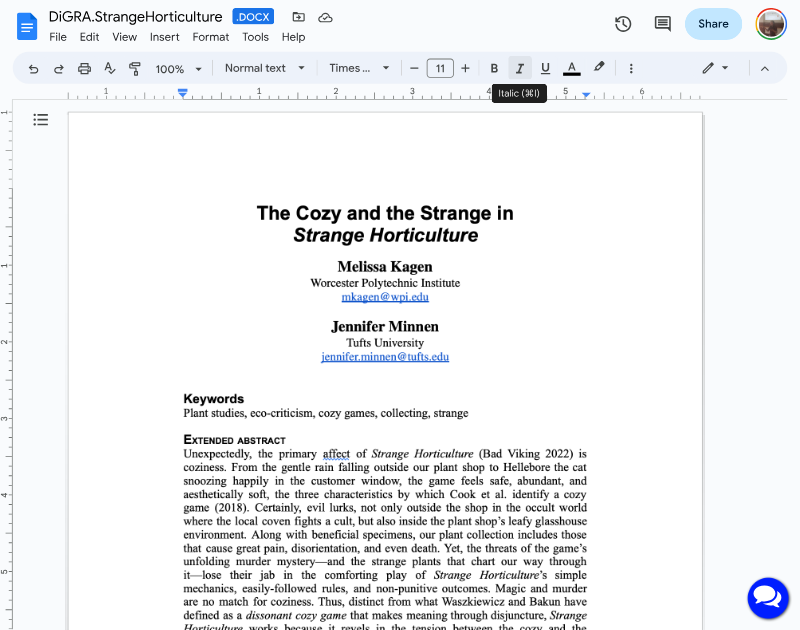
DiGRA · 2023
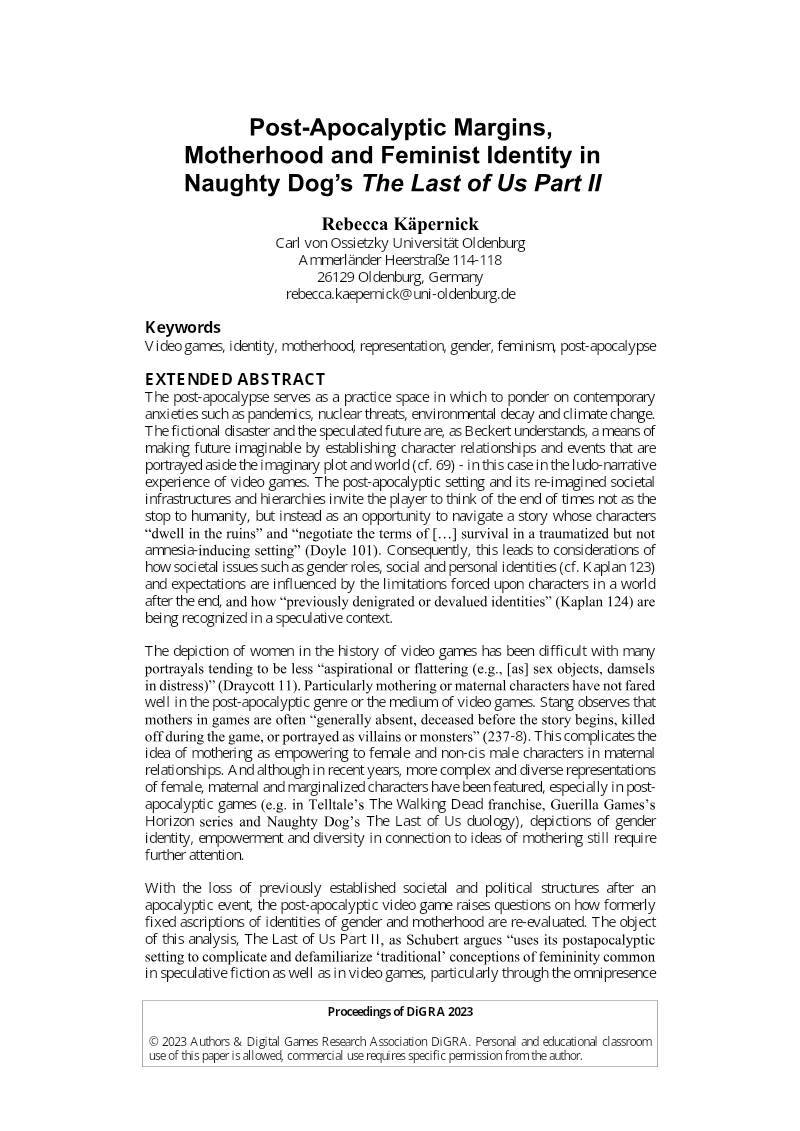
DiGRA · 2023
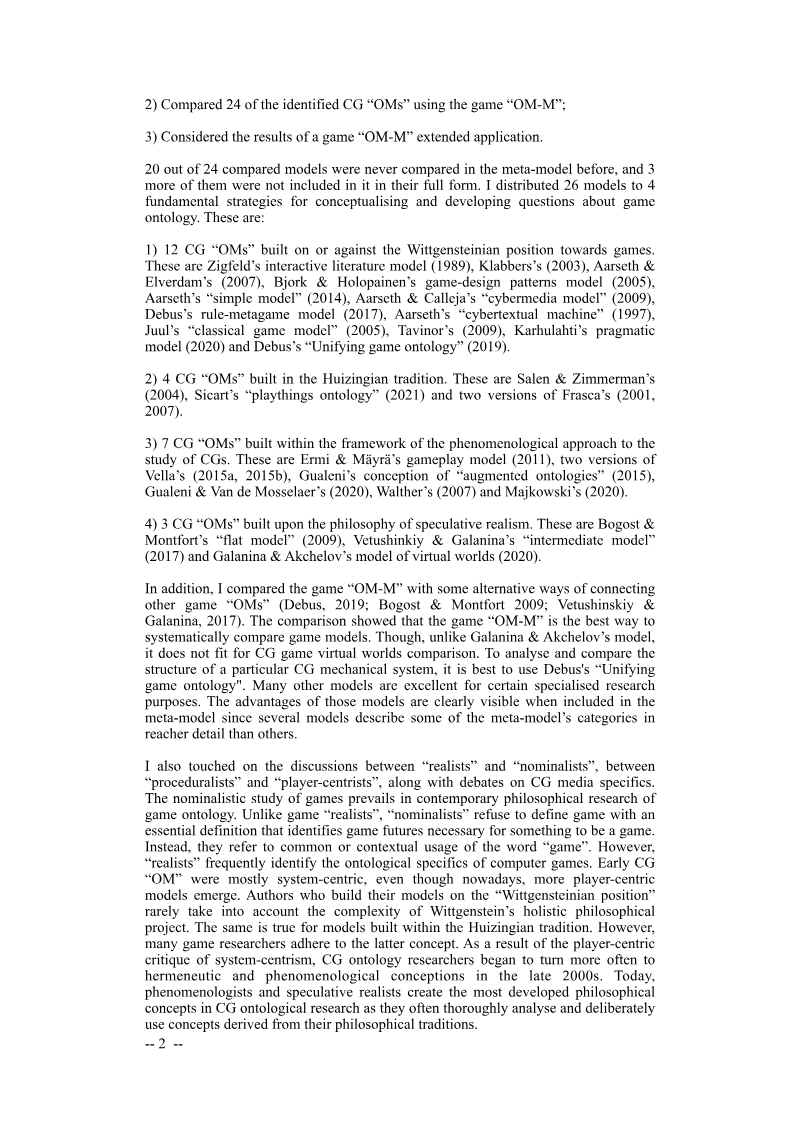
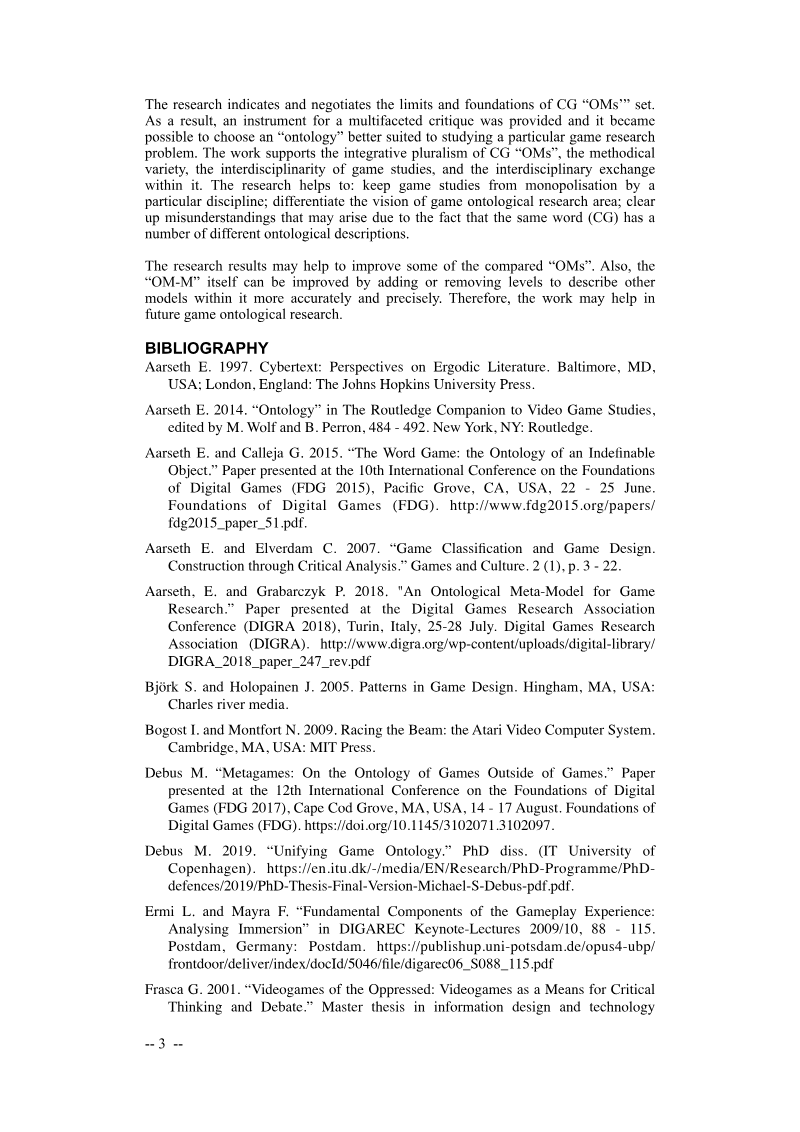
DiGRA · 2023
DiGRA · 2023
DiGRA · 2023
DiGRA · 2023
DiGRA · 2023
DiGRA · 2023
DiGRA · 2023

DiGRA · 2023
DiGRA · 2023
DiGRA · 2023
Game Developers Conference · 2024