1 free read left. Create a free account for unlimited reading + AI research.
Create free account
Chaos, control and creativity – Tips for managing and scaling an art team
Key insights
7 takeaways- 01Artistic quality is best achieved through iterative cycles and time management rather than relying solely on initial conceptual brilliance.
- 02Creative directors must transition from purely artistic oversight to acting as architects of process, shifting teams away from creative silos toward integrated, technical, and data-driven operational models.
- 03The creative director's primary role is to provide definitive, high-stakes decision-making to ensure the creative process remains disciplined and scalable.
- 04Integrating technical art capabilities directly into the artist's workflow reduces friction between design and development, ensuring assets are optimized for target devices without needing separate integration teams.
- 05Studios should adopt a 'Moneyball' hiring strategy that prioritizes team fit, personality, and specific project needs over static skill sets to maximize operational efficiency.
- 06High staff turnover costs can be mitigated by fostering a culture of transparency and cross-team communication through regular peer reviews and collaborative sessions.
- 07Scaling an art department—as demonstrated by growth from a single artist to a 30-person global team—requires clear succession planning and defined career progression paths that do not force every artist into management.
Ask AI about this video
Transcript
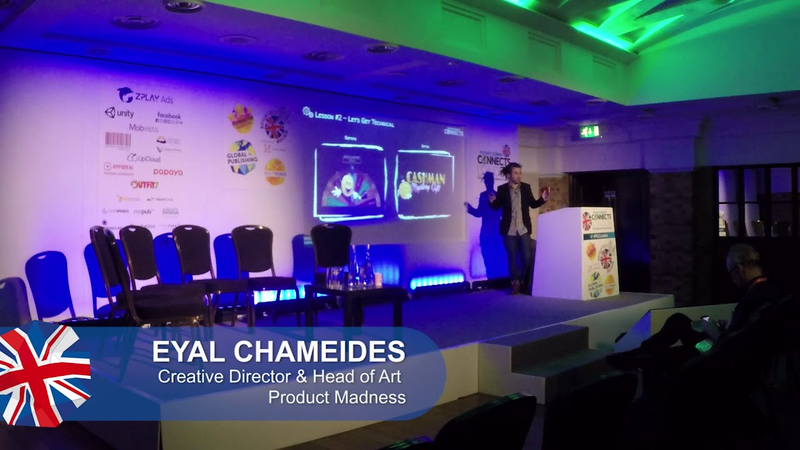
[Music] [Music] hello everyone I know it's the current towards the end of the day so I'll try to keep this nice and snappy and on point and my name is Al I'm the creative director at product madness we have a booth two floors upstairs we make games mostly kind of social free-to-play you kind of slots games some casino stuff we didn't start off there but that's what we are now and what I did after we go cool and I want to share with you some of my learnings or lessons as a kind of through my experience as a creative director and when I built this deck I was really trying to think of stuff that you know there's a lot of standard advice that
all people give not try to thing of the advice that I wasn't given when I started my career and what I would have liked to hear when I was maybe a bit younger and just some curiosity how many people here are either artists or managing artists so one to one day manage artists hands up hmm cool all right so hopefully you'll find this interesting and for the rest of you hopefully you will as well okay so just a little bit about me and kind of my background is computer sciences and fine arts and I kind of led my first art team when I was 19 so very young but that kind of really helped me off and have a kind of a background in game design start off in a consoles back in Australia and I was first I would say employee back at product madness back then really I was one artist for working on about five games or I was working on five games so I kinda had to do a little bit of everything the company grew and scaled we hired a few more artists we're about four artists working on 30 games so again we
had to do everything user acquisition UX UI the animation all that kind of stuff and over the time we got more and more you know we increasing scaled we start to find you what we are to where we are right now we are about 30 artists kind of globally in part minutes working on only kind of four games so we did get smarter we got more specific we got more experience in specific parts of the game design process so these are the five five yeah five lessons that I want to kind of talk to you guys about and we'll just jump right into it so lesson number one pick a color of crocks and buy them already so I kind of put an example of this kind of working mood board that we had for one of our projects and I think this is kind of a really good example of where usually you are at the beginning of a design process where everyone kind of throws everything at the wall and we kind of see what sticks um you know it's it's part of the process and it's great but I would say one of the really big challenges there is that really when you're working on a game you really
don't have enough time to explore all the different ideas to their fullest and really that creates a lot of problems down the line and mostly because that's kind of the second point really simpler concepts look better at first and better concepts look messy it's really when you're starting to think about kind of any sort of creative work really the stuff you can throw together in a day or two you know by definition will always be easier and simpler to look at and that kind of stuff is a bit of a red herring because it could really lead you down kind of Oh honestly the wrong part in there kind of the long direction um and really if you're anything like us I guess you know to some extent that arts starts we start to work on the art at the same time that we kind of start to work on other bits of the game the game design may be kind of where it fits in our portfolio of games so really things tend to change and that makes things difficult were 600 the track of a sudden your brief changes on you which is fine but we gotta be aware of that so really my biggest advice for anyone who's kind of doing the stuff is the first thing
you want to do is get your team rowing in the same direction and just trust the process so even if there are 20 ideas on the table you're not sure which is the best one you got to pick something and you got to start running with it right and then you're gonna start fine-tuning and correcting it as you go and that kind of breaks the last point that 90% of what your design needs is more time not a better starting point if I think back to my experience I would say that the majority of those projects that ended up looking I would say underwhelming you know they didn't get there because you know the initial brief wasn't strong enough for the initial direction wasn't there they got there just because we ran out of time we ran out of iterations we ran out of polish so really you pick something you stick to it and you trust that by the end of it you will get to something great and that's really where your team comes in and the process comes in and this is for anyone who's kind of leading the team I think really we know your job as the I would say kind of the creative director or the art director of this process really just to be the one who kind of
comes in and makes that final call and it's not because you're smarter or you have more experience or anything like that it's honestly because this is your job so your job is to look at the 20 different directions pick one and say all right guys this one where I'm gonna bet on let's try this let's all work down the line because ultimately if the game doesn't look good or something is broken it's on you as the person who's managing this process so you just gotta kind of own up to it and take that risk all right listen number two let's get technical really if I think of most traditional game studios the creative team only owns part of the creative process so you know every studio will be a little bit different but if I kind of try to Ballpark some sort of process so you have the art team kind of working on the UX the UI the concept they do some final design and then at some point they just kind of hand it over to I would say an integration team or the dev team that's where you get integration you got optimization and then you get some testing keyway something's broken it goes back to what the devs of the art and that's the process so what's the problem the problem is a the art team
only owns part of that process as we saw the other thing is that devs you know they cost more than artists right and that's just a sad truth of the industry means that when you are in the process and you need to start polishing if something's broken on I don't know the like the UPI or something is broken in the the the payment integration versus the art the payment integration is going to get priority so the our team is always gonna lose priority for like core dead stuff and you know developers hate to implement arts but everyone does I mean that's just you know that's not the creative part that's busy work no one likes that and optimization later on when you do draw call what kind of stuff that's all handled by the devs that's a problem they don't want to do it and you know when you talk about what is a really well polished game really a well polished game is where you really can't see the gap between the art and dev so how do you fix that basically so first of all you start by getting technical artists and artists who are technical right you get artists who can do all that kind of stuff you I would say is the creative director or the art director you fight for a pipeline that
you can own so you do your homework you learn the industry you you pick a tech stack that your art team can take ownership of and you take on the responsibilities not just the benefits what does that mean it means if you need your artists to start being able to push and pull into a git for example you need to start using JIRA you need to start doing draw compromise ations because if you screw something up you break the whole game that's part of it you take on that responsibility as the team and it's worth it and finally kind of be strategic not tactical in your thinking meaning again if you know moving on studio to a place where now the artist can be part of the development process that could take six months and you know what it's worth it because it'll cost you a lot now but ultimately it'll allow artists to do much cooler things I'll also say that you know tech art means something different in every company and you know I speak to different studios and different tech artists a lot of Studios when you talk to someone is a tech artist they are an implementer they're the person at the end of the art final who put the assets into the game
and we're not built that way in our studio every artist is an implementer every artists put stuff into you know what's a unity check SiC and QA it and I think that's a huge benefit for us so again when you think of what is a tech artist that would be my biggest recommendation and for example want to give you guys a really quick example this is from these are some old examples now from a game called cash man casino that we did once upon a time and if you could play that the first video please [Applause] cool and this is the second video so really want to show this is the same artist right and you know it's not that his skill sets were lacking in the first video or that anything really changed really what happened over the course of a couple of months we built up the capabilities to give him more and more control into what he wants to do know all this stuff may seem pretty simple but to be honest on a technical level there was a lot of integration that need
to happen there between you know counters and you know the coins coming out and all that can stuff and how it runs on the game and this was the exact same artist he spent the same amount of time and we just got significantly better results just because we increase the the process and we increase the responsibility of the art team and this is a bit of behind the scenes of really how we build so you know the old system was really just kind of timeline animations that you know was cific work and it was horrible and really through technical art and tech art and getting the artists to control more of the pipeline we really started building more tools and more systems to allow us to do just really cool stuff and nowadays we can produce just significantly better looking games for you know I would say kind of a fraction at the time and we can also assure that when it gets into the game it looks great and looks as the artist intended because really the artist who puts it into the game and the artist who tests it ultimately cool so this is kind of what I'm trying to push for get it to the point where really there is an
animation your artist can build the device they can check it on device does it look good does it feel a bit choppy okay do I need to optimize draw calls okay I'll go back I'll do it I'll integrate it I'll check it again and mix up all right what's the number three creative creative team Moneyball so you guys see I seen the movie Moneyball it's you know Brad Pitt where I kind of builds a baseball team through stats basically this is kind of the quote from the movie and I kind of subscribe to this force because I think it makes a lot of sense and part of the challenges behind again our team is that honestly strong artists don't necessarily make strong our teams and that you know you know I think you could say the same thing about you know developers or product managers or anything like that really and the requirements really will always change I mean you have an amazing team and they can do amazing work you know what the next title that we need to launch needs to be an html5 and all of a sudden all this expertise is I would say meaningless but you're kind of back to square one hiring is always a gamble so even if you
you know you interview people you vet them you love them they're fantastic you really don't know what you're gonna get and you know we've been surprised in both ways and it's just the way it is and I would say rising user acquisition costs so if you're a studio and you're scaling you know if you want to get I don't know let's say three four really good artists yeah you can do that it's you know it's quite feasible when you get to a place where you know you're trying to hire your 21st artist or your 31st artist things start to get really really tricky you start to you know poach people for their companies you're importing artists from overseas there is much higher cost to getting talent at that scale which is you know just part of the challenge so how do I guess I go around that oh ha what would I recommend to anyone so first of all think project then team then person because maybe sometimes really what you need to hire isn't what you think you need to hire don't be scared to hire up or down which is you know something maybe quite silly but really you know sometimes you need to get really strong much better people and
you know what sometimes you don't need to sometimes maybe you need to get someone who can do busy work and it's okay to get a junior in that's all absolutely fine a team with all seniors usually doesn't function very well you want to build a really good hierarchy within your team so kind of know what role you're trying to fill and also trying to think honestly what are you trying to hire for so are you hiring for scale right so do I need another of this type of artist 20 to expertise like you know am I trying to get a better 3d guy or maybe I need a completely like skill set of capabilities so I need to get a whatever like web animator that's what I'm looking for and each one of these things would really change the way you view who you're hiring can make your hiring much easier and ultimately you know everyone says this and I agree you're hiring personalities not skill sets you know there's a lot of books about this but really they say and I agree you know you hire based on the potential of each candidate and I think that's very true but here I would say you also want to hire someone who could gel well with the
rest of the team and that's super important and by hiring all the right stuff you're growing the team in the direct the right direction you know this is just a kind of really silly example that I kind of put together but you know this is one team and this is the other team and really when I'm kind of thinking about you know who do I need to get for this team you know I could have like a Mentalist in my head and this is all just kind of you know for the sake of you know just kind of nonsense maybe this is the way I kind of look at my look at the artists but really I kind of know that you know for the forth artist on team number two really I'm looking for an illustration I'm looking for soft skills I'm looking for animation a bit a bit of technical because everything else is kind of covered and I'm okay with that kind of artists and that's really what I'm looking for and that really kind of helps me narrow down who are looking for and kind of I would say filter between you know with the important stuff and I would say the kind of irrelevant stuff that's you know you might love a candidate but really easy filling the needs of your team this is a pretty I would say maybe a
counterintuitive statement or maybe people will argue with me about this but I genuinely believe this and you know sometimes hiring someone now and training out for six months is better than holding up for the perfect candidates and getting them in six months time it's my my personal opinion on these things and for all the reasons above I you know strongly recommend that lesson four or everyone should be replaceable including you so no matter what you do people will leave there's nothing you can do about that people will get better offers or they want to go back to you know whatever you know country they're from or they're just bored and that's all absolutely fine you want to be there for their journeys you also want to kind of do it in a really nice way so with that in mind you know understand that whenever someone leaves it's going to cause a huge disruption and again as you scale it only gets harder there was a recent article that I read was one big organization try to quantify really what the what's the cost
of someone leaving and they said it was roughly six months of of salary that's the actual cost when someone leaves by the time they get someone trained someone find them and they start being productive you know that's a pretty scary number how do you kind of I guess go about mitigating that problem we start with succession plans for everyone yes that also means you either be the creative director or the art director you always want to kind of have in the back of your mind this idea that you know at some point you want to be have someone on your team to be able to step up and do your job and that's important and you wanna make sure that everyone on your team also has that in the back of their mind and invest in your people make sure there are investment worthy like I will say honestly product madness is one of the better companies that have had the same privilege of working with as far as investing in people you know like I said we make kind of free to play casino games about four months ago we went the entire our team to Vegas to learn a bit more about the social industry social casino world to see what an inside of a
casino looks like to talk to the studios and make these games that's a huge investment from the company and I think it's amazing and it's worthwhile and I think for me as the kind of the champion of that process I was able to go into my MD and say listen it's a lot of money but it's worth it because these are people that are worth investing in if someone does want to leave and that's absolutely fine don't kind of stretch it out break up quickly it's okay these things happened oh make a fuss and also break up amicably because honestly you never know this person might come back we've had multiple artists specifically that have left the company to pursue their own dreams and at some point they've kind of reached back and said listen you know we did this we enjoyed it we'd like to come back and that's that's also great so you know don't take it personally keep the door always open that's fantastic and so when you talk about what a success arrears of what it is when you do kind of the succession planning a lot of people get really worried when you start think about succession planning a
lot of people get really worried about the fact that they're gonna hire someone that's better than them or they're hiring the person is gonna replace them really I can't stress is enough that is the dumbest way to look at hiring honestly across the boards you want to perpetually hire people that are better than you that is just way you should be going like the stronger your team the better you're going to look and when you're trying to look for your own personal replacement you know like recently I had to go and kind of writes like a job spec of like what it is I think I do when I started off by writing a four-page document which was ridiculous I don't do four-page worth of stuff but you know I put everything in there and then I went and kind of trimmed it down and really I pulled it onto a page because really there are things that I do because it's me there's things that I do cuz I'm the only guy who can do it and that's really what your role is and that's what you should be looking for [Applause] every artist has their own journey and this is a big problem with our teams in general and as you move up the studio hierarchy you know there are fewer roles and that's just the way it goes in a pyramid and strong artists aren't always
strong managers and that's a real is like that's just the truth you know we need to be aware of um strong managers also are necessarily more important than strong artists and that's also something that we need to be aware of so what are the actions behind that so first of all in every studio an art director should not be the end game of every artist on your team alright and you need to be transparent with the available roles to all your team and what the requirements are and by the way I just you know reading again like lack of regular reviews from managers was the number two reasons in a server that I read why people left the company which is insane so talk about like the importance of keeping someone in there reviewing talking to them and this is by the way a succession plan that we put together so it goes all the way from junior artists to art director what the art requirements are as you see like the responses grow more and more and this is a document that every artists on my team has access to I think it's exactly where they are on the progress where they want to go and you know some artists are happy you know
like being a senior artist that's absolutely fine there's no problem in that some want to move into management's that's also absolutely found and really from my side I find it's also an educational process for the studios it's okay that a senior artist is as important as an art director it's okay that they get paid accordingly and that's just part of the training that you need to kind of instill in the greatest studio mm all right I'm going to be quickly now I don't have that much more time now where make sure the time for and that was it thank you very much for me all right that would say that was my plug we are hiring in all departments so uh yeah if you're keen come join us upstairs any questions we have 60 seconds or so left hi thanks very much for your here talk and I'm an art director and in Rovio and we're having
trouble getting all the different art teams to really talk to each other and as something I've seen in a lot of the companies I've worked where the artists and different teams kind of sit in their own I was wondering since you're also dealing with quite a few artists how you managed that cross team conversation so I would say like again like it kind of depends on the nature of the studio again like in our series specifically we try to get the artist to handle everything from like end to end and I think what that also created is a world where artists really have to interact with one another all the time and because they need to share advice they need help a lot of people will be out of their depth in certain element of the processes and that's fantastic that really encourages interdepartmental I would say kind of coordination I also really strongly believe in moving artists around between teams getting people to step in and help and that obviously makes things fantastic so oh this is the way we did it in heart of Vegas this one we're gonna do it in Cashman and it's not we're gonna do it in there you know for fun that really
builds a strong connection as well and it depends most also who you hire like I say this in every interview if you're the kind of artist that enjoys sitting down putting their headphones on illustrating you know 9:00 to 5:00 and then going home maybe this isn't the studio for you like I want to build a studio open our team that is cohesive and they talk together and then you know as an art director you can put certain elements in place like we do you know weekly catch ups and we do what we called rib sessions or it has to show their work on our kind of bi-weekly process and we have you know our director kind of circles where we just try to kind of create this I would say you know brain trust that people can feed that from one another and but you just like it I would say I know we're gonna be over there but it really it just starts from the top if you dedicate time and efforts to making sure your department talks to one another then that becomes a priority and it really has to kind of go like that hope that helped [Music]
[Music]
Summary
Managing and scaling an art team within the competitive free-to-play mobile gaming industry requires a strategic shift from traditional creative silos toward a more integrated, technical, and data-driven operational model. The primary thesis is that creative directors must move beyond purely artistic oversight to become architects of process, fostering teams where artists take ownership of the entire development pipeline, including technical implementation and optimization.
Key findings emphasize that artistic quality is often a function of time and iteration rather than initial conceptual brilliance. To maximize efficiency, teams should adopt a "Moneyball" approach to hiring, prioritizing personality, team fit, and specific project needs over static skill sets. By integrating technical art capabilities directly into the artist's workflow, studios can reduce the friction between design and development, ensuring that final assets perform optimally on target devices without relying on separate, often overburdened, integration teams.
The scope of this management philosophy covers global art departments within the social casino gaming sector, specifically focusing on scaling teams from small, multi-disciplinary groups to larger, specialized units. The methodology relies on professional experience gained while scaling an art department from a single artist to a 30-person global team.
The analysis concludes that leadership must prioritize succession planning and transparency. By providing clear career progression paths—acknowledging that not every strong artist aspires to management—and fostering a culture of cross-team communication through regular peer reviews and collaborative sessions, studios can mitigate the high costs associated with staff turnover. Ultimately, the role of the creative director is to make definitive, high-stakes decisions that provide the team with a clear direction, ensuring that the creative process remains both disciplined and scalable.














Comments