1 free read left. Create a free account for unlimited reading + AI research.
Create free accountFinancial report Capcom
1 free read left. Create a free account for unlimited reading + AI research.
Create free accountFinancial reportCapcom
Distilling the key insights…
Capcom’s fiscal year 2002 financial presentation outlines a strategic pivot toward global market expansion and rigorous internal operational controls. As of May 2003, the company maintained a significant position in the Japanese video game industry, reporting net sales of 62 billion yen and an operating profit of 6.6 billion yen. While the company held a 6.56% share of the Japanese consumer software market, its U.S. market presence remained more modest at 2.61%, prompting a management mandate to prioritize international growth and multi-platform development to improve profitability.
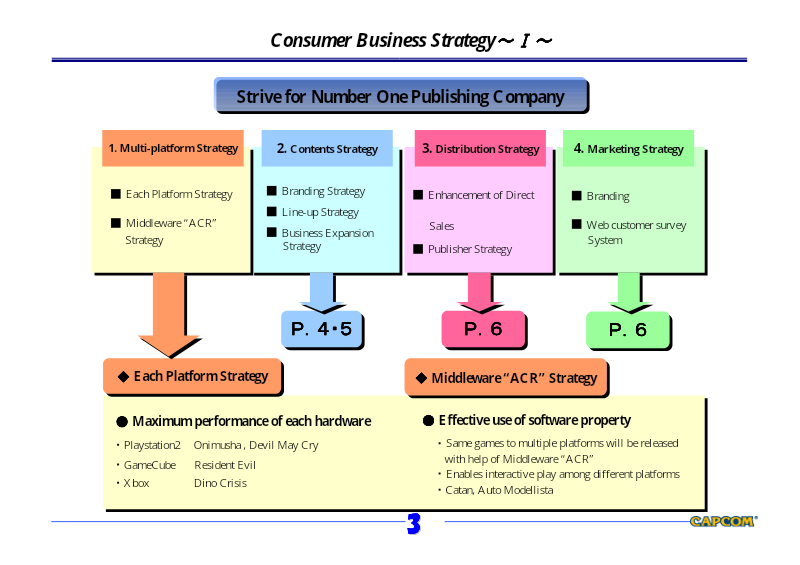
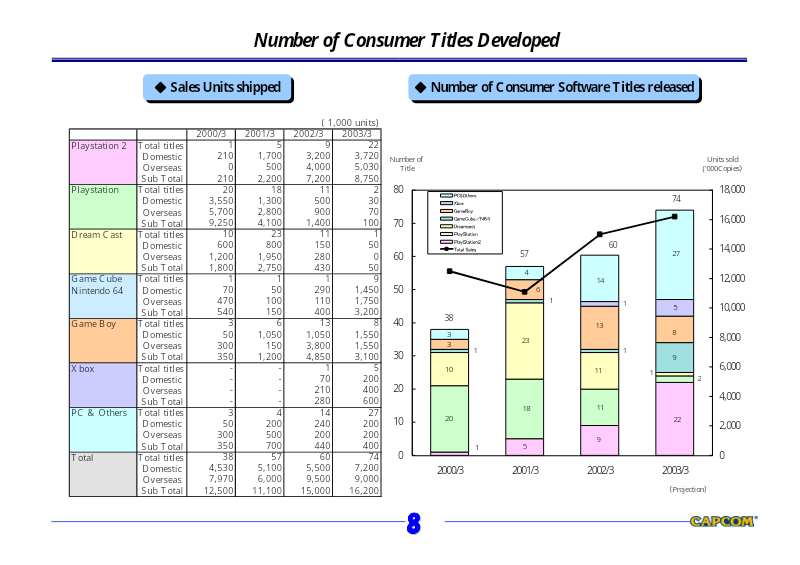
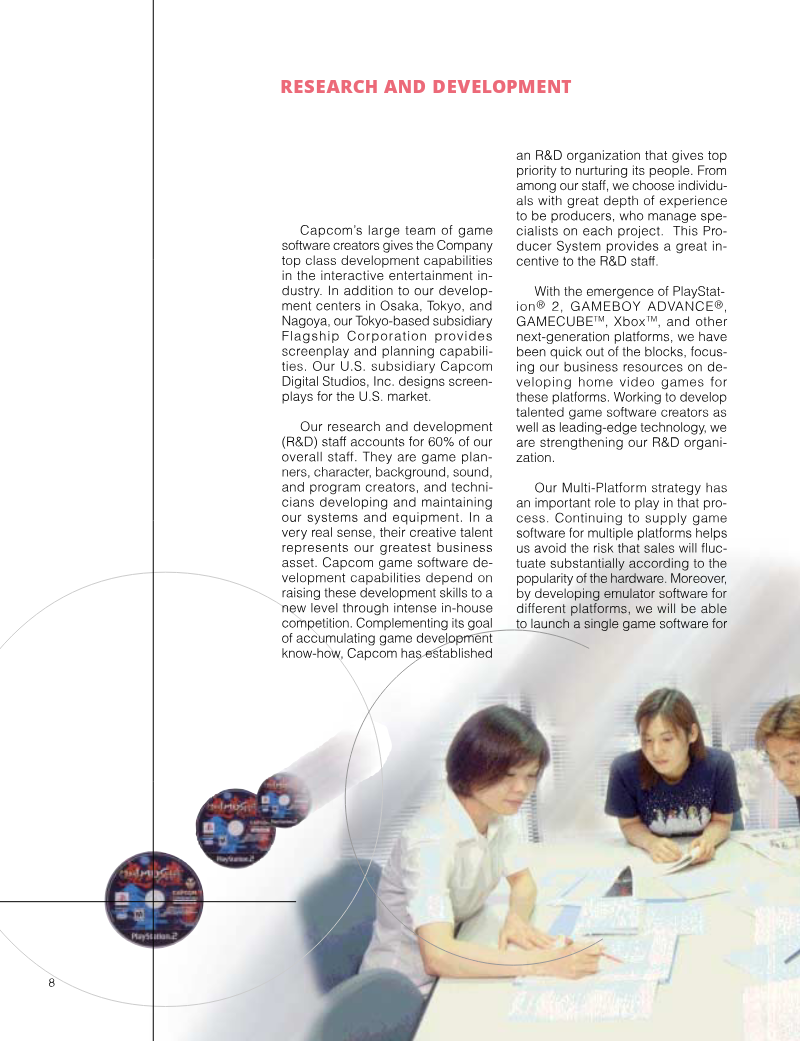
The core business strategy focuses on concentrating resources into consumer software research and development, alongside the expansion of arcade operations and character licensing. To address past challenges—specifically development delays, rising costs, and inventory management—the company implemented a dual-approval R&D system and standardized progress-tracking tools for all titles. These measures are designed to ensure schedule adherence and quality control. Furthermore, the company is shifting toward a multi-platform approach, leveraging middleware and localized marketing to better align with the specific preferences of U.S. and European consumers.
Financial management remains centered on generating stable cash flow and enhancing corporate governance. The company has taken steps to improve balance sheet transparency by adopting new accounting standards for asset impairment and establishing committees for compliance and executive remuneration. Looking toward the 2003 fiscal year, the company plans to bolster its portfolio with major titles such as Onimusha 3 and Resident Evil Outbreak, while continuing to optimize its arcade business through a regional strategy that prioritizes high-traffic shopping mall locations. These efforts collectively aim to strengthen the Capcom brand and ensure long-term fiscal health in an increasingly competitive global landscape.

Capcom · 2026

Capcom · 2026


Capcom · 2026
Capcom · 2026
Capcom · 2026
Capcom · 2025
Capcom · 2025

Capcom · 2025
Capcom · 2025
Capcom · 2025
Capcom · 2025
Capcom · 2025
Capcom · 2001