FinancialNintendo
Financial Results Explanatory Material: 1st Quarter of Fiscal Year Ending March 2027
27 pages~29 min full read
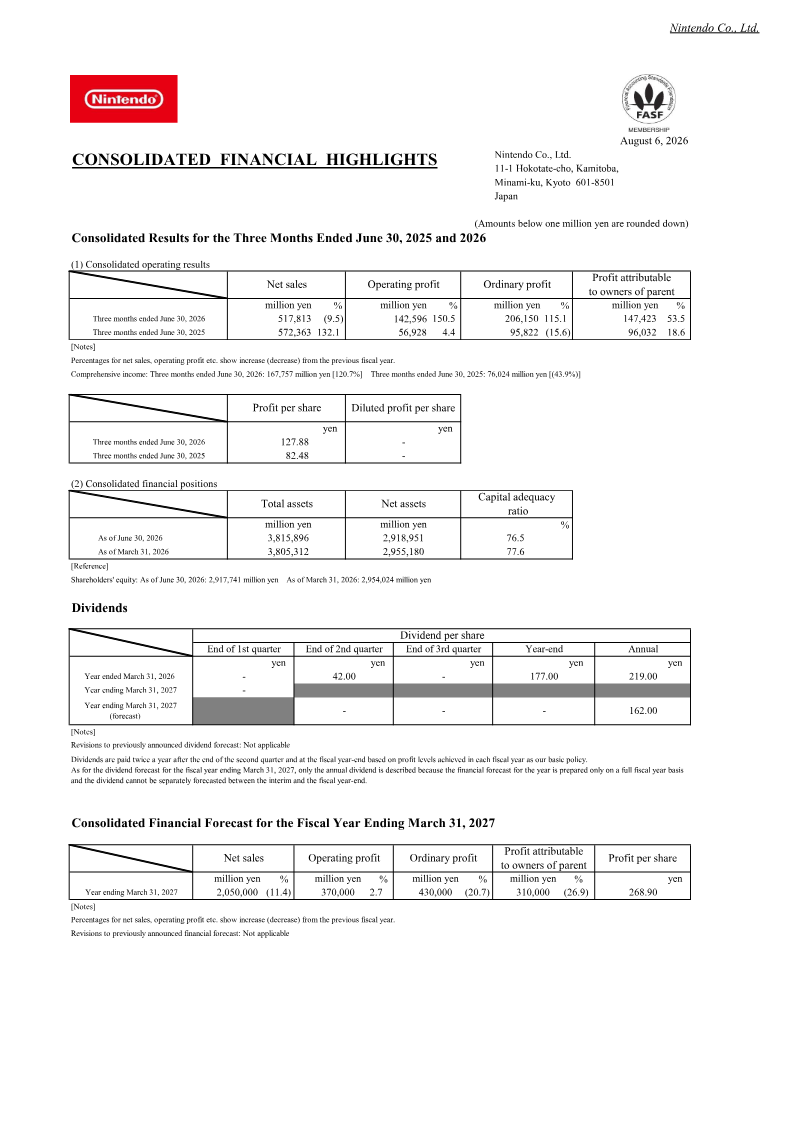
Nintendo’s financial performance for the first quarter of the fiscal year ending March 2027 reflects a strategic transition between hardware generations. While net sales experienced a 9.5 percent year-on-year decline due to the anticipated cooling of legacy hardware demand, the company achieved a 150.5 percent surge in operating profit, reaching 142.5 billion yen. This profitability was driven by a combination of IEEPA tariff refunds, high-margin digital software sales, and substantial revenue contributions from intellectual property licensing. Annual active users remain resilient, consistently exceeding 100 million, which provides a stable foundation for the ongoing transition to the Nintendo Switch 2 ecosystem.
The current hardware strategy centers on the rapid adoption of the Nintendo Switch 2, which recorded 382,000 units sold during the quarter. Management maintains a confident full-year outlook, projecting 16.5 million hardware units and 60 million software units, supported by a pipeline of new releases and enhanced software upgrades. First-party titles continue to demonstrate strong commercial viability, exemplified by the success of Tomodachi Life: Living the Dream, which has surpassed 8 million units in global sell-through. Furthermore, the company is successfully diversifying its revenue streams through non-gaming media, as evidenced by The Super Mario Galaxy Movie crossing the 1 billion dollar threshold in global box-office receipts.
To ensure long-term competitiveness, the company is prioritizing infrastructure and research. A significant investment of 121 billion yen is currently allocated toward the construction of a new Technology Development Center, slated for completion in March 2029. By balancing immediate hardware transition costs with sustained investment in intellectual property and internal development capabilities, the company aims to maintain its market position throughout the remainder of the fiscal year and beyond.
Nintendo · 2025
Nintendo · 2025

Nintendo · 2025

Nintendo · 2025
Nintendo · 2024

Nintendo · 2024
Konvoy · 2023
Nintendo
Capcom · 2026
Capcom · 2026
Sega Sammy Holdings · 2025
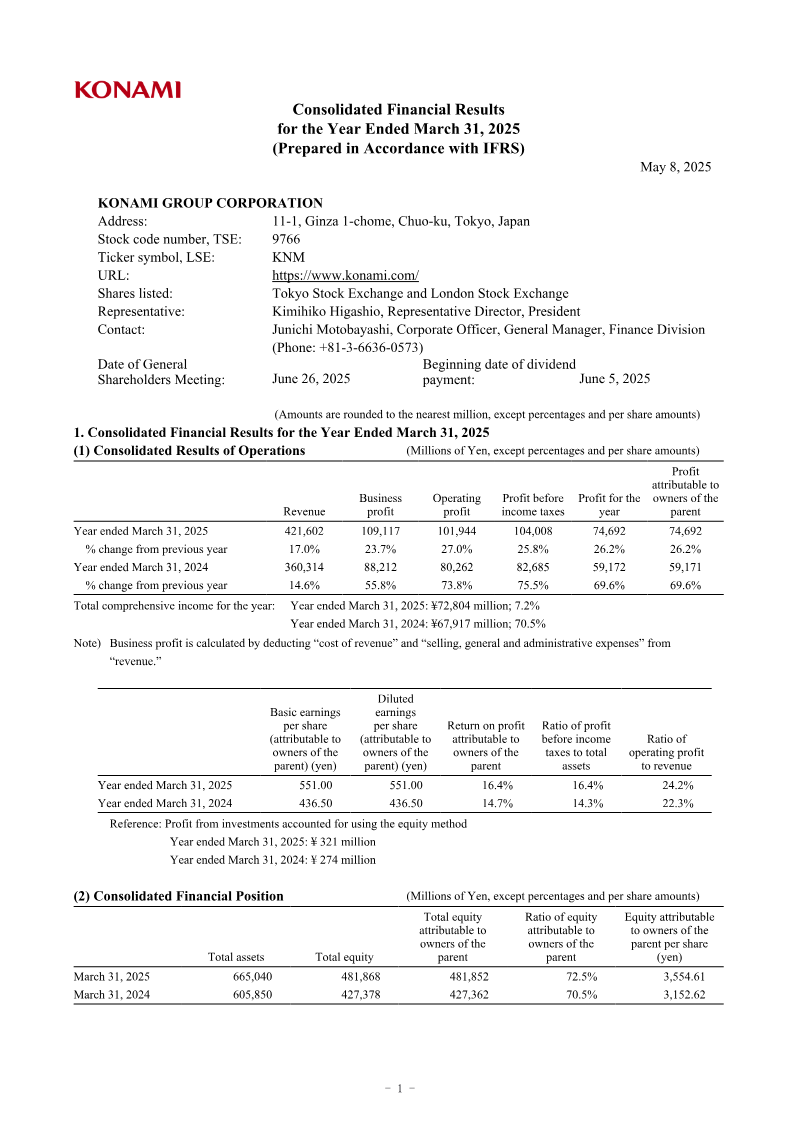
Konami · 2025
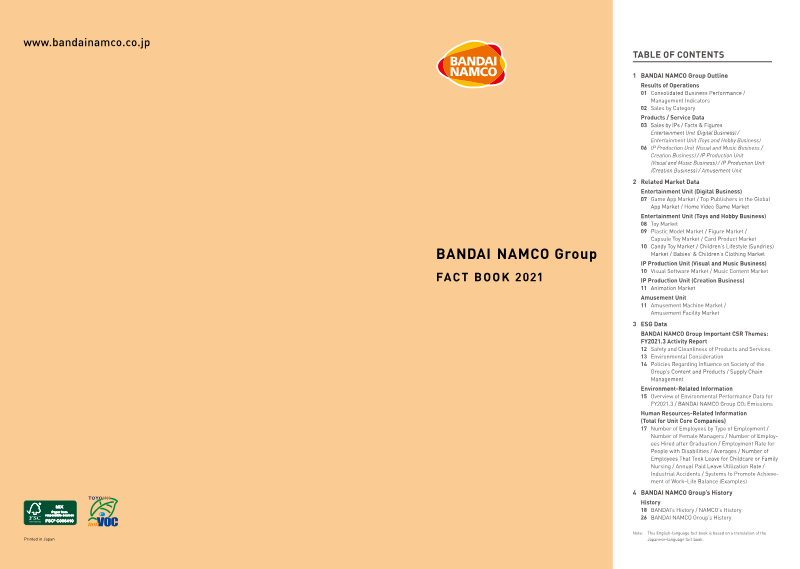
Bandai Namco · 2021
Bandai Namco · 2019
Bandai Namco · 2018
Bandai Namco · 2017
Bandai Namco · 2014

Bandai Namco · 2012
Bandai Namco · 2011
Bandai Namco · 2010