1 free read left. Create a free account for unlimited reading + AI research.
Create free account
Building leverage for game creators
Key insights
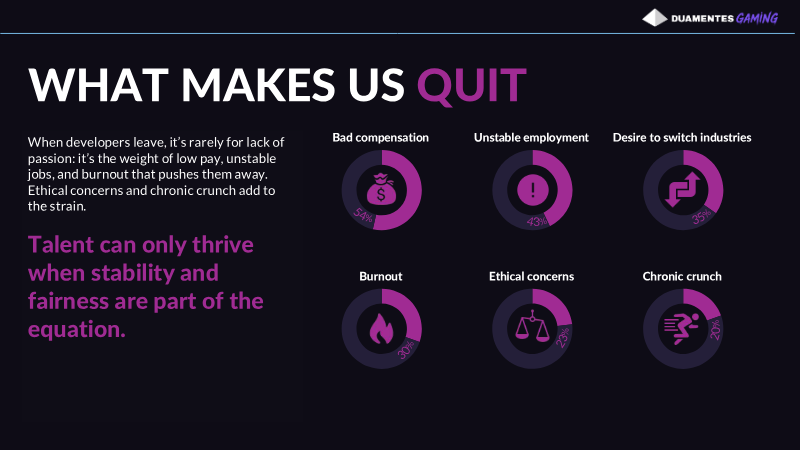
6 takeaways- 01Quality of life is the primary driver for developers considering leaving the game industry, which currently faces systemic instability characterized by crunch culture, toxic environments, and frequent layoffs.
- 02There is a significant shift in workforce sentiment toward collective action, with an increasing percentage of developers now supporting unions, guilds, and collective bargaining to address power imbalances.
- 03Despite the gaming sector's economic power exceeding that of global live sports, the average career length for developers remains short, typically spanning only five to seven years.
- 04Legal defense funds are being utilized to provide independent creators with the necessary support to navigate complex contractual agreements.
- 05Guilds are emerging as a structural solution for independent contractors to engage in collective bargaining, while unions are being established to help company employees negotiate better employment conditions.
- 06While these organizational structures cannot prevent business failures or poor management, they act as a necessary buffer against the most severe impacts of industry volatility.
Ask AI about this video
Transcript
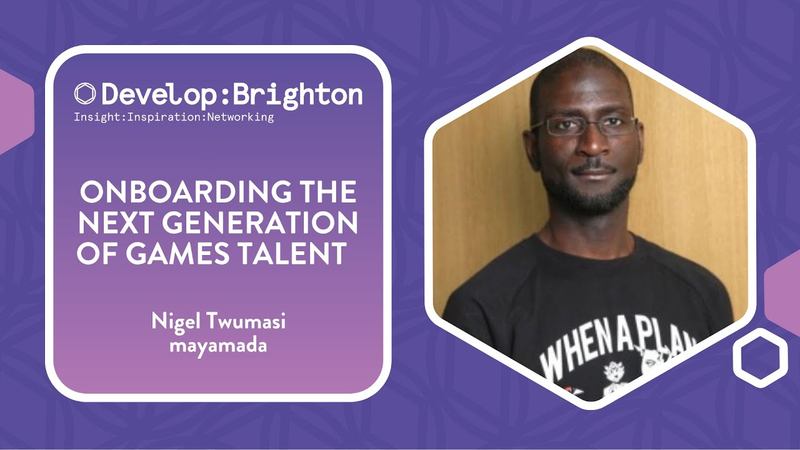
okay we'll go straight into it so what do I mean by leverage well I'm gonna be talking about that in more depth as we go along but this is going to be talking about labor issues about more the culture of the Gov the companies in which we create games no doubt you've heard a lot of news lately about a lot of issues in the industry you've heard things like game workers unite and things of that nature one of the things that I wanted to relate and I forgot because I left my phone is I had an email late last year from a young woman in Europe and she I talked to a lot of students I mentor a lot of students around the world and one of the things that she wrote to me is this really heartfelt letter this email in which she was really concerned about her future in the industry and so as she was going through and reading you know as she was
writing in this letter she was basically saying that in her school they have a slack channel and they discussed different issues with each other about what's going on in the industry and of course lat this this email came in November of last year and if you were paying attention last year was not an easy year for the game industry there was a lot of things going along and a lot of stories that we've heard and these are not new stories necessarily but the amount of these incidents happening month after month after month last year really kind of drove home for a lot of people that for some folks enough is enough but was more concerning is that this young woman a student who's aspiring to be a game designer in the industry she's seeing all these stories and she's really concerned about her future and so she was basically asking me what can i do what can we actually do about it because she said in the slack channel a lot of the other students will say things we need to start a union or we need to form a guild or we need to do something about this but she's like well what though what actually can we do
because as students you know they're basically seeing themselves going into this industry where they hear all of these horrific stories about what's going on and in the in the industry around different companies you know and of course the stories have continued into this year it's not like it's actually stopped but you know none of this is new to us I mean there's some that are just fairly recent of course and so basically her question to me is is that what can we actually do she was basically saying that you know right now I'm mainly afraid of the future that awaits me in the industry and so that's a question to us for those of us in the industry so what can she do what can she actually do as a student who's aspiring she's only a year away from graduation she's already starting to kind of put her feelers out there to see where she might end up working and she's really afraid of ending up somewhere she where she's going to be ground into dirt from crunch hours or some others are practice going on and the more important question
though is not what can she do but what can we do and that's really the question that we find ourselves at right now so I used to be executive director of the International Game Developers Association and in that five years that I ran the org from 2012 to 2015 17 I talked to literally thousands and thousands of game developers around the world in all kinds of different positions from you know solo indie startups to triple-a people I talked to government officials NGOs all these other people around the world this guide was particularly cool Hughes he was the minister of communications for Tunisia and he loves games he co-owned a gaming studio when he lived in the UK several years ago so you know who knew but I had the experience and they had the great fortune of being in a position where I was able to hear the concerns of a lot of developers around the world and one of the things that was common that I heard over and over again no matter what was the number one thing that they
wanted was of course besides the basics like I want someone to play my game and buy it I want you know I want exposure the market the billion beyond those things in terms of the culture they wanted leverage it was this constant message I heard reinforced in different ways in different cultures around the world that they wanted some sense that they had the ability as people in the trenches doing the work to push back against some of the management practices and push back and they basically have a stake and how games actually get made other than just being the creative talent behind it they actually wanted to have a stake in too terminate the process of how it gets made this and especially the schedule of how these things get made now when I ran the ITA I launched what we call the developer satisfaction survey which I believe they're still doing and this might be a little hard to read up here but one of the questions we ask game developers where why would you leave the game industry what would be a reason for leaving the industry and you can see here the number one answer by far was
that I want a better quality of life that's may not be surprising to those of us who've been in the industry of a while you know some of these other ones found a job with better pay in hours I was burned out and so on so there's sort of this consistent theme about the conditions under which they're working and we also asked what are the reasons why you would choose to be self-employed or a contract or freelancer number one answer more control over working conditions of course there's other answers that are close to it make the games I want to make more control over the content which was also a consistent theme that we heard in the survey it's not just about having control over how they work but it's also what they work on which is a pretty consistent answer you would here with any creative person I mean their game creators are artists and they want to make what they want to make but the control over a working edition so the other thing too we ask questions about equality and perception of diversity inclusion all these other things and we said do you feel there's
equal treatment and opportunity for all in the game industry and the majority answer was no so that's concerning to me and that's concerning it was a reflection on the culture that we have now just for demographics sake the respondents to this survey were global there was 48% from North America so Canada u.s. and the rest were from around the rest the world mostly concentrated in Europe but then a screen of a smattering throughout Latin America Middle East Asia and elsewhere so there is this says have a heavy North American bias to it 50% but it's not entirely just so you have a little bit of the context for who's answering the questions so one of the things that I think is is I've seen a lot of developers come together on lately it's not just the idea that we're creating games as a financial mechanism to make a living and to do something that we enjoy to be part of the quote industry the business but it's actually embracing games for what they really are it's not just an industry or it's not just a
business it's actually the current evolution of human narrative so these are just some examples of human narrative since humanity showed up around here and so visual art language writing all these other forms well currently video games are the form that we are basically helping to determine how do we communicate story and narrative from one generation to another and so it's kind of that's that's an exciting thing and I've seen more developers especially younger ones kind of embrace that role that I'm not just going to be a game designer I'm actually doing something on a broader cultural level the other thing too is is I think most of us understand this already we hear these numbers all the time these are actually numbers from 2017 but the economic power of our industry is significant I don't think any of us have to be reminded of that I mean it's so significant that it's even more than all life sports combined in the world FIFA NFL MLB all of that stuff we still make more money than even live sport so
it's a very we're a going concern and I think that's another fact that I seem kind of bolstering the confidence of a lot of people in the industry that we have something to say we are a cultural force but the sentiment around dissatisfaction with how they're working and what they're working on it's being driven of course by work-life balance we hear about crunch all the time the general trend on crunch if you look at the data is that generally over the last decade it's gotten a little bit better just a little bit that which basically means some the companies that employ crunch they tend to do it a little bit less and when they do it they tended to have the periods of crunch tend to be a little bit less but there's still a lot of companies that do it there's also this general sense of unfairness when we hear about these you know things about rampant sexism across an entire company or the company culture being toxic or things of that nature we hear more of these kind of stories being reported on toxic work environments of course and just sort of
this sense of growing collectiveness that I've seen among a lot of developers where they're willing to talk more openly about their dissatisfaction with a lot of these issues whereas I would say even five or ten years ago I've been in the industry for twenty six years five or even five or ten years ago it wasn't as openly discussed it was always a you know a conversation over drinks at GDC or something like that but it wasn't as broadly discussed and especially as broadly discussed as I'm seeing it in schools in people who are going to be entering this industry now last year because we had a very tumultuous year you saw the stories as I was making this introduction we saw a lot of stories around organization organized labor tons and tons of attention being placed on that and again this is a conversation that's not new this has been going on for a very long time but to me in my estimation last year was the first time it was so openly discussed as an issue that we as an industry need to confront and of course there's a lot of support
for the idea of unionization there's a lot of comparisons made with us with Hollywood but we're going to talk about this a little bit more what's interesting is the opinions on unison and how they've shifted over the last decade so the IgD used to do something called the quality of life survey and ten years ago they asked the question would you support joining a union and 32 percent said yes they would and then in 2014 which was the first year we did the developer satisfaction survey that answer was 56 percent who said they would join a union today if it was available then in 2017 a couple years ago the same researchers who actually are behind the ones who did the developer satisfaction survey they did their own independent survey they're based in Canada and they focus on labor issues in the game industry their survey showed that 66 percent would be in favor of a local union where eighty two percent would would join a industry-wide union that's pretty staggering and the the GDC state of the industry survey asks the same questions but earlier this year and
seventy-three percent said either yes or maybe to the question and to kind of dig into the GC data so 47 percent said they think you know should should workers unionize 47 percent so about half said they think they should and of course then a 24 6% err on the maybe side it's more interesting to me as do you think workers will unionize and it's a much more skeptical answer so it's only 21% said yes and there's a huge chunk of maybe but what's interesting is that the question is being asked and the sentiment is out there is this something is this an option for game developers is you know to address the issue of leverage and to make them feel like they're being heard the basic idea behind this of course is that is the desire for collective bargaining is there a way for developers to come together and have an intelligent calm conversation with management about things that are affecting their ability to continue their creative work not feel
burned out not feel like they you know that the working conditions are just driving them to leave the industry because generally another thing like our survey was showing is that on average people who entered the industry stuck around for between five to seven years that's the length of their career and when we ask them how long do you want to work in video games their answer by far was indefinitely so there's a huge disconnect there between the actual time they spend and the time that they want to spend in this industry so collective bargaining of course is basically when people who are in a position of lesser power come together to band basically form a platform so to speak on what they would like to see happen and they use that for a negotiation with with the group that is in power now this happens in a lot of different ways and of course I'm moving quickly because I only have a very short slot here this is a very you know much more in-depth conversation so I'm just going to talk very briefly about three forms of worker leverage that we've seen other industries used to
a certain degree of success the first one is a Legal Defense Fund also we have guilds and then there's also the question of unions so legal defense fund so basically what this does is basically provide legal provide access to legal counsel so especially for people who can't afford it and so this is something that I've seen a lot of interest in I mean there are legal defense funds in different industries the comic book Legal Defense Fund example has been around for many years and the original reason for the comic book ELISA the Legal Defense Fund was to help comic book artists and writers defend themselves because they had the comic book code that was was imposed upon them to control the content and make sure it's pure and clean and all that kind of stuff so it was sort of their ESRB in a way and so that was a way for comic book artists and writers to basically defend themselves over their creative choices and so the CCB LDF has been around for quite a while and of course another purpose is to
educate on labor law and worker rights and this is something that I talk about with a lot of developers especially Indies where I hear countless stories about them going into a publisher and signing a contract without having legal counsel review it because oftentimes they can't afford a lawyer but even if they can't afford a lawyer they still don't have somebody out there to look at it in like another set of eyes I was talking with a couple of publisher friends in at GDC this year and one of them said it they said almost verbatim they said it's surprisingly easy how it's surprising how easy it is to take advantage of an indie developer because they are so eager they want that publishing deal they want the money they need the money and so in one case they said the person came into their office the indie developer said I'm not leaving until I sign this they said well no you need to take this away from here and read it and really you know redline it have a lawyer look at it well I can't afford a lawyer do you have any lawyer friends no I don't sorry what do you
have any colleagues at all like veterans in the industry who would look at it for you and give you some advice it's like I don't want I don't have time for that looks like I'm gonna sign it now of course the the really ethical publishers would say well I'm not gonna let you sign it I'm taking it back and you know until we can settle this out but that sometimes it doesn't happen this is actually something that I'm working on right now I'm actually in the process of creating the game creators Legal Defense Fund I'm hoping to launch it this year at some point but this is something I've been working on just because I really feel this is something that could help a lot of people in this industry people at any position within the industry Indies you know people at triple-a who are having problems with management or whatever it might be honestly I think in terms of leverage a union for example with an indie developer if you have a five-person the indie studio why would you unionize I mean you're basically kind of co-owners anyway so it's almost like you're protecting yourselves against yourselves you know there might
be a reason for that but generally that wouldn't make sense but there's other ways of leverage that they could other forms of leverage they could use so guilds is another form of leverage that has been employed a lot of different industries over the years was and this is basically what a guild is a collective bargaining organization for independent contractors that's essentially what a guild she has typically been some there's a lot been a lot of confusion sometimes between a guild and a union and what exactly they are but traditionally a guild is for people who are independent contractors now guilds have been around forever I mean there's guild structures that go all the way back to the Roman Empire and this is like this is a for example this is from from the I think this was from the 17th century so this is why it's basically what you would see in like a lot of European cities is you would Eve going on the road into the city you would see a sign like this and this is basically telling you all the different Union said excuse me guilds the guilds
that exist in the different in that towns like the Baker's guild or you know the the Cooper's guild and all this other stuff in there so that's basically showing you oh hey ok well now I know there's somebody there who can help me with this they can fix my carriage wheel or whatever renzo is basically an advertisement in a way to just say hey these kinds of people there this expertise exists in this town so in Hollywood today a lot of the Gil's that we hear about I mean they are guilds they're not unions the Screen Actors Guild the Directors Guild these are all guild structures so these are all formed by people who basically came together as independents and formed this body to do collective bargaining so in a way that's collective bargaining because it is a common mechanism used across guilds and unions and other in other organizations it's often perceived that it will collective bargaining that means it's a union it's like well no not mess Sara Lee not technically no but at its basis that's exactly why they exist so
that they can all collectively bargain with studios to get set rates and set conditions for how they do their work now Union in contrast so where's a guild is for a collective bargaining for independent contractors a union is a collective bargaining organization for company employees and that's really the fundamental difference between the two and so unions basically if you want to use this definition of Association of wage earners for the purpose of maintaining and improving their conditions of employment and that's really what kind of drives the creation of a union in any particular workplace and that's why most of the unions they get started they start in a specific workplace they don't necessarily start outside the the workplace so like what we saw last week with the Riot Games walkout on Monday of last week there's people single there there they are there right for a union well who knows we don't know what's gonna happen but that's up to the employees and that's a that's a decision between them and management to decide if basically they
the employees find that their concerns are not being addressed by management they might have to find another way to express leverage or to enforce that kind of leverage we now unions I have a very long history as well not quite as long as guilds but these are just some pictures is like from the early 20th century when they actually called out the National Guard to basically force a union to stop striking and go back to work and this is a universal thing as well you see unions all over the world even in nice quiet places like like in Norway they have unions there too because employees want representation of a certain degree what's interesting though with the data I found this study recently where the Economic Policy Institute showed that as union membership increases the pay equality are basically wealth equality in society tends to even out a bit more so you can see here how this is 1917 to 2014 so as unionization increased in the
early 20th century we saw more of a parody of going on between income levels because more people were unionized and basically it was a way of redistributing they're guaranteeing a certain amount of wealth in certain kinds of jobs but as union membership is declined you can see how the income has concentrated at the top and we we know this quite well we hear all kinds of stories about the 1% and how it's just been going kind of off the rails in terms of the amount of the income what's also interesting too is that they have found that it went in unions you tend to have less of a gender pay gap and that's I think that makes sense because generally the the rates are set by the job type so that kind of helps equalize the job the pay more than not having it so that's that's been an interesting phenomenon as well there are a couple of unions that started the game makers union in Finland has been around for a while ST JV started in France a couple of years ago not a lot of people knew that because when it's in wooden it's Tuesday in France you create a
union right but then this group game workers unite got started in at GDC last year basically as a huge education campaign but out of that campaign in January of this year the game workers unite UK group actually became a union they joined with the independent workers guild of the UK to form their own union in the UK so there is some momentum on this front there are people who are interested in in trying to find a way to have leverage happen now the question is will in these forms a leverage prevent incompetent management or crunch or layoffs or some of the other problems that we see and my answer is like no they're not going to prevent that step because you can't legislate stupidity but I do think they will buffer gamed of creators from the effects of those things I mean you think about like what happened a telltale where you have this seemingly viable company with several hundred employees one week and the next week it basically is gone with no
severance nothing and that kind of sent a lot of shockwaves to a lot of people in this industry you know because they hear about they hear about layoffs and things like that but I mean this is a company that seemed completely viable you know and yeah they were risking their their their model of production on IP and but yeah that was a problem so this is the kind of thing I want to avoid that we have students who are actually afraid of finishing their degree and going into this industry because they're because of these issues and so I think we need to think about you know what is the future look like in terms of leverage in this industry and I don't really have a straight answer other than that's something that I think we need to pursue and you know look into thank you thank you very much [Applause]
Summary
The game industry faces a critical juncture regarding labor practices, characterized by persistent issues such as crunch culture, toxic work environments, layoffs, and a lack of diversity and inclusion. These systemic problems have created a climate of instability, leading many aspiring developers to fear for their future in the field. The primary thesis is that game creators require greater leverage—the ability to influence management decisions and working conditions—to ensure long-term sustainability and professional well-being.
Data from industry surveys, including the Developer Satisfaction Survey, highlight that quality of life is the leading factor for developers considering leaving the industry. While the economic power of the gaming sector now exceeds that of global live sports, there remains a significant disconnect between the desire for long-term careers and the reality of short-term employment, which often averages five to seven years. Recent years have seen a marked shift in sentiment, with an increasing percentage of the workforce expressing support for collective bargaining, unions, and guilds as potential solutions to address these power imbalances.
To achieve this, the industry is exploring three primary mechanisms for leverage: legal defense funds, guilds, and unions. Legal defense funds provide essential support for independent creators navigating complex contracts, while guilds offer a structure for independent contractors to engage in collective bargaining. Unions, by contrast, serve as organizations for company employees to negotiate employment conditions. While these structures cannot eliminate poor management or business failure, they serve as a buffer against the most severe impacts of industry volatility. The growing momentum behind these initiatives reflects a broader cultural shift toward viewing game development not merely as a business, but as a vital form of human narrative that requires more equitable and stable working conditions.
















Comments