1 free read left. Create a free account for unlimited reading + AI research.
Create free account
Building esports and viewership as a product
Key insights
6 takeaways- 01Design games with modular, built-in competitive infrastructure to ensure the title remains flexible and relevant in a competitive media landscape.
- 02Adopt shorter development cycles for competitive features to allow developers to capitalize on organic community trends and evolving player behaviors.
- 03Shift esports from a marketing expense to a core game design component to create a sustainable 'watch, play, and engage' feedback loop that converts viewers into active players.
- 04Prioritize value for content creators and viewers as a primary growth strategy, replacing reliance on high-budget, short-term promotional events with sustainable, organic ecosystem development.
- 05Utilize account linking and API-driven leaderboards to capture behavioral data, enabling developers to iterate on product design and maintain long-term player interest beyond the launch window.
- 06Integrate interactive broadcast tools like Twitch Drops and real-time data visualization extensions to deepen the connection between tournament viewership and in-game rewards.
Ask AI about this video
Transcript
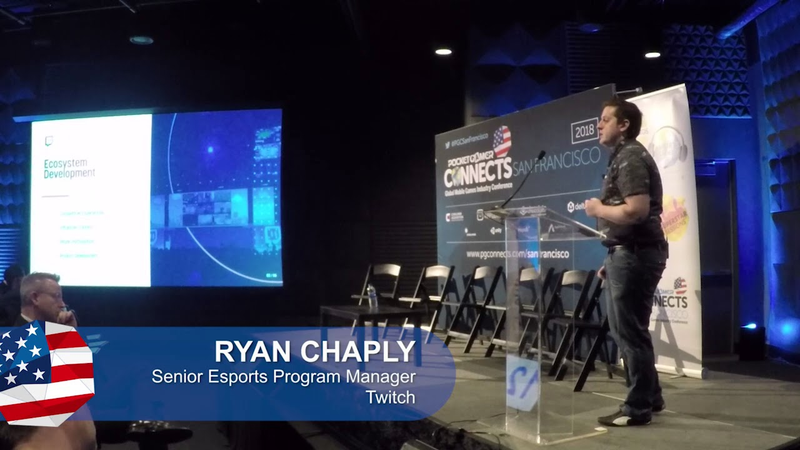
[Music] [Music] strange but it was a survey from a media coming asking about what do you watch what do you watch on TV in the evenings I thought great this is my chance I work at twitch I can actually have like an impact on some of these these research technologies of what people are looking at on on TV and I started going through the checklist and I saw ok sports stuff well I don't really watch a ton of that movies sitcoms no cable news shows now I mostly get that by reading online I kind of got through the end and realized wait I don't I don't have really anything on here that I'm actively watching the entirety of my content consumption is
through things like Netflix and twitch and crunchyroll and I'm checking off the box and realizing ok now I'm in the age group that's in the middle of the range and I'm almost having this bit of like a wait is this survey really really for me am i responding appropriately to this how am I going to affect what everyone else wants to watch but it kind of made me realize that maybe some of these companies just aren't quite there yet when it comes to general behavior of kind of the audience and there was number of conversations here I know people are playing for it not even more than they're then they're on tinder and in the US and I think this kind of demographic as we're looking at what we do in our day to day at twitch starts to kind of change the conversation of standard media and standard viewership habits to what we're thinking about with eSports so I want today to talk a little bit about how our organization and where
the the content team within twitch and eSports specifically in premium gaming and how we think about eSports content and content generation as well as all the conversations that we're having with game developers of how you can start to take the the eSports that you're developing and think about it from a product and from a viewership standpoint to actually integrate within the game just hit this button I might have to ask you guys to advance slides of this there we go so I want to start with the general pyramid that I hope most people in the room have probably seen some variant of this that they've been talking about eSports and what we're a very holistic perspective at Twitch when it comes to eSports and premium gaming and competitive gaming so we start off at the bottom obviously the grassroots competition so we always want to think about eSports as a big pyramid that involves everyone within the entire
ecosystem to create a path from that grassroots level going up through the community TOS that's not terms of service to the community tournament organizers and then up into the to the top level professional experience that you can get with with some of the the folks like ESL that just presented so this is a holistic look and then we also have the wheel I'm gonna be very buzzword heavy and chip heavy here today so we have a wheel that we think about of watch play and engage we want people who are watching the experiences to then think about okay I want to not just passively sit back lean back and watch I want to lean forward into the screen I want to engage with the stream in some way shape or form I want to participate in whatever competitive experience that I'm having right now I want to be able to go directly from watching the stream to chatting with the broadcaster's with the streamers to jumping into a tournament to engaging directly so we're very focused on how we create this kind of feedback loop between everyone else in the entire ecosystem and then on the
bottom I have three things that I'll get into a little bit more here talking a little bit about the ecosystems here talking a little bit about how we we focus on empowering content creator so the content creators and we're we're thing about eSports are a very meaningful part of it they they can sit within the grassroots competition they can sit within the community Tio's and as we've seen with with a lot of the battle royale games they they go right up to the top and the professional level and in some ways if designed properly they actually they can help bring people up through the entire pyramid and then the last piece is a bit more of the the product focus of how do we take some of these different product experiences that we want to design some of the feature sets that twitch provides some of the things that we work very closely with game developers on and how do we create that that watch play engaged cycle through the product itself button so one we're looking at designing
a ecosystem with game developers we want to drive all of these different things so the competitive experience portion of the of the gameplay is generally a a philosophy of great competitive experiences that everyone can participate in in some way shape and form and then allow them to funnel directly up into the into the pro and in a sense that they have the ability to participate compete get better and then convert into something that they can aspire towards so you want them to have the ability to become a pro but you want everyone to be able to have that chance of competing so comparing a traditional sports you might have a minor league in a feeder system that come into that all the way down to you know your t-ball level baseball sort so we want to we want to talk about how do we create those competitive experiences that live along every portion of the pyramid and
then how do we tie the influencers into all of those experiences from launch day through through the entire competition so instead of necessarily thinking about the product or the eSports budget as a marketing budget think about it as a core component of the entire product strategy so I want to have a marketing beat where I push out a tournament announcement with the launch of the game and then as the game is being developed I want to look at the roadmap and I want to tie those competitions and the influencer engagement throughout the entire roadmap into all the all the major beats so if I'm doing a major product release or a major update I want to make sure that I also am tying a tournament to that or an influencer piece into that so that the the entire watch playing gauge wheel goes through your your development cycle over months instead of over days player participation as a part of this
should continue to engage over time where we're looking at how do we engage players through long durations not just for one week or one month after the game comes out but how do we keep them engaged throughout years and all of this comes back to to a product development lifecycle so some of the conversations that that you may have seen in the media recently around the the Thanos mode and fortnight so the Avengers tie-in you can play as Thanos it's a solo game mode and you may have seen the the directors for for The Avengers said Oh several months ago when we were editing the movie you're like yeah we're playing fortnight in the middle of editing and we want to be able to have where we really like for a night so we got in touch with epic and said hey what can we do and within the space of several months they were able to go from this kind of like wild ideation of Avengers fortnight fun to an actual proct in the game in the pipeline and for for some folks who have been in
triple-a development for a while the integration cycle from an ideation phase through something getting into the product is often measured in six plus months so as we're looking at products around eSports we want to think about in the initial inception how can we shorten these timelines down to be able to take advantage of the things that are happening through influencers through the competitions the results of the competitions this is a little bit of an embarrassing slide but also one of my favorite examples of content that we've done recently it's a bit awkward because unfortunately as I was coming downtown today I saw the news about bosky kind of closing out so they're no longer with us but radical Heights it's a battle royale game from bosky and very recently we we did a influencer based stream where we had six North American and six European
influencers that played kind of competitively played the balrog game on on Twitch and it actually brought the game up to the the second most popular title on the site for a short time and this is a great example around how to create a competitive content that utilizes influencers and utilizes engagement as a part of it to to the platform in a way that's meaningful for viewers so viewers had an engagement method of their watching our main channel which is kind of going through all the six different broadcasters and and kind of saying oh here's what's going on here's who's in the lead right now here's the leaderboards and then those viewers would actually take the information being presented there and then go to the the individual channels they go to lyrics channel or summits channel and then in chat they'd be like encouraging him to to withdraw more money and hold on to it to try to win the game or to to kind of finish quickly and get to a new match so they were able to engage meaningfully with the
broadcaster's in this kind of competitive format and so this went on there's about a four hours for in the North America for hours for Europe and it was one of the most feedback wise from from the broadcaster is one of the most entertaining tournaments that they have had the ability to participate it and this is relatively easy to to spin up but this type of engagement becomes meaningful both for viewers and for players and then as we talk with game developers who want to take this type of idea rivals is a twitch owned brand and we use it for a number of different titles including pub G we do a pretty regular pub G rivals event and and take this and integrate it into into the product in some way shape or form so developing products you know one of the things I want to highlight here is especially in the wake of Facebook creators and viewers they they are not the product so we're very focused at
twitch in terms of not necessarily just thinking about a content creator or a streamer as something a resource that can be utilized we want to we think about them more as the value that the game can provide to these creators to to create this watch by play or watch play engage cycle and how good that can be so we want to make sure that they're not viewed as a product from a development standpoint and we want eSports to to drive engagement in an intelligent fashion so for for mobile focus games in particular we want to create experiences that also mirror what like how the viewers engaged with the games themselves so how do we create a mobile competition experience whether it's with influencers or how do we work with many of the people who are up here from mobile game companies to make the content that they're creating the eSports content there that they're
creating appeal to the mobile audience most effectively and one of the conversations that we often have with them is how do we utilize tool sets that they have within the game to to build this ecosystem growth one of the things that will be on the next slide that's been very popular for us is the twitch drops functionality so it's a feature that allows us to take viewers who are watching the stream and reward them for doing so so you can link your twitch account with your your game account and just by watching overwatch or Rainbow six eSports tournaments you can receive in game content and those types of things continue to drive now I've gotten something in-game from watching I'm gonna go back gonna boot up the game I'm gonna play it because I've got this cool new thing that I got from it I'm gonna get back and I'm gonna get back involved with the game so the third piece to that then is how do we bring the bring the
broadcasters into that cycle how do we create meaningful content pieces with these tool sets that we're working with developers on how do we create that - to really drive a I'm a fan of I'm a fan of lyric or a fan of Summit now I'm gonna watch some of their streams because I'm getting content that that drives me back into the game to keep playing and then as I mentioned before eSports is just a portion of the development lifecycle so this is an ongoing thing that we continue to do years after games are released and ideally instead of seeing a very sharp launch curve we want to grow games over time so fortnight is a great example of this again been around in general they have very long legs csgo is another great example it's it's been kind of growing over time instead of a launch and then and then trail so a few of the products that that we do so I mentioned drops already extensions is another one that we're talking with developers about pretty regularly and
extensions is also now launched on mobile which is very exciting for me it is essentially on top of the the viewing window screen the ability to interact and in pretty much any way you can imagine so you can basically write HTML 5 that kind of lives on the viewing experience the hearthstone is a pretty cool example of this there's an extension that you can see the decklist that people are playing with so think about an eSports tournament where the top two players are competing against each other and you want to see what cards this guy's got left in his deck that he could be top decking next so those are those are kind of experiences that you can build with extensions that we're having conversations around to build pretty aggressively account linking is used for drops but it's also very valuable for game developers because the that provides some information for you on how your players and viewers are engaging back with your game what type of behaviors they're they're following up on and then you know potentially what broadcasters
they're they're watching bits is another mechanic that if you've been watching overwatch League which is definitely one of our kind of forefront into some of these interactive experiences players your viewers can can cheer on the channel so they're essentially taking a digital good called bits and they're cheering it towards towards various things on the channel so you can cheer towards individual teams you can chair towards overall global rewards and as players cheer they get rewarded with different twitch features different skins and emotes as well as some things within the games and then fairly recently there's been a little bit of talk of a new feature that we're testing called the bounty board which is a feature that integrates different game broadcasters with game companies and kind of creates a direct link for them to to do some featured broadcasts so the
idea is that you can you can do a featured stream or a sponsor stream with different game creators with different influencers and a much more much easier fashion than having to go out and find an agency or find a potential broadcaster that may or may not be interested and then of course since we're we're twitching we're Amazon twitch Prime and Amazon game on are both features that are very exciting within our platform as a whole twitch prime is is pretty mature at this point but if you have any questions feel free to reach out to me after about it Amazon game on is a little bit newer here at this stage in the game but they're it's a they're actually focusing mobile game developers right now so I'd be happy to connect folks with with the game on team after after the talk today and that's a set of api's four different leaderboards different competitions and some pretty cool new engagement methods with players
and I think that was it yes so I want to leave a few minutes for questions from the audience just that how much's is twitch actually orchestrating kind of what we most recently seen with Drake and ninja kind of those big popular you know events versus obviously some of them were just happening organically so the Drake and ninja one that was quite a surprise to all of us within the office both times that that happened so like our internal slack channels were kind of going crazy about it ideally the more organic the better for us because it's just it's a natural type of thing there are definitely situations where since that episode we get approached quite regularly with how do I do this or how can I do this the the rivals product is something that that
we've created we're actually thinking about it before that happened but it's an area where we can kind of more formally create those type of experiences without without relying on it being kind of the the random walk chance that a broadcaster and a celebrity meet up so we're definitely thinking about it a lot the that type of experience and resonates very well it's very natural on Twitch but we want to also make sure that we're not getting into a situation where it looks like it's just a paid thing because Drake in India was completely completely organic the players yeah it's gonna depend on what type of competitions your your running battle
rails also a huge stream sniping is a big problem so depending on the type of tournament whether the extensions are enabled or what type of visibility give the extensions are concerns that you'd want to navigate around kind of the destructuring design and rule sets of the tournament as well as whether the extensions used or not it's it's also an issue both the hearthstone scenario or all the conversations we have a lot of conversations around Magic the Gathering for all of their Pro Tour events but you're on Twitch and that area the the deck lists often aren't known before the top eight because the the competitors kind of create them pretty regularly on the fly and and there's actually a strategic element where it's not desirable to have that information available so the opportunity from a development standpoint would be for a formal tournament you could disable the ability of the API to access the decklist up until a certain point or
within a certain time frame there seems to be a lot of consideration in the sinistairs which and yes so it's like I think the the concentration is in many ways it's a it's a perception there's a lot of names that come up pretty regularly we do see a very healthy amount of competition sometimes much to our chagrin but in terms of the the players that have kind of built the ecosystem often get associated with it so you have the Netflix is commonly associated with on-demand video service because they built it and because they grew so large with it but there are a number of other competing services out there some of
them are niche some of them are quite broad so I don't necessarily think that the concentration is preventative from anyone getting in the space we're we're pretty generalist when we work with pretty much every game developer to help to help them get the content on the platform and help them reach larger audiences but quite regularly we see a lot of content going to other platforms as well [Music] 37% in the US school-wide ESL said nearly 75 percent there is important [Music] I would have to defer to yourself for the specific numbers that they have you [Music]
you [Music]
Summary
The integration of esports into the broader product development lifecycle serves as a critical strategy for maintaining long-term player engagement and viewership. By shifting the perception of esports from a marketing expense to a core component of game design, developers can foster a sustainable ecosystem that bridges the gap between grassroots competition and professional play. This approach emphasizes a continuous feedback loop—the watch, play, and engage cycle—which encourages viewers to transition from passive observers into active participants within the game environment.
Key strategies for achieving this integration include leveraging influencer partnerships and utilizing platform-specific tools to enhance interactivity. Features such as Twitch Drops, which reward viewers with in-game content for watching tournaments, and extensions that allow for real-time data visualization, such as deck lists in card games, significantly deepen the connection between the broadcast and the gameplay experience. Furthermore, the use of account linking and API-driven leaderboards provides developers with valuable behavioral data, allowing for more informed product iterations and the ability to sustain interest well beyond a game’s initial launch window.
The industry is increasingly moving toward shorter development cycles for esports features, enabling developers to capitalize on organic trends and community-driven moments. By designing games with built-in competitive infrastructure and modular features, developers can create flexible, long-lasting experiences that evolve alongside their player base. This holistic strategy, which prioritizes the value provided to content creators and viewers alike, is essential for modern titles aiming to maintain relevance in a competitive media landscape. These practices are applicable across various segments, including mobile and PC gaming, and are designed to foster organic growth rather than relying solely on high-budget, short-term promotional events.













Comments