1 free read left. Create a free account for unlimited reading + AI research.
Create free accountArticle DiGRA
1 free read left. Create a free account for unlimited reading + AI research.
Create free accountArticleDiGRA
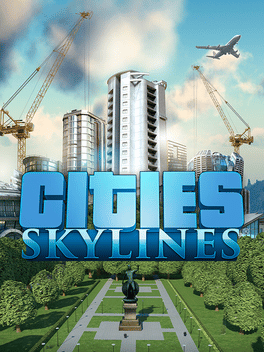
This paper examines the city-building game Cities: Skylines (Colossal Order, 2015) through an ecocritical lens, arguing that the genre reveals the forms of power driving the climate crisis. While the game appears to grant players omniscient control over construction, planning, policy, and economics, the author contends that beneath this fantasy of superhuman agency lies an ecological power in which growth and capitalist logics destabilise environments and ecosystems. Drawing on Eugene Thacker's concept of the "world-without-us," the analysis shows how the game's pristine opening landscapes invite players to transform an impersonal, unfamiliar planet into a "world-for-us" that is personalised and given meaning through civic construction.
The central finding is that the game's depiction of a world-for-us ultimately reproduces contemporary patterns of ecological power rather than offering alternatives. Although assembling a city within a natural environment can encourage a form of "ecological thought," the game's mechanics channel players toward unsustainable and destructive engagements with nature. Its ludic imperatives are described as reaffirming habituated responses, narrowing the futures players can imagine in ways that align with what the author terms a "capitalist realism" in which environmentally damaging systems appear natural and inevitable. The analysis draws on "procedural futurism" as a framework for understanding how simulation games model speculative realities.
The study is a textual analysis focused on a single game and draws on a body of ecocritical and game studies scholarship, including work by Alenda Chang, Benjamin Abraham, Timothy Morton, and Colin Milburn. The paper is presented at the Proceedings of DiGRA 2023 and was supported by a University of Auckland research development award. Its conclusions concern the opportunities for, and limits to, meaningful critique of contemporary power within games, rather than empirical measurement of player behaviour.
Each row is a game or company this document names, each column a document, oldest first. A mark means that document names it. Select a row to see those documents.

DiGRA · 2026

DiGRA · 2026



DiGRA · 2026
European Conference on Games Based Learning (ECGBL) · 2026