1 free read left. Create a free account for unlimited reading + AI research.
Create free accountWhitepaper DiGRA
1 free read left. Create a free account for unlimited reading + AI research.
Create free accountWhitepaperDiGRA
Distilling the key insights…
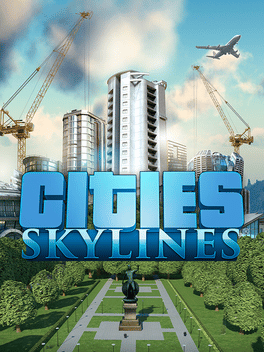
Cox and Zagal's study examines how sustainability can be measured and represented in city-building games, a question that matters because such games shape players' intuitions about urban systems. Grounding its analysis in the triple bottom line of social, environmental, and economic concerns, along with longevity, the authors select seven exemplar titles from a set of 16 games released between 2014 and 2019, spanning pre-industrial and post-industrial settings. Their central methodological contribution is an adaptation of an indicator-based urban sustainability framework into seven categories: water, land use, energy, clean air, social wellbeing, population density, and trade. Because games rarely expose detailed underlying data, the authors replace precise real-world metrics with descriptive, question-based indicators, a pragmatic adjustment that makes evaluation of virtual cities feasible.
Applying this framework reveals a consistent pattern. Water, land use, and social wellbeing are well represented, while pollution across air, water, and land is largely absent or underdeveloped. Water is typically modeled as an unlimited resource, and only Cities: Skylines and SimCity: BuildIt incorporate sewage or garbage mechanics. Social wellbeing also shifts with era, operating at the level of individual citizens in pre-industrial games and at the neighborhood or societal level in post-industrial ones.
Further analysis of density, trade, and energy shows that population density acts mainly as a capacity limit rather than a per-lot measure, and that barter-based pre-industrial games involve far less trade than currency-based titles. Although energy appears in every game, pollution and renewable options are modeled only in Cities: Skylines and SimCity: BuildIt, where clean energy is costly and unlocked late, making pollution-free cities nearly unattainable. The authors conclude that these games generally reward economic and social growth over environmental conservation, with pre-industrial titles offering more subtle environmental messaging as the partial exception.
Each row is a game or company this document names, each column a document, oldest first. A mark means that document names it. Select a row to see those documents.
DiGRA · 2022
DiGRA · 2022
DiGRA · 2022
DiGRA · 2022
DiGRA · 2022
DiGRA · 2022
DiGRA · 2022
DiGRA · 2022
DiGRA · 2022

DiGRA · 2022
DiGRA · 2022
DiGRA · 2022
DiGRA · 2016