1 free read left. Create a free account for unlimited reading + AI research.
Create free account
Building an effective paid UA operation for mobile apps in a multi-channel environment
Key insights
6 takeaways- 01Diversifying beyond dominant platforms like Google and Facebook is essential to mitigate market saturation and maximize ROI in mobile user acquisition.
- 02Centralized management software enables teams to scale by providing a unified dashboard for cross-channel campaign execution, asset management, and bulk optimizations.
- 03Automating repetitive administrative tasks through centralized infrastructure allows UA teams to shift their focus from manual per-channel management to high-level strategy and LTV-based acquisition modeling.
- 04Typical users of centralized UA management platforms manage between 20 and 30 advertising channels, with the total range spanning from 5 to 300 channels depending on organizational scale.
- 05Operational efficiency is achieved by aggregating performance data across platforms, allowing for real-time budget reallocation and the identification of underperforming campaigns.
- 06Current management technology is primarily optimized for major ad networks rather than direct exchanges or DSPs, focusing on streamlining workflows for high-growth mobile and gaming applications.
Ask AI about this video
Transcript
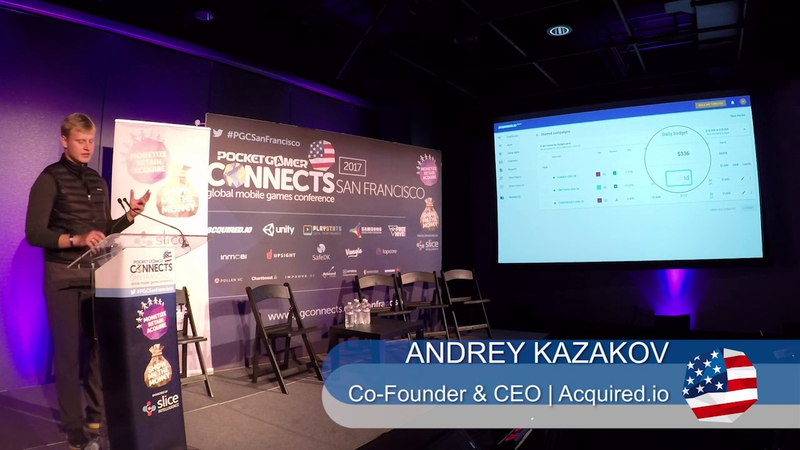
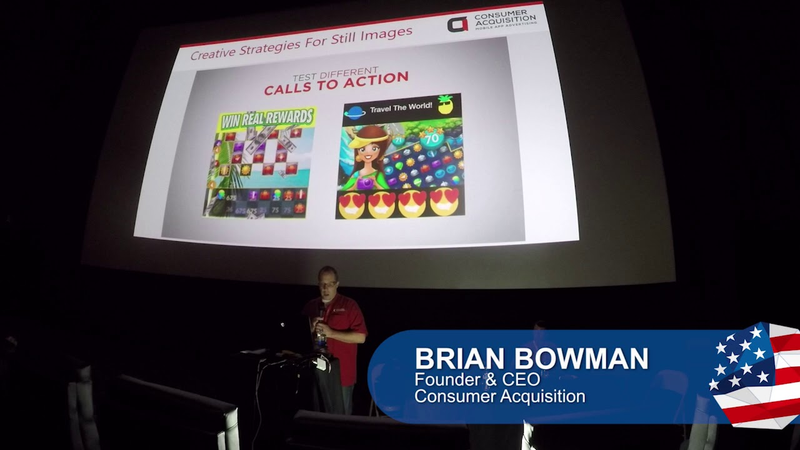
Hi. Thanks for having me. So, in this one, we're going to talk about the need and efficiency of building multi-channel portfolios across advertisers and buying. So, and let me tell you a little bit about my background and what I've done before that. So, I started off as an engineer and AMC then had a small VC firm, but it turned out well on a small fund. We like invested many companies, had five exits. After that, with my partner, I found a company called AppsFlyer. We were doing mobile marketing intelligence to the sense that we were showing like we just were on where. So, different competitor like different advertisers could do competitive analysis with regards to like other parties user acquisition. And we had that one was really favored by
gaming companies. We had a lot of gaming companies using the product. King.com, uh Kixeye, IGG, a lot of others were our our customers. We had more than 200 gaming customers using the product. Then eventually it ended up uh acquired by AppAnnie and that became AppAnnie marketing intelligence because like that that that's a very organic fit to their product suite. They have a lot of data so that become even more powerful solution. Um we got out of AppAnnie in January and we were just observing this pace itself and we figured out that after having a lot of conversations with different people that there is a definitive cost of using many channels when an advertiser does ad buying. However, everyone realizes the need and value in it. So, I pretty much every advertiser you can think of is willing to you like spend in a diverse fashion across different channels, but there is definitive cost to doing that.
So, let's talk a little bit about like why do we think that band buying across many channels is a good idea? It's because like it on one hand you can think that you can always stick to Facebook and Google and that might get the job done. Uh why that might not be the case. Uh like one of those is that you really need to be able to get max ROI on your ad spend regardless of the situation and even with the platform as vast as Google and Facebook, there are moments when your particular target group gets overbought. In that particular sense, you got to either compromise on return or you cease ad buying and that happens to a lot of advertisers. And if you have a diverse portfolio, you just reallocate your budgets towards other channels so you don't so you're not depending on just several big ones. Um and also, I think important one here is that the the ability to have an ongoing process of channel discovery so you can try new things in a rapid fashion because like there are people
coming up with new ad units um and new ways to acquire users and you have and you need to have ability and bandwidth to try those things. Also, there are a lot of networks which have like exclusive relationship with inventory, right? For example, like the back in the days I think I think like Miniclip was exclusive to AdColony for some time. Or a Trebec crack was exclusive to Vungle. And if you want to get there, you just got to work with those parties. Otherwise, you just not getting there. And that's why I want to emphasize that the need for diversified portfolio is meaningful. Uh going forward like the process of adding new channel and having a channel on board is somehow costly because like you need to measure statistically meaningful budget to try a new channel. You need new legal relationship to manage, and then uh you need to actually optimize and scale that up. So, your effort per certain channel is uh
very meaningful, and given the way things are, like there are a lot of per channel operations that are pure cost and manual work for advertisers. Like things like adjusting bids, changing targeting, working with sources and sub publishers, managing creatives. Uh all of that is like a combination of manual work advertiser needs to do on a per channel basis. And that that that that contributes a lot into actual day-to-day activity of every advertiser. So, they need to either like expand their team or seek efficiency in other places. Also, adding adding new channels uh makes uh makes it harder to act on the whole portfolio in general because you need to basically analyze more data. Uh so, you can act uh in a timely fashion. Uh we also observe an interesting fact that number of actual channels to acquire users from is growing. However,
it doesn't feel that way uh because like we see some consolidation in this space, but we also see a lot of like new big channels coming, like Snapchat start offering app install ads, you can do that in Pinterest, and there is more things to deal with for app focused advertiser. And on the other hand, operational infrastructure to just basically be able to operate that is vast because like you need to have like you need to deal with a variety of networks, you need tools to visualize that, you need something that aggregates cost. You use a You also you you you do that with some kind of attribution partner. You have BI to do your projected lifetime value. So, this is like a complex infrastructure that advertisers have in house to make uh uh uh uh things working. And what we do is we we're working on we're working on making sure that your ad team has ability to manage their channels in a more effective way.
So, we focus on the relationship between user acquisition team and channels in that grand scheme of things. So, they can they have like a one product centralized dashboard where they can act right where their data is. So, they can adjust bids based on campaigns performance and manage creatives and create campaigns in one dashboard that is applied to variety of different channels that are meaningful for their ad buying. Uh so, let me show several cases how our product can uh actually streamline the process to create campaigns across different channels. So, basically there's just like a wizard that gives ability to select your channels, uh apply your timing, and targeting, and creatives. So, you can actually uh use one creative base uh across variety of channels that that you want to run that campaign on. So, you can say like you want to run run that on Vungle, Chartboost, and AdColony, and you upload assets from one assets repository, and
here you go. You can also use assets which are performing well on one ad unit type using our repository uh to be applied to the other channels. So, like if there's a video which is good on Vungle, you can flip that to AdColony and back and forth. Uh and yeah, so in a centralized fashion, you can create one group of campaigns on variety of channels without dealing with every one uh of them individually. And we see a lot of value at here just because we save you ad buying teams time doing the those operations. Otherwise, they just need to do a lot of work per every individual channel. Uh so, going forward, there's also like a lot of things going on. Like the number of channels advertisers working from really varies from like 5 to 300 depending on the company size. Usually, it's between 20 to 30 across like our customer base. Uh and
growing the number of channels just makes it harder to act on like the whole portfolio of channels advertisers working with. So, we give advertisers a tool and ability to act right where you their data is. So, they can find certain campaigns which are which fit certain metrics. So, for instance, what you can do in really powerful, you can use pivot tables and act right in that table. So, you can say, "I want to see all the campaigns with ROI under 10%." And no matter what the channel is, we can just have those campaigns selected and take you to the interface where you can act on those campaigns. Uh and and current environment you deal with you deal with the with the cost aggregation product and every channel individually. So, this is like a multi-hour operation because you need to see where which ROI is where and then you go to every individual dashboard and change things. And we can give
advertisers ability to do that in just several clicks. So, yeah. And we select campaigns from different channels and then advertiser can switch the budget in a matter of several clicks without dealing with every every certain channel individually. We can also do group operations here. And basically, you can change any possible metric for the campaign itself based on that selection. And that can be either budget or bid. We make it as flexible as we can. At the moment, we support 20 biggest platforms, but we're going to increase that list to like whole whole portfolio of 50 channels. But we're we would just launch today to public with with that 20 biggest platforms at the moment. So basically we see ROI on that problem like I think it's important to understand ROI on having diversified portfolio in general as we discussed earlier that
gives advertisers ability to react on certain market situation that not dependent on several sources of their paid audience. And we're just making that affordable. I think that's the thing. So like if you want to have a diverse portfolio of channels, you don't need a team of 10 people, you just need a product that helps you run your campaigns like ours. So it helps smaller companies do more and actually it helps like bigger companies be even more effective. Surprisingly like we have like a lot of good feedback from big advertisers. I thought it would be like more more of a product focused on like smaller advertiser, but we really see big spenders with significant teams very enthusiastic about like ability to improve their efficiency as as our product. Like we have several early customers that includes IGG, which is I I got games, and text messaging company.
Yeah, this is it. So I'd love to learn what you guys think and thanks for having me. We've got a little bit of time left here. Do you want to take questions if anyone has them? Yeah, we'd love to. Yeah, okay, we've got a we've got a few minutes, 4 minutes. So does anyone have any questions for for Andre about Acquired AI's work? Maybe not. Is it all ad networks that you're you're integrated with or exchanges as well? Yeah, at the moment this is mostly ad networks. So like no like we all have several DSP partners, no exchanges directly because like the product itself is not a DSP, it's more for software that powers ad buying functionality. But this is this is on a road map. And we're focusing exclusively on apps. Just to be sure. So like this is like our customer is somebody whose product is application and whose goal is either like he has an clear understanding of either LTV
or like volume. I can give a lot of non-gaming examples like Hotel Tonight where all those companies are qualified customers. However, we're like we're thinking of gaming as our like beachhead because a lot of those ad operation challenges they're seen in gaming and we're working on solving them. Oh oh sorry, can we get can we get a mic to you because I we can't we can't necessarily all hear it but I think so. Thank you for Wait and there we go. So if we do use a channel that's uh not supported by your platform, uh won't that fragment our UA activities? We'd have to manage the finances manually for that channel. Is your uh do you have any sort of flexibility that we can plug in a custom channel of our own into Yeah, absolutely. So like you it's not us versus something else. So you can use like So you you can run some of your portfolio through Acquire.io and some things directly. What what what we've seen is popular
that advertisers use it a lot for like you know, they think like there's Facebook, Google and everything else and we're a good option for everything else. We're not looking to I don't know, go and compete with say Nanigans in terms of doing Facebook better. This is like not what we're going to do. So if you have a direct deal with somebody, let's say a website uh that's targeting a niche, um are we able to plug that relationship into the system? It it does depend on like well how do you power that? For example, I don't know. If you use like ad colony to power that relationship, for example. That's possible. If this is like a pure direct deal without any bigger infrastructure partner, that will be less likely to be the case to support it.
Summary
The primary challenge in modern mobile user acquisition (UA) is the operational inefficiency inherent in managing a diversified, multi-channel advertising portfolio. While relying solely on dominant platforms like Google and Facebook may seem efficient, it exposes advertisers to market saturation and limits growth opportunities. A diversified strategy is essential for maximizing return on investment (ROI) and discovering new, high-performing inventory. However, the manual labor required to manage dozens of disparate channels—including bid adjustments, creative management, and data aggregation—creates a significant barrier to scaling these portfolios effectively.
To address these challenges, centralized management software has emerged to streamline operations for app-focused advertisers. By providing a unified dashboard, these tools allow teams to execute cross-channel campaigns, manage assets from a single repository, and perform bulk optimizations across multiple networks simultaneously. This infrastructure reduces the need for large, manual-heavy teams, enabling even smaller organizations to maintain a broad, competitive channel mix. The typical customer base for these solutions manages between 20 and 30 channels, though the range can extend from 5 to 300 depending on company size.
The effectiveness of this approach is measured by the ability to act on performance data in real-time. By aggregating metrics across platforms, advertisers can use pivot tables to identify underperforming campaigns regardless of the source and reallocate budgets with minimal friction. While the current focus of such technology remains on major ad networks rather than direct exchanges or DSPs, the goal is to provide a scalable framework that allows UA teams to focus on strategy rather than repetitive, per-channel administrative tasks. This operational shift is particularly critical for gaming and high-growth mobile applications that rely on precise lifetime value (LTV) projections to drive their acquisition strategies.

















Comments