1 free read left. Create a free account for unlimited reading + AI research.
Create free accountWhitepaper DiGRA
1 free read left. Create a free account for unlimited reading + AI research.
Create free accountWhitepaperDiGRA
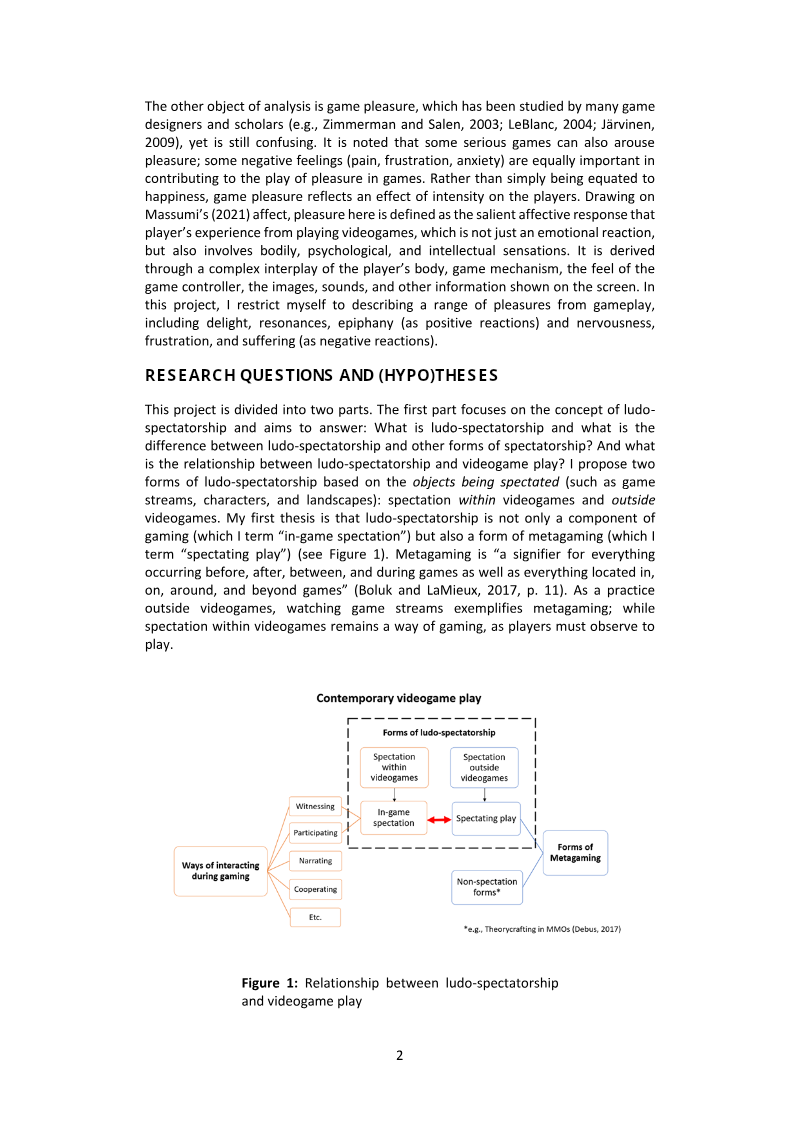
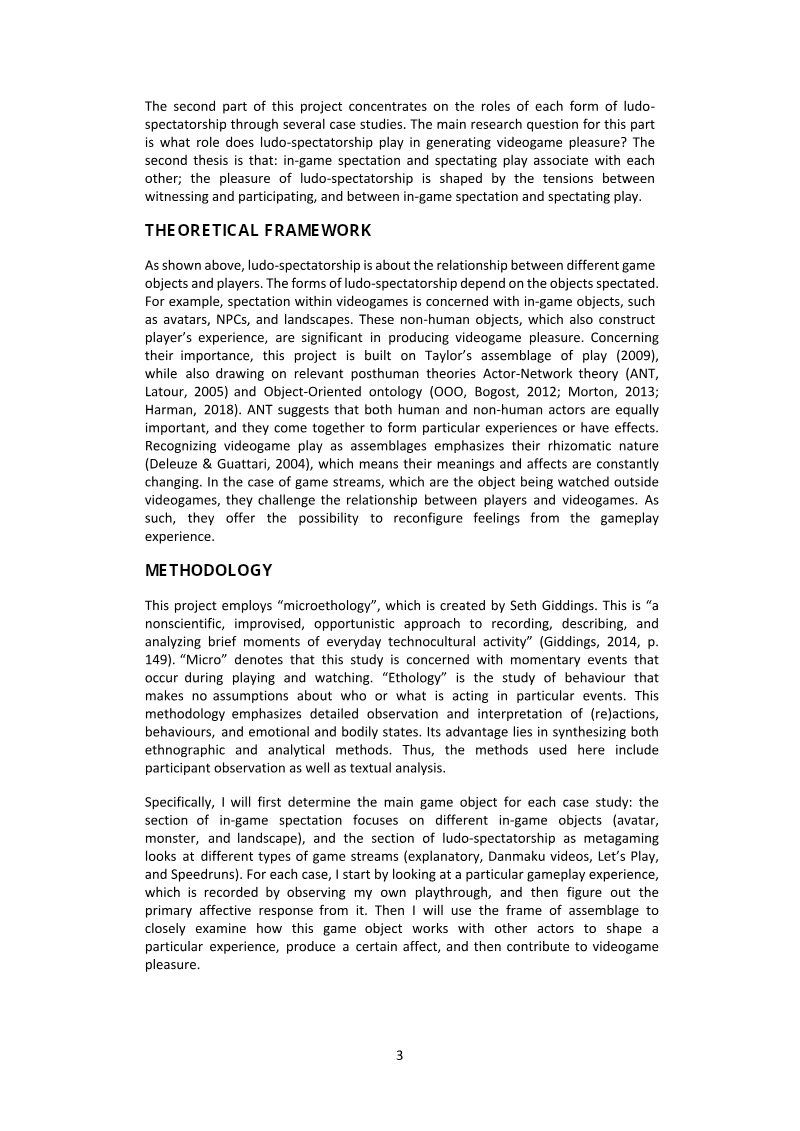
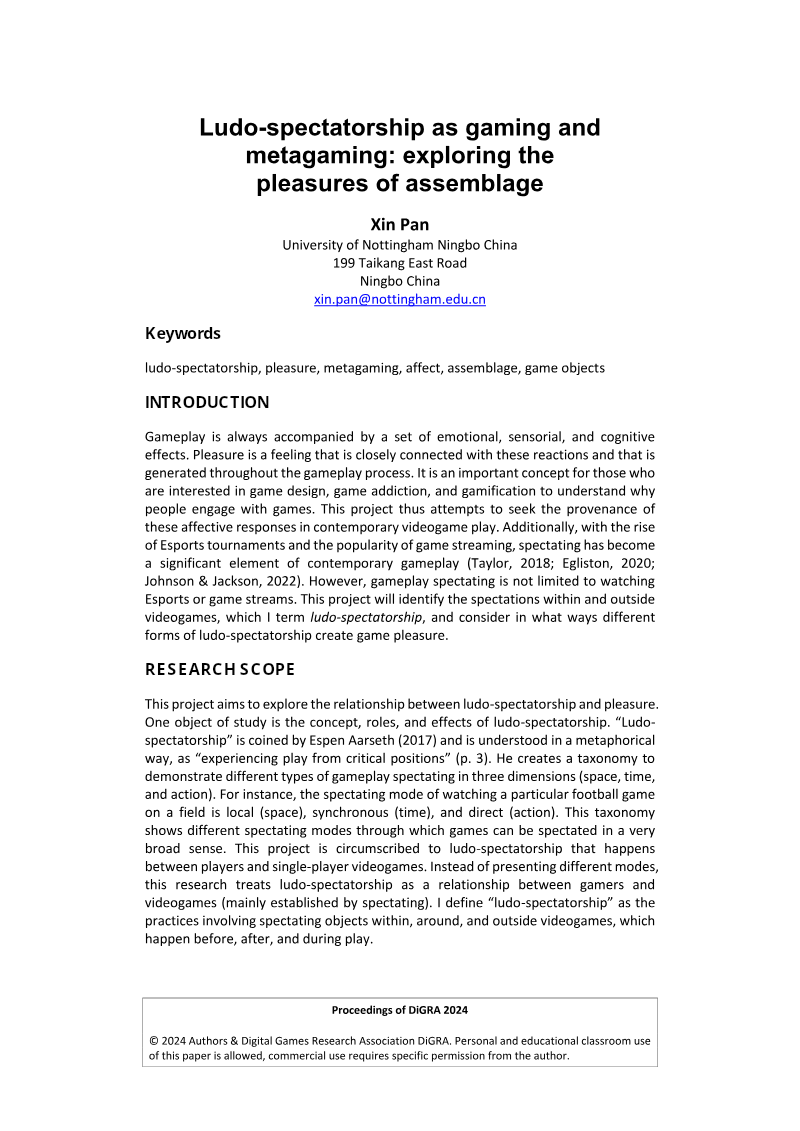
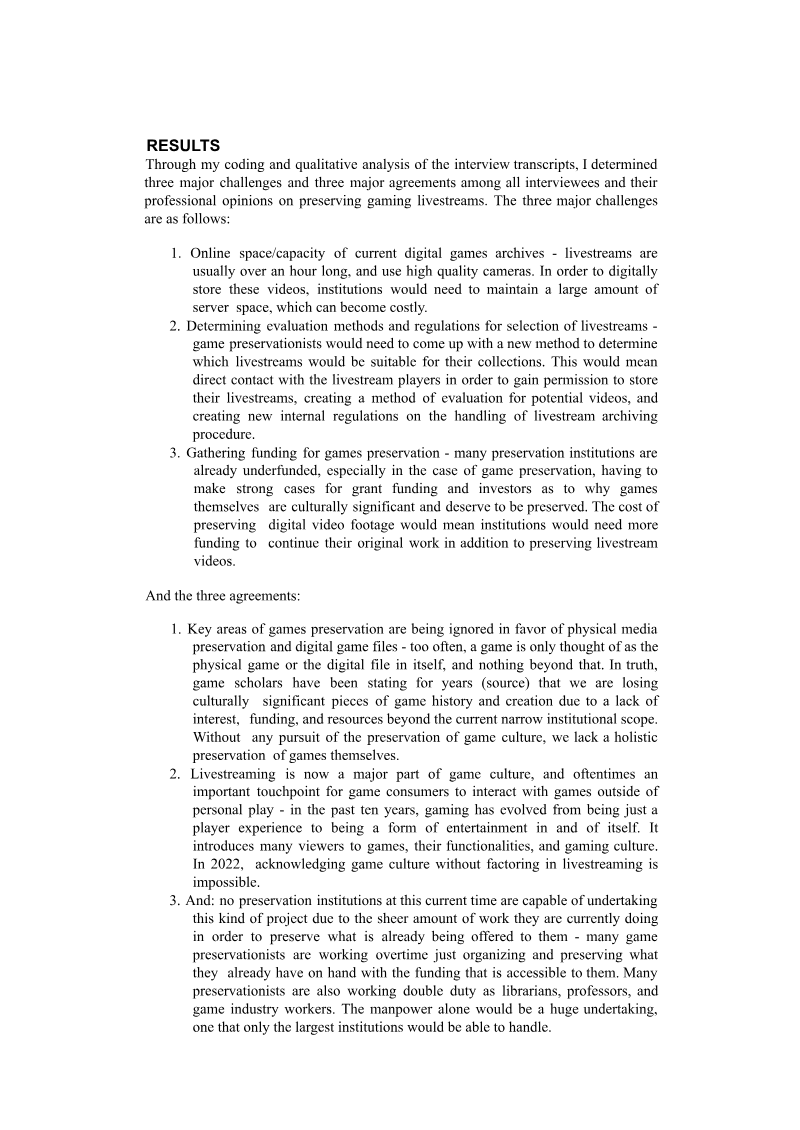
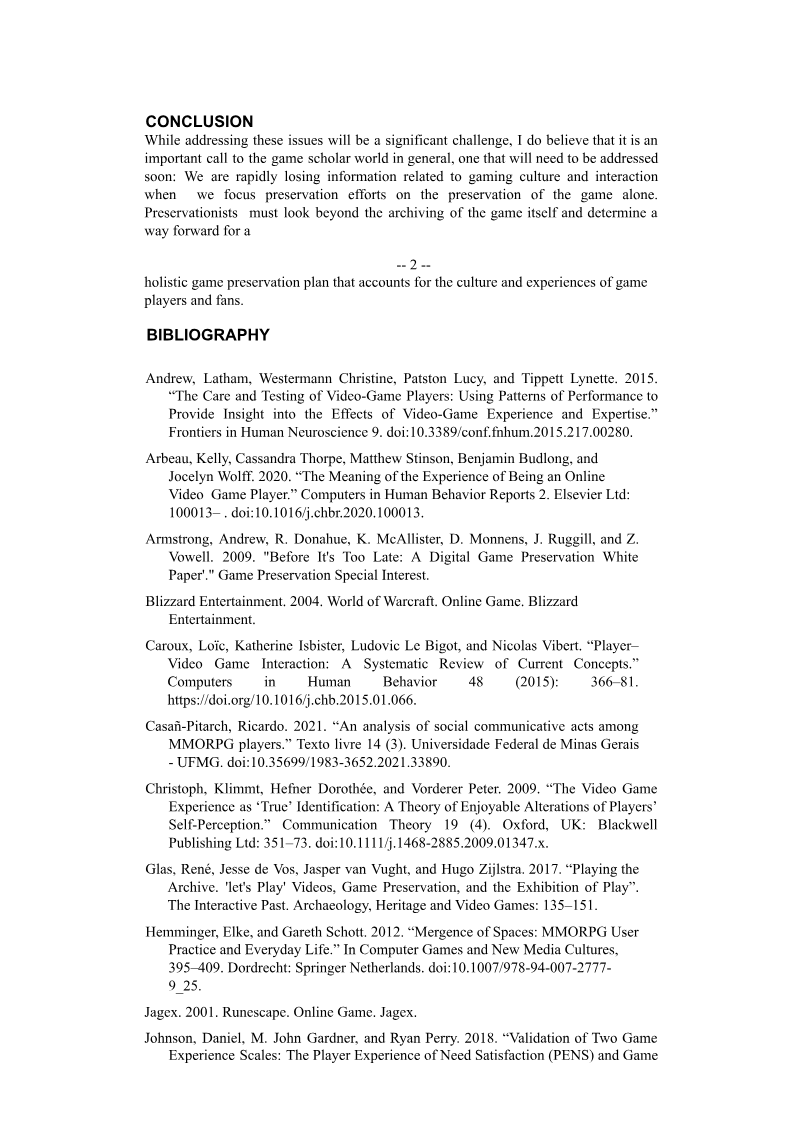
The paper frames spectating game streams as a form of metagaming built into the act of play itself. It shapes how players respond emotionally and cognitively.
This paper examines how spectating game streams functions as a form of metagaming that shapes players' affective experiences in Inscryption (2021), a roguelike card game. Its central argument is that spectating is not merely an external source of information but is woven into the act of play itself, influencing how players emotionally and cognitively respond to their own gameplay. Drawing on assemblage theory, Actor-Network theory, and the concept of the magic circle, the author positions videogames as dynamic assemblages defined by the interplay between human players and nonhuman operations rather than as stable, self-contained objects.
The analysis rests on a single-participant case study: the author's own playthrough of Inscryption, combining gameplay with the viewing of streams and recorded field notes on physical reactions, behaviors, and feelings. The study identifies three moments of uncanniness, understood as an affective response arising from the unfamiliar-familiar, which is fostered through the in-game environment, mechanics, and non-player characters. The first moment is generated entirely within the game, while the second and third are triggered by external game streams. The second occurs when footage from a YouTuber reveals that the player's earlier actions were a recording of another person's playthrough, and the third arises when an explanatory video resolves the game's central mystery.
The paper concludes that these stream-induced moments constitute "breaking the fourth wall," a form of metagaming in which the boundaries of the magic circle are deterritorialized and renegotiated. Explanatory videos, in particular, were found not only to produce but to intensify the uncanny built by earlier moments. Because the findings derive from one player's subjective account, their generalizability is limited, though the work offers a conceptual framework for studying spectatorship in relation to affect and play.
Each row is a game or company this document names, each column a document, oldest first. A mark means that document names it. Select a row to see those documents.

DiGRA · 2026

DiGRA · 2026



DiGRA · 2026



DiGRA · 2026



DiGRA · 2026



DiGRA · 2026



DiGRA · 2026



DiGRA · 2026

DiGRA · 2026



DiGRA · 2026



DiGRA · 2026

DiGRA · 2026
DiGRA · 2024