1 free read left. Create a free account for unlimited reading + AI research.
Create free accountWhitepaper DiGRA
1 free read left. Create a free account for unlimited reading + AI research.
Create free accountWhitepaperDiGRA
The study surveyed 1,017 players of four online collectible card games. It found player experience differs meaningfully between titles, so findings from one game should not be generalized to the whole genre.
This DiGRA 2019 study examines how players of four online collectible card games experience need satisfaction, drawing on a survey of 1,017 players of Hearthstone, Eternal, Faeria, and The Elder Scrolls: Legends. Its central argument is that player experiences differ meaningfully from game to game within the same genre, so findings from a single title should not be generalized to collectible card games as a whole. The authors attribute these differences to specific design features and to whether players arrive with prior familiarity with the franchise.
The quantitative results show significant variation in autonomy and competence satisfaction across the four games, though not in sense of community. Game membership accounted for roughly 13% of the variance in autonomy satisfaction and 9% in competence satisfaction. The Elder Scrolls: Legends produced the highest autonomy scores (M = 4.1), while Hearthstone produced the lowest (M = 3.3), and Eternal players reported greater competence satisfaction than Faeria players. Notably, Hearthstone ranked significantly below the other titles on both autonomy and competence despite having the largest player base among the four.
Qualitative responses help explain these patterns. Players credited positive experiences to board design, strategic depth, flexible deck-building, and generous reward systems, while Hearthstone players most frequently criticized randomness and one-turn-kill decks. Based on these accounts, the authors recommend design features such as meaningful board representation, responsiveness to player actions, and flexible deck construction as means of supporting player satisfaction. The study's scope is limited to four online collectible card games and a single survey sample, and its conclusions are framed accordingly.
Each row is a game or company this document names, each column a document, oldest first. A mark means that document names it. Select a row to see those documents.
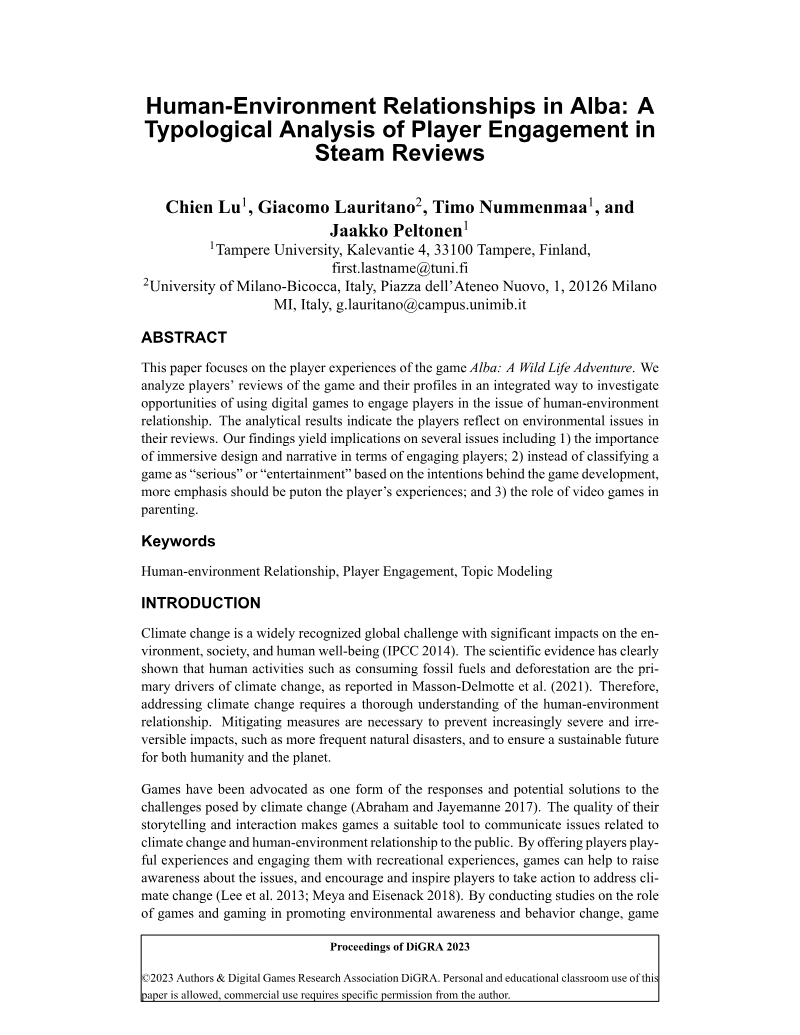
DiGRA · 2023
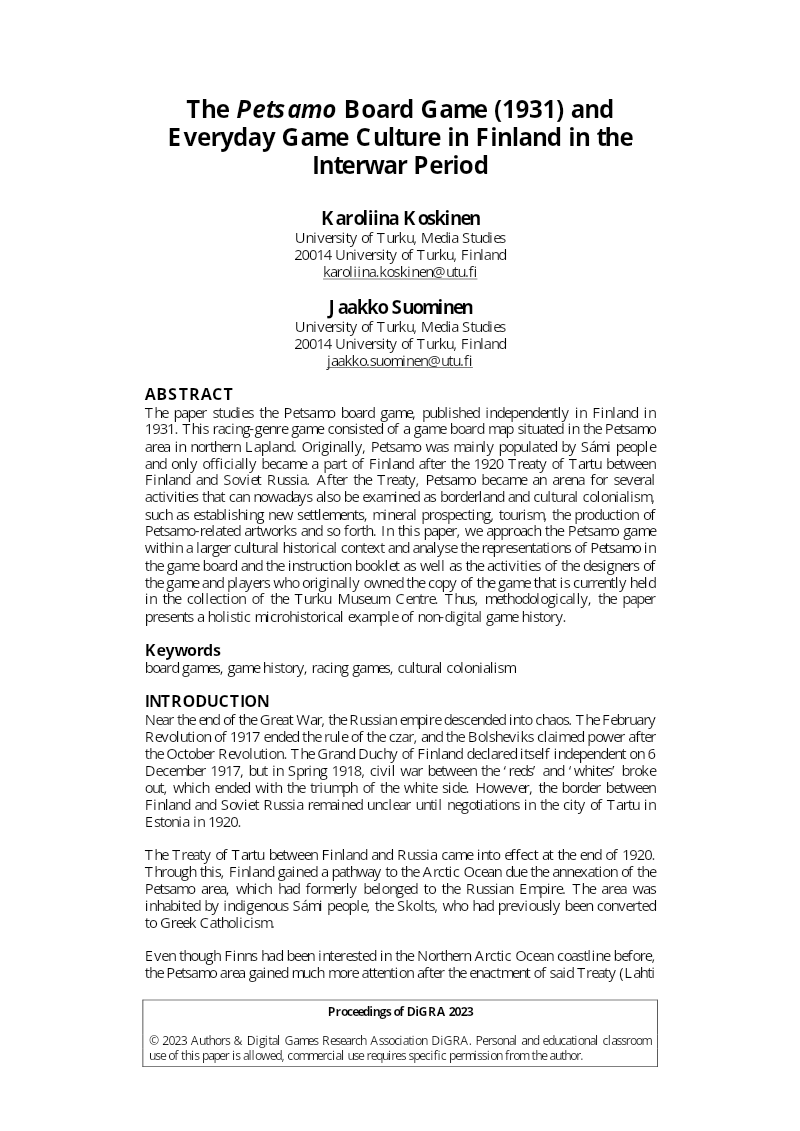
DiGRA · 2023
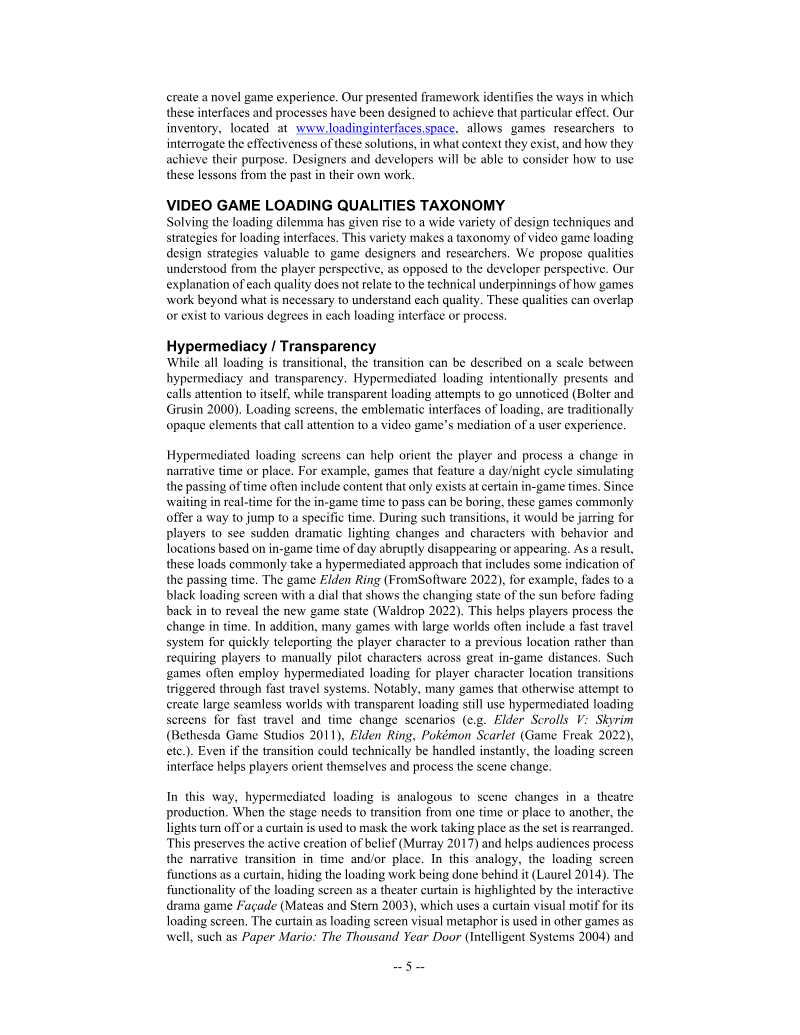

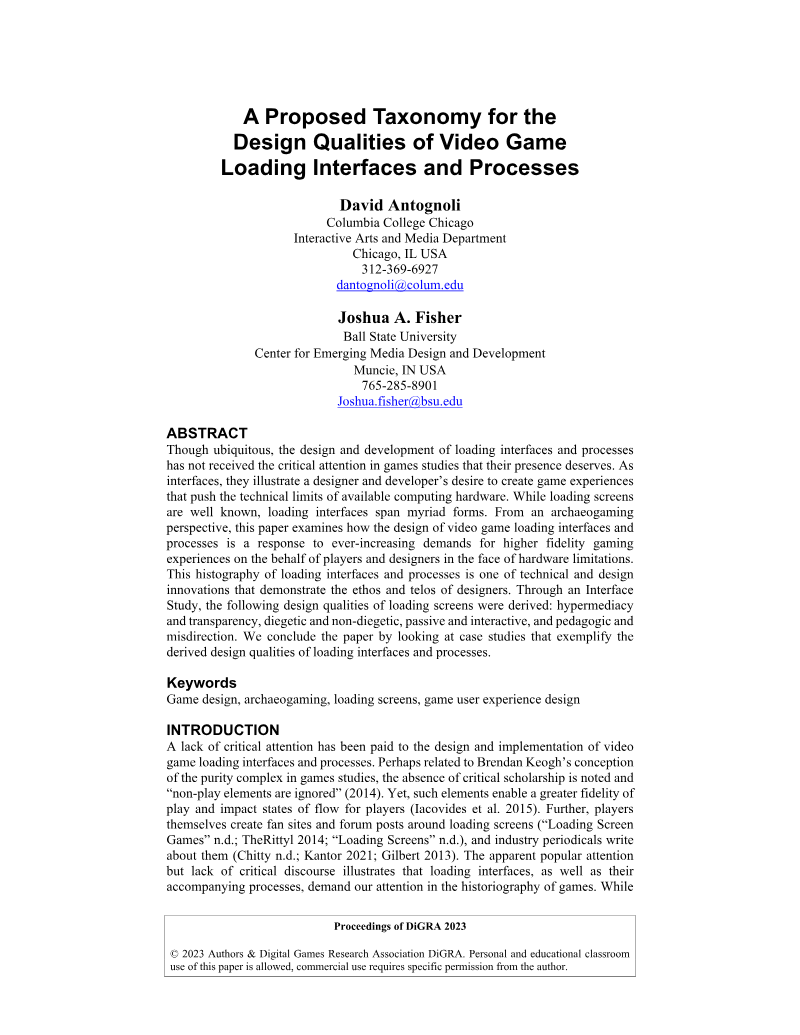
DiGRA · 2023
DiGRA · 2023
DiGRA · 2023
DiGRA · 2023
DiGRA · 2023
DiGRA · 2023
DiGRA · 2023



DiGRA · 2023
DiGRA · 2023
DiGRA · 2023
Extra Credits · 2019