1 free read left. Create a free account for unlimited reading + AI research.
Create free accountWhitepaper Loading... The Journal of the Canadian Game Studies Association
1 free read left. Create a free account for unlimited reading + AI research.
Create free accountWhitepaperLoading... The Journal of the Canadian Game Studies Association
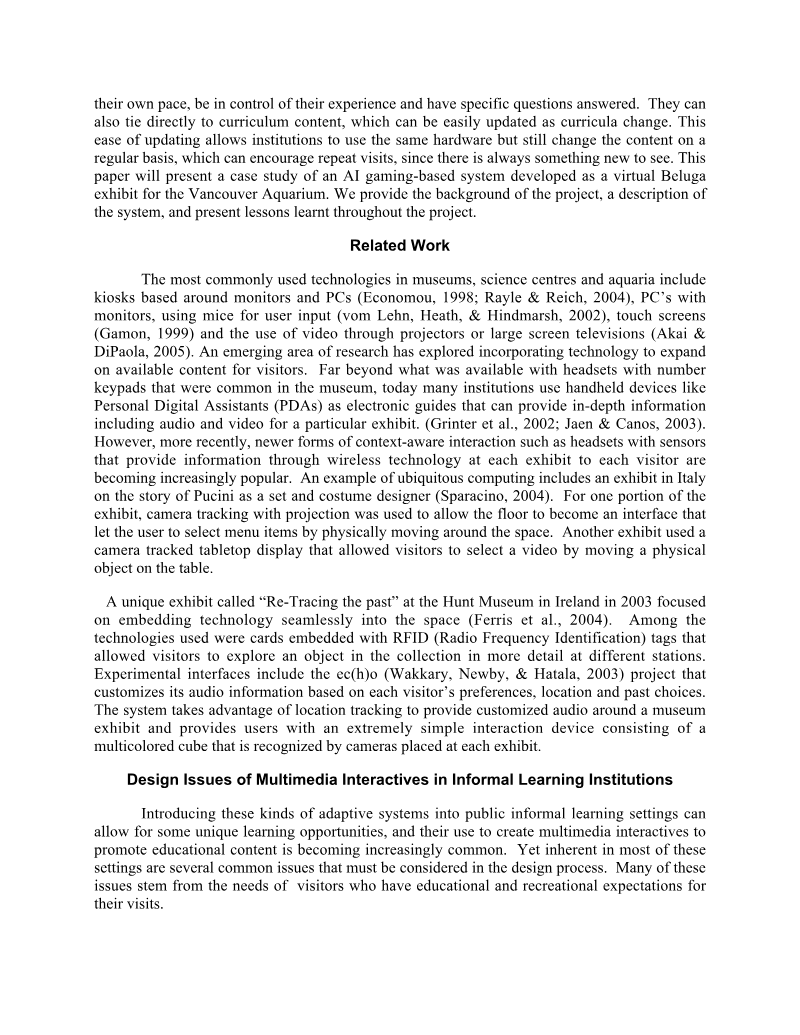
The Virtual Beluga Interactive project aims to move beyond traditional static signage and video displays.
New approach. The project replaces static displays with a 3D AI-driven simulation for active learning.
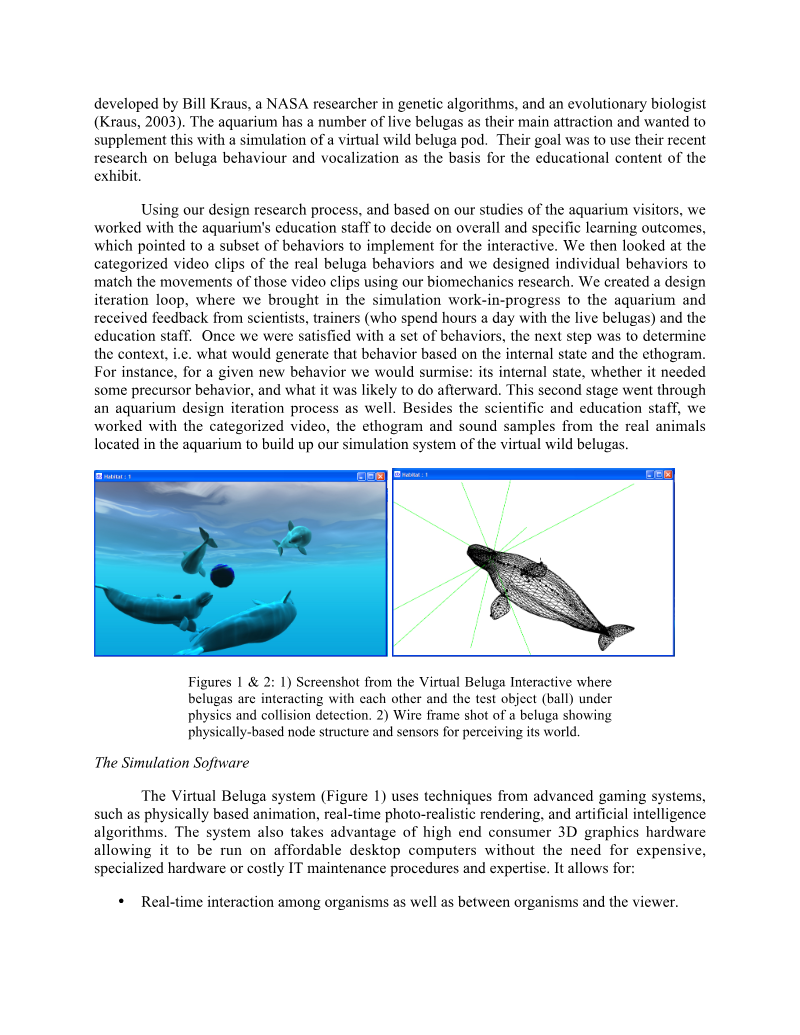
The Virtual Beluga Interactive project demonstrates the integration of artificial intelligence and advanced gaming technologies into informal learning institutions to enhance visitor engagement. By developing a 3D simulation of a wild beluga pod for the Vancouver Aquarium, the initiative aims to move beyond static signage and video displays, allowing visitors to explore complex marine biology concepts through interactive, non-deterministic "what-if" scenarios. The project emphasizes the transition from passive observation to active, collaborative learning, specifically addressing the needs of group-based visitors who frequent such institutions.
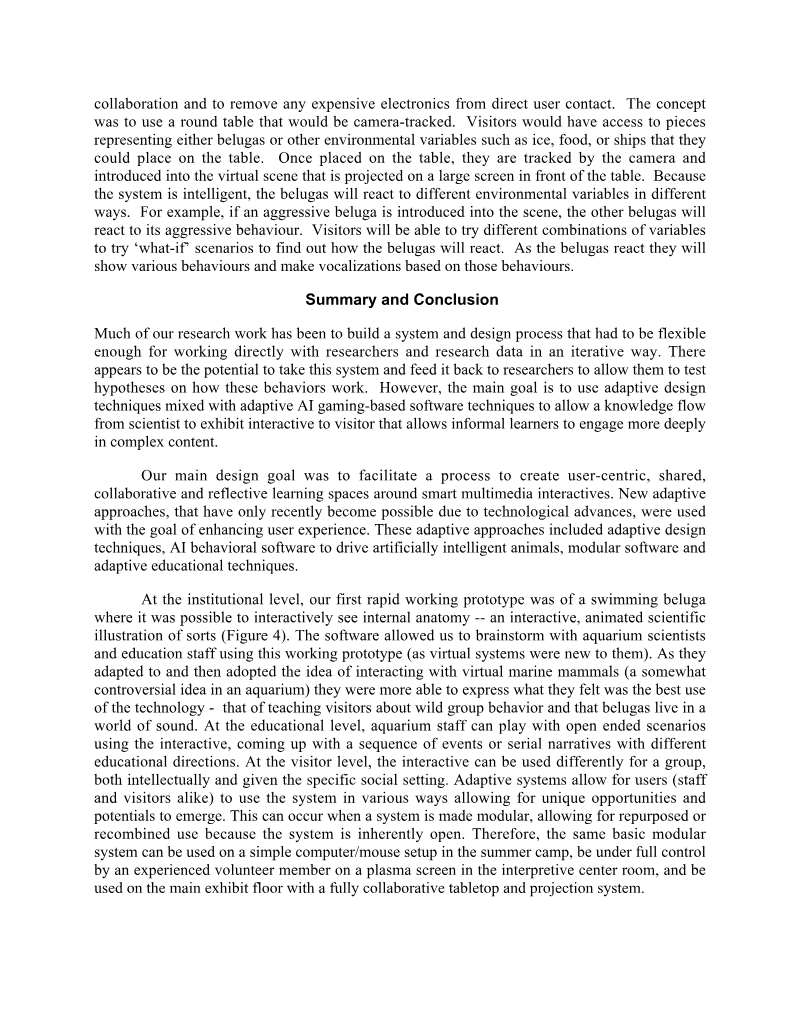
The system utilizes physically based animation, real-time rendering, and neural network-based AI to simulate realistic animal behavior. The simulation is grounded in scientific data, including ethograms, vocalization recordings, and expert interviews with marine biologists. A key feature of the design is its modularity, which allows the software to scale across different hardware configurations—ranging from simple desktop setups for educational camps to collaborative, camera-tracked tabletop interfaces on the main exhibit floor. This flexibility ensures that content can be updated to reflect evolving scientific research, thereby encouraging repeat visits.
The methodology involved extensive observational studies of visitor behavior, which revealed that 90% of guests attend in groups, necessitating a collaborative interface design. Through an iterative development process, researchers and aquarium staff refined the simulation to ensure it remained respectful of the animals while effectively communicating that belugas exist in a complex acoustic environment. Ultimately, the project serves as a template for future exhibit design, proving that adaptive, AI-driven systems can successfully bridge the gap between scientific research and public education by providing a personalized, responsive, and deeply immersive learning experience.
Loading... The Journal of the Canadian Game Studies Association · 2018
Loading... The Journal of the Canadian Game Studies Association · 2018
Loading... The Journal of the Canadian Game Studies Association · 2017
Loading... The Journal of the Canadian Game Studies Association · 2017
Loading... The Journal of the Canadian Game Studies Association · 2017
Loading... The Journal of the Canadian Game Studies Association · 2017
Loading... The Journal of the Canadian Game Studies Association · 2017
Loading... The Journal of the Canadian Game Studies Association · 2017
Loading... The Journal of the Canadian Game Studies Association · 2017
Loading... The Journal of the Canadian Game Studies Association · 2017
Loading... The Journal of the Canadian Game Studies Association · 2016
Loading... The Journal of the Canadian Game Studies Association · 2016
International Journal of Serious Games · 2024