Medieval videogames have typically been judged against the standard of historical accuracy, and this study argues that such a standard misses how these games actually work. Its central thesis is that the sense of historical authenticity conveyed through imagery, sound, and atmosphere offers a more productive lens than factual fidelity for assessing how games reimagine the medieval past. Drawing on examples such as The Witcher 3 and Assassin's Creed II, the argument positions itself between the ludology and narratology debates in Game Studies, suggesting that historians need a third perspective because neither dominant framework adequately addresses historical representation.
The analysis rests on the idea that historical films and games draw from a shared cultural repository of popular images of the past. Dubrovnik standing in for King's Landing and Vikings appearing in the medieval-themed Mount and Blade illustrate how audiences recognize and accept "authentic imagery" even when it departs from documented history. Scholars including Alcázar, Kelly, and Eco describe a plurality of medievalisms and a collective modern imagination of the Middle Ages. Medieval games, on this account, cannot accurately recover the past; instead they generate a hyperreal, generic "medievo" that mirrors present-day perceptions and concerns.
The study pushes against dismissing such games as mere simplifications. Using The Elder Scrolls V: Skyrim as its principal case, it argues that the game's "historyscape" of Norse architecture, music, and ambient sound produces a convincing medieval atmosphere, and that such games function as transformative spaces that rework earlier medievalisms. Accordingly, medieval videogames are legitimate objects of historical analysis.
The study concludes that historians should treat historical games as their own way of reimagining the past, and it proposes "authentic imagery" as a framework applicable beyond medieval settings, including to the Cold War aesthetics of Fallout. Its author acknowledges the limits of a single case study and calls for further research on other titles, designer intentions, and player interpretation. Ultimately, the transformations of history found in games reveal how societies understand the past and how those understandings may change over time.
 Assassin's CreedGame · Ubisoft Montreal · 2007 · 424 documents
 The WitcherGame · CD Projekt RED · 2007 · 276 documents
 The Witcher 3Game · CD Projekt RED · 2015 · 210 documents
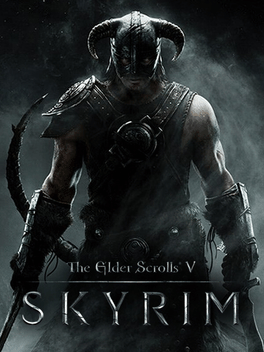 The Elder Scrolls V: SkyrimGame · Bethesda Game Studios · 2011 · 33 documents
 Assassin's Creed IIGame · Ubisoft Montreal · 2009 · 7 documents