Key insights
7 slides
Key number
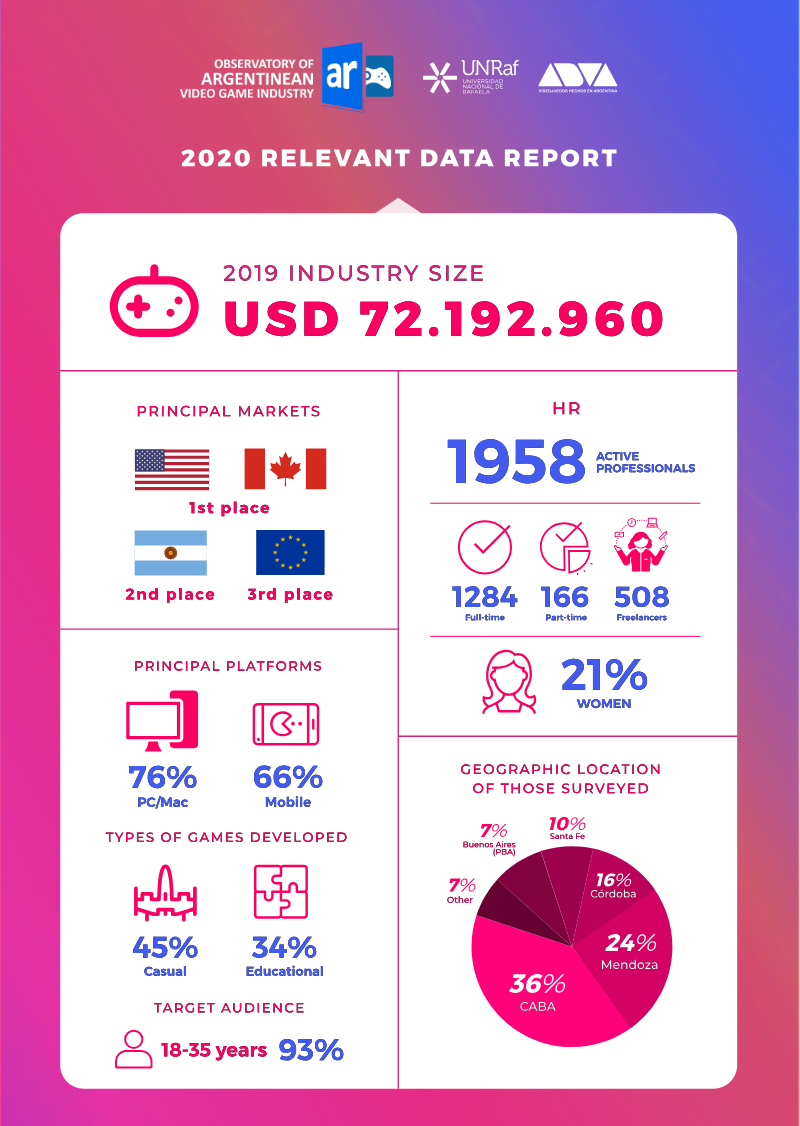
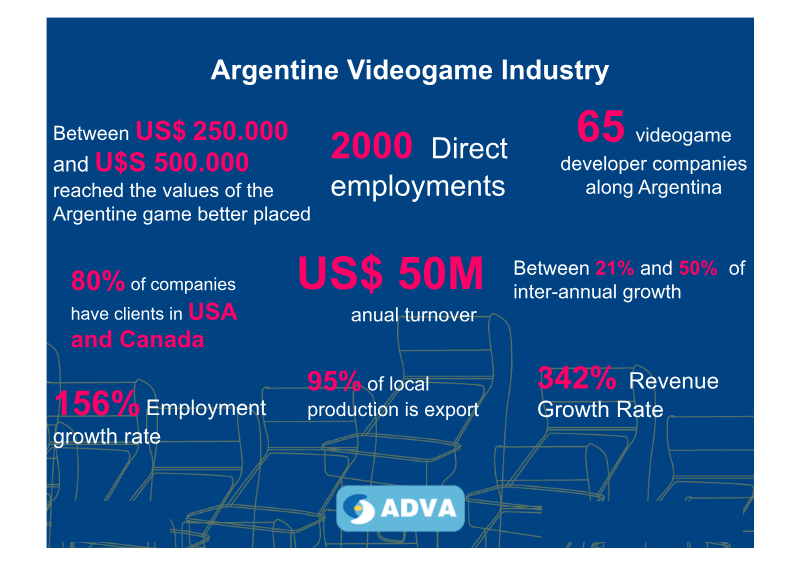
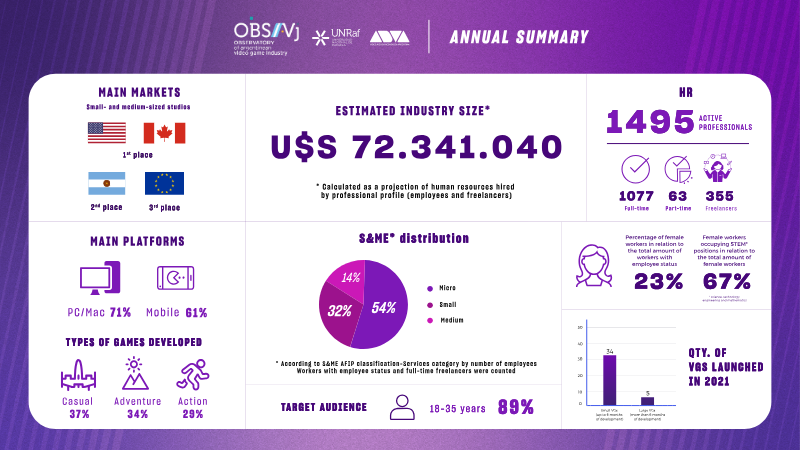
An estimated US$72.3 million industry, mostly small and medium studios.
The sector is concentrated in small and medium-sized studios, and its audience is largely aged 18–35.
Estimate. The industry is estimated at US$72.3 million, derived from a projection of hired human resources.
1 / 7
- 01Argentina's video game industry is estimated at US$72.3 million, a figure derived from a projection of hired human resources, and is concentrated in small and medium-sized studios whose audience is mainly aged 18–35.See it on page 1
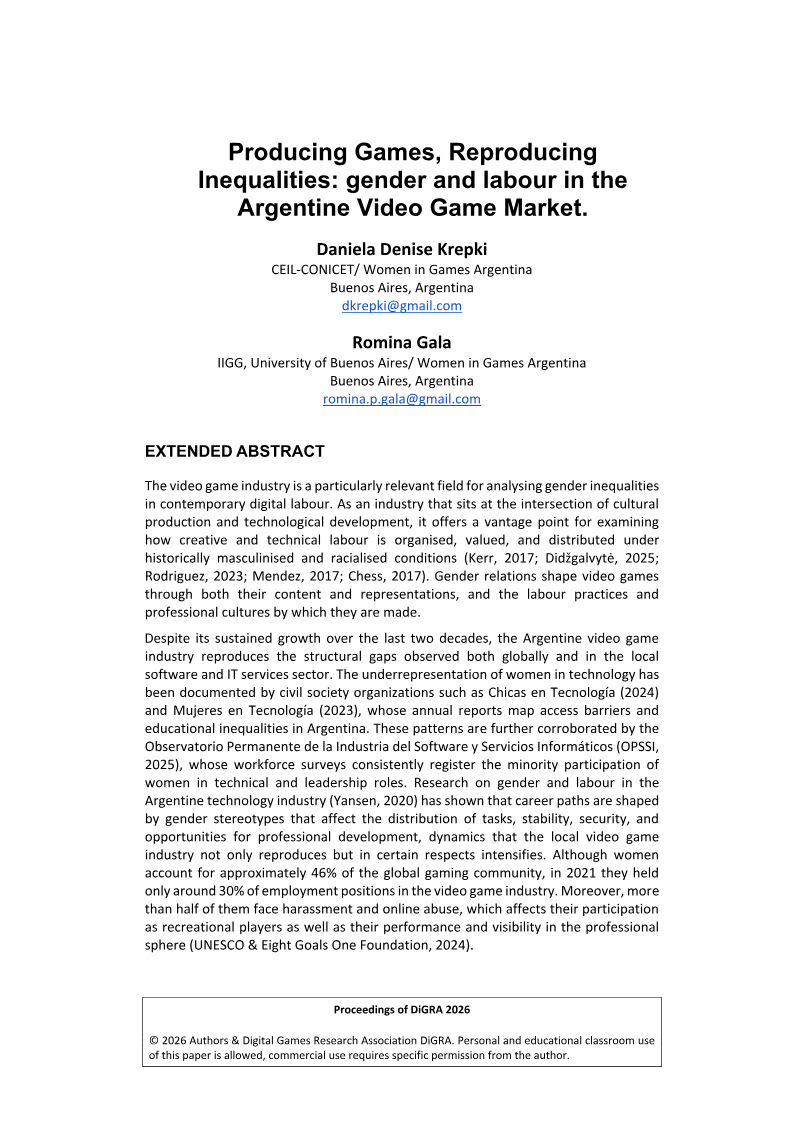
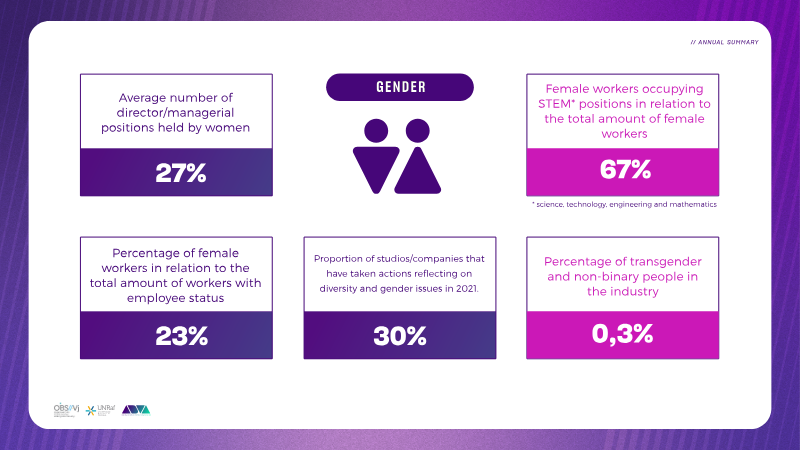
- 02The sector is heavily male-dominated: women hold 23% of employee-status positions and 27% of director or managerial roles, while 0.3% of workers identify as transgender or non-binary.See it on page 10
- 03Skills in demand are programming (86%), English proficiency (86%), and multidisciplinary knowledge (65%), and roughly 58% of employees hold a university degree.See it on page 12
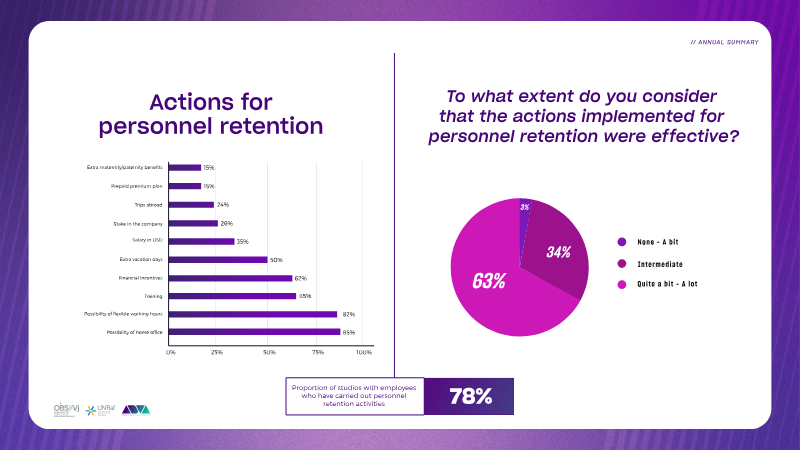
- 04Recruiting commercialization and development profiles is difficult, and 78% of studios with employees run retention efforts, most often flexible hours, home office, and USD-denominated salaries.See it on page 14
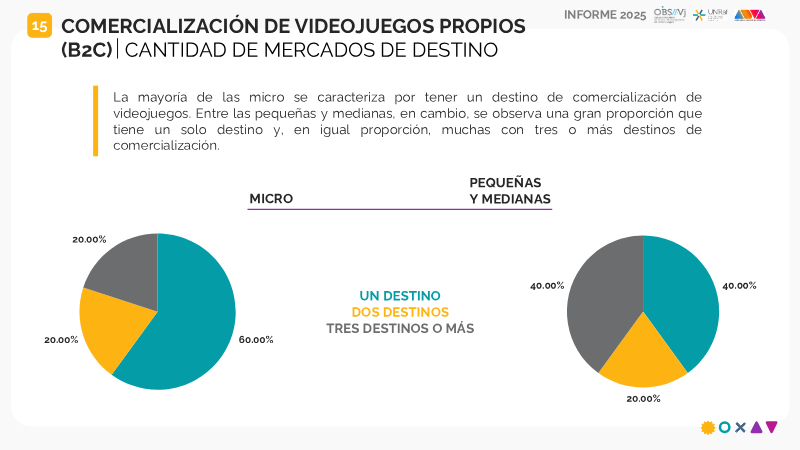
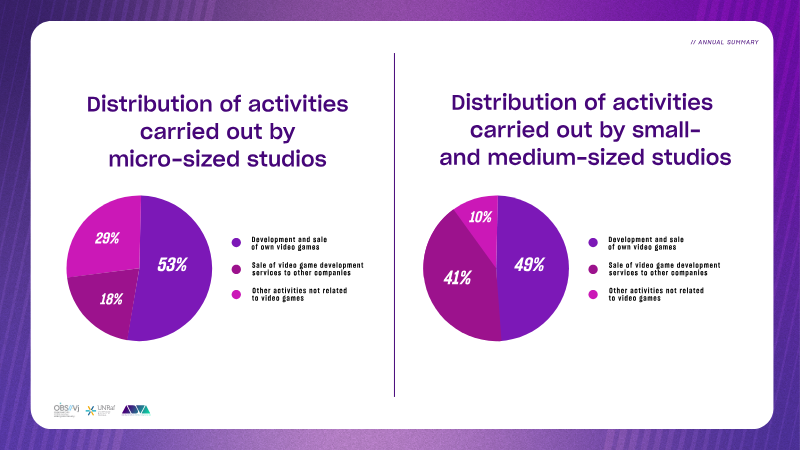
- 05Small studios primarily earn revenue from developing and selling proprietary titles, while medium-sized studios rely more on service work for other companies, with financing dependent on owner contributions, cash flow, and publishers.See it on page 15
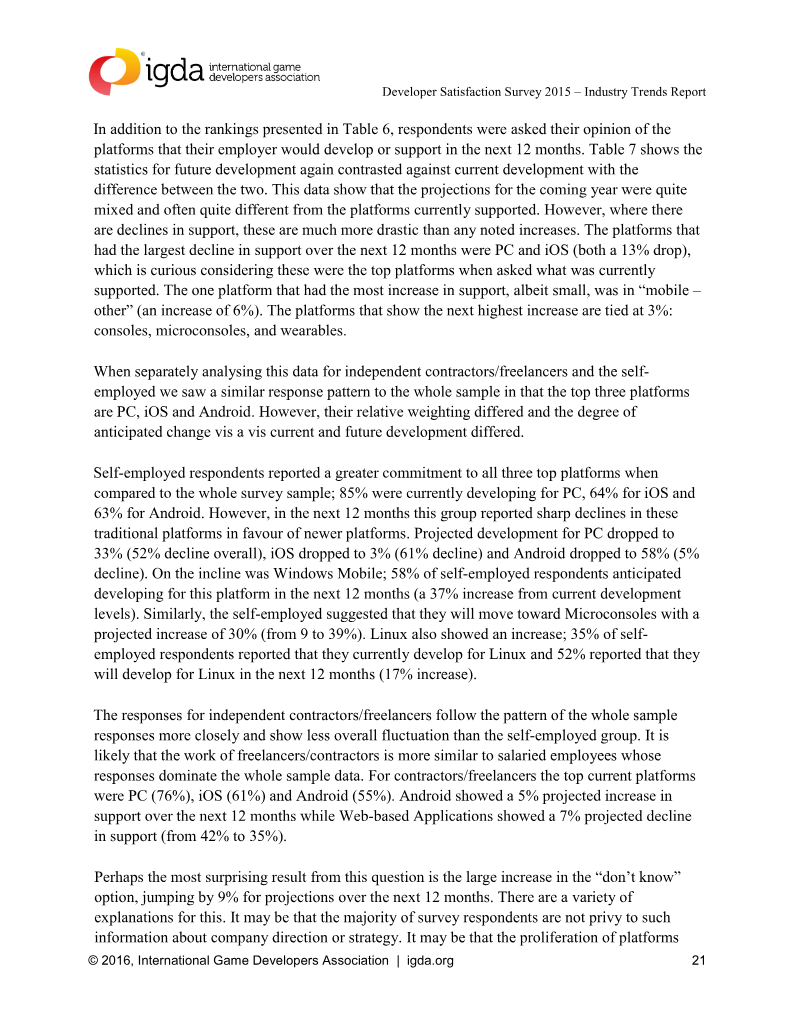
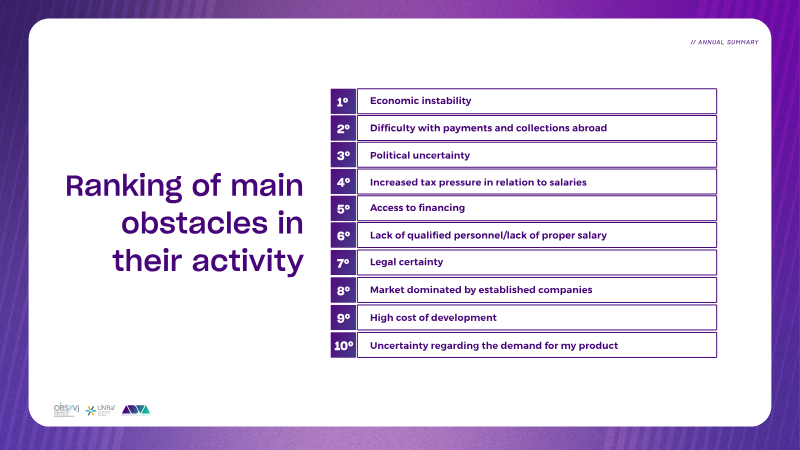
- 06Economic instability, difficulties with cross-border payments, and political uncertainty are the most cited obstacles, and many studios report missed opportunities due to lack of funds.See it on page 28
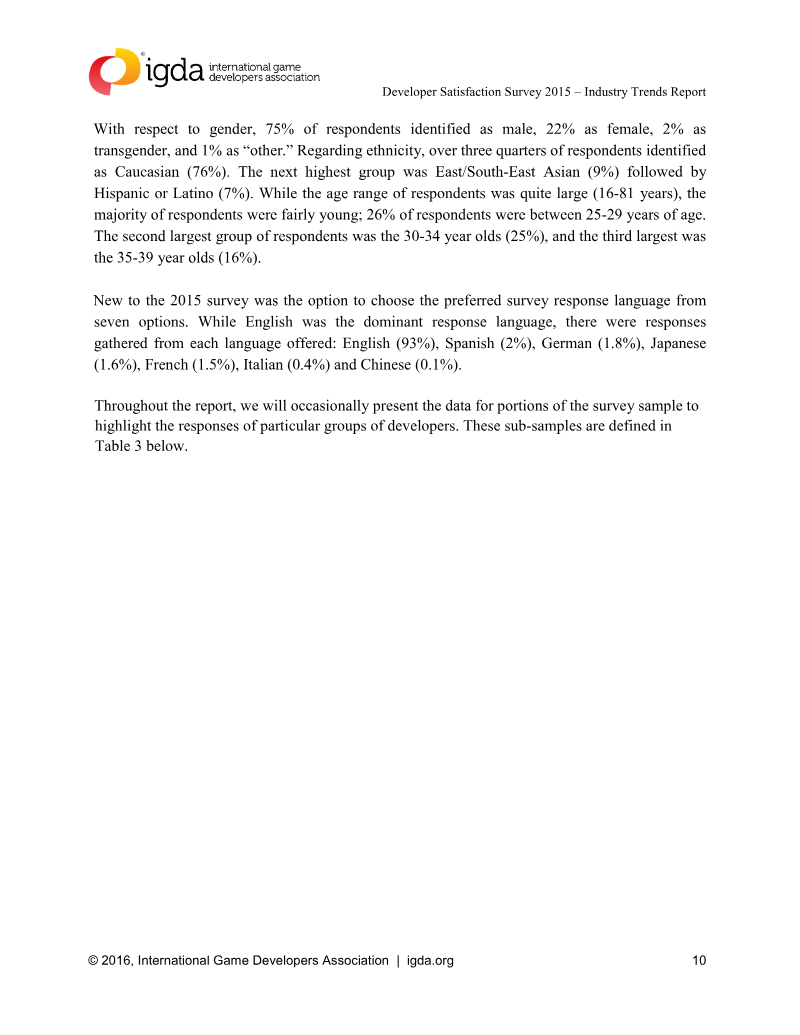
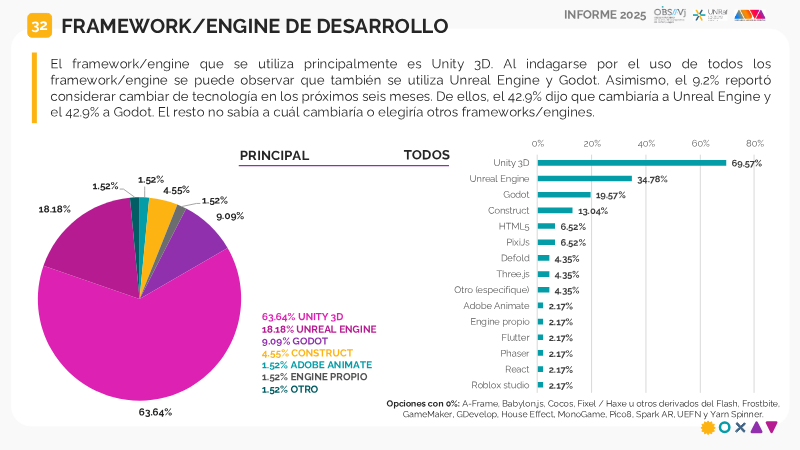
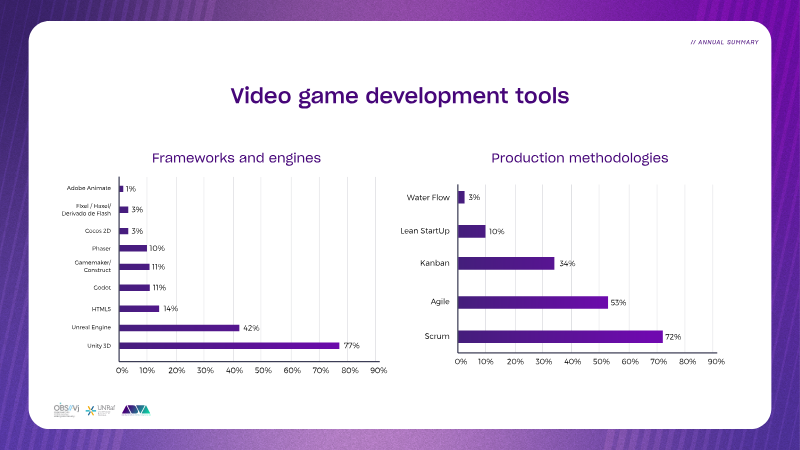
- 07Development relies heavily on Unity, C#, Blender, and Google's analytics suite, with Scrum as the dominant production methodology.See it on page 24
Ask AI about this report
Summary
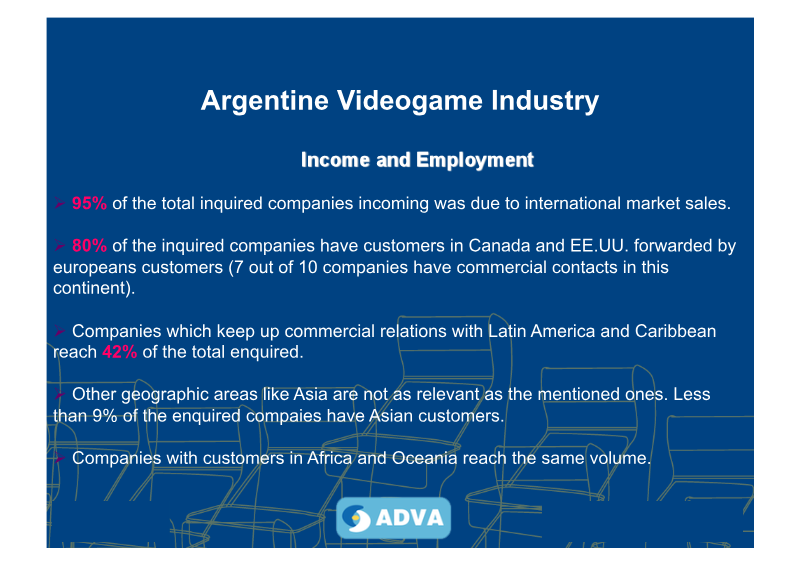
The Argentine Game Dev Industry Observatory's 2022 annual summary, produced by the Universidad Nacional de Rafaela's video game program, surveys the country's video game sector based on activities during 2021. Its purpose is to map the structure, workforce, finances, and challenges of Argentina's game development industry. The estimated industry size is US$72.3 million, derived from a projection of hired human resources, with the sector concentrated in small and medium-sized studios and drawing its audience largely from the 18–35 age range. Participation in the survey grew to 84 responses, and respondents were concentrated in CABA and Buenos Aires province, with Córdoba, Santa Fe, and Mendoza also represented.
The workforce is predominantly male, with women holding 23% of employee-status positions and 27% of director or managerial roles, while 0.3% of workers identified as transgender or non-binary. Roughly 58% of employees hold a university degree, and programming (86%), English proficiency (86%), and multidisciplinary knowledge (65%) rank among the most valued skills. Recruitment is hampered by difficulty finding commercialization and development profiles, and 78% of studios with employees reported personnel retention efforts, most often flexible hours, home office, and USD-denominated salaries. Development tools reflect a strong reliance on Unity, C#, Blender, and Google's analytics suite, with Scrum the dominant production methodology.
The sector's revenue model leans toward developing and selling proprietary titles for small studios and service work for other companies among medium-sized ones. Financing relies heavily on owner contributions, company cash flow, and publishers, and many studios report missed opportunities due to lack of funds. The most cited obstacles are economic instability, difficulties with cross-border payments, and political uncertainty.