1 free read left. Create a free account for unlimited reading + AI research.
Create free accountWhitepaper DiGRA
1 free read left. Create a free account for unlimited reading + AI research.
Create free accountWhitepaperDiGRA
This paper proposes archaeological storytelling as a distinct narrative technique for games, in which the player must study material culture within a game world and interpret artefacts to build an understanding of that world's history. The authors distinguish this approach from archaeogaming, which applies archaeological methods to games and their artefacts, and from existing environmental storytelling, which uses objects and spaces to suggest narrative but rarely requires interpretive reasoning. The argument draws on narrative theory from Murray, Ryan, Jenkins, and Bates, as well as museum practice around the active interpretation of objects and the principle of multi-vocality, which gives equal weight to competing accounts of the past.
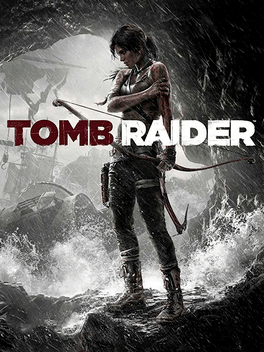
The authors survey the current state of archaeology in games and find that popular titles such as Tomb Raider and Uncharted treat artefacts as optional collectibles with little bearing on the main narrative, while the archaeological past is often reduced to a surrogate history of social elites. Several experimental works come closer to the proposed model: Aporia, which conveys its story entirely through artefacts across three levels of interpretive difficulty, and Looming, in which a fragmentary understanding of two extinct civilisations emerges only through collecting and reading objects. The analysis notes that Aporia's playtesters largely failed to reconstruct the intended narrative, which the original developers treated as a shortcoming, whereas the authors read this outcome as evidence of the interpretive difficulty that archaeological storytelling could legitimately embrace.
The paper concludes that games should avoid presenting a single authoritative interpretation and should instead offer multiple, possibly contradictory histories, along with archaeological analogues such as stratigraphy and dating. The work is a conceptual and critical review rather than an empirical study, and it presents no survey data or playtest statistics beyond the qualitative observations of prior projects. The authors position archaeological storytelling as particularly promising for educational games aimed at archaeology students and as a valid narrative approach in its own right.
Each row is a game or company this document names, each column a document, oldest first. A mark means that document names it. Select a row to see those documents.
DiGRA · 2018
DiGRA · 2018
DiGRA · 2018
DiGRA · 2018
DiGRA · 2018
DiGRA · 2018
DiGRA · 2018
DiGRA · 2018
DiGRA · 2018
DiGRA · 2018
DiGRA · 2018
DiGRA · 2018
Game Developers Conference · 2018