1 free read left. Create a free account for unlimited reading + AI research.
Create free accountArticle DiGRA
1 free read left. Create a free account for unlimited reading + AI research.
Create free accountArticleDiGRA
The authors argue that video games are a meaningful medium through which cultural meanings and social issues such as race circulate and can be critiqued.
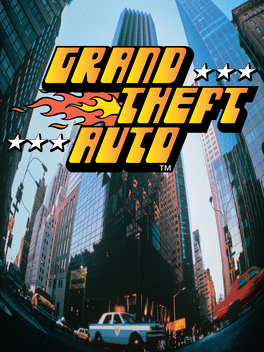
This paper, a 2005 DiGRA contribution by Dymek and Lennerfors, examines how Grand Theft Auto III handles race, humour, and ethics. Its central claim is that video games are a meaningful medium through which cultural meanings circulate and social issues such as race can be critiqued. Rather than engaging the narrativist versus ludologist debate, the authors focus on what the game communicates, noting that games scholarship has given race and humour comparatively little attention.
The analysis brings two frameworks into dialogue. Critical Race Theory, which treats racism as a normal feature of society and race as a social construction, reads the game's exaggerated gang stereotypes (Italian mafiosos, Colombian drug sellers, and triad members, among others) as perpetuating white supremacy and racial stereotyping. Schopenhauer's incongruity theory of humour offers an alternative reading. Because the game's caricatures may clash with players' prior assumptions, the resulting humour could prompt reflection on one's own racial beliefs rather than merely expressing a sense of superiority. The paper frames this as a contrast between a phthonic, or superiority-based, reading that aligns with critical race critique and an incongruity-based reading that opens space for self-examination.
The authors' conclusion favours the incongruity perspective, which treats the game's racial humour as a site where player stereotypes can be reflected upon and renegotiated, over a purely condemnatory judgment of the game as ethically reprehensible. Drawing on postmodern philosophy, they argue against forced "either-or" verdicts and advocate a "both-and" approach that holds the game's competing racial discourses in productive tension. The work is primarily theoretical and interpretive, drawing on game studies, critical race theory, and philosophy of humour rather than reporting empirical data.
Each row is a game or company this document names, each column a document, oldest first. A mark means that document names it. Select a row to see those documents.
DiGRA · 2018
DiGRA · 2018
DiGRA · 2018
DiGRA · 2018
DiGRA · 2018
DiGRA · 2018
DiGRA · 2018
DiGRA · 2018
DiGRA · 2018
DiGRA · 2018
DiGRA · 2018
DiGRA · 2018