ArticleInvestGame
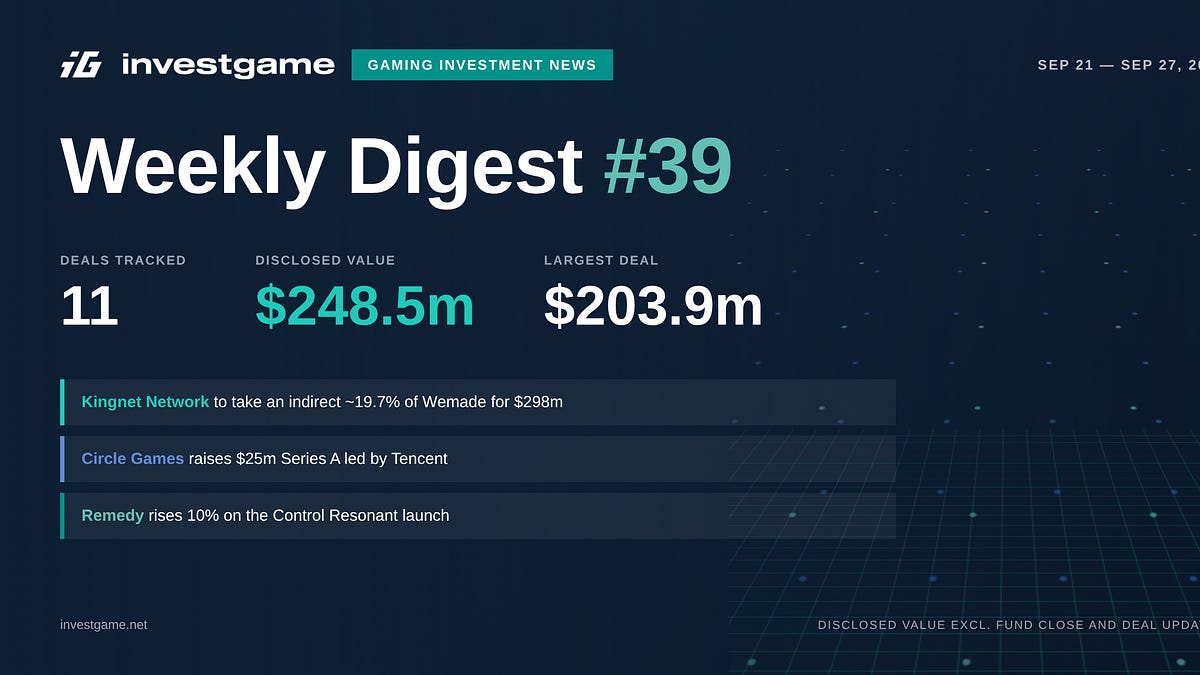
Alibaba's $1.5B+ Lingxi Games Deal and Blacknut's Up to $215M Round Lead the Week
23 Aug 20261 pages~15 min full read
Key insights
6 slides
Key Transaction
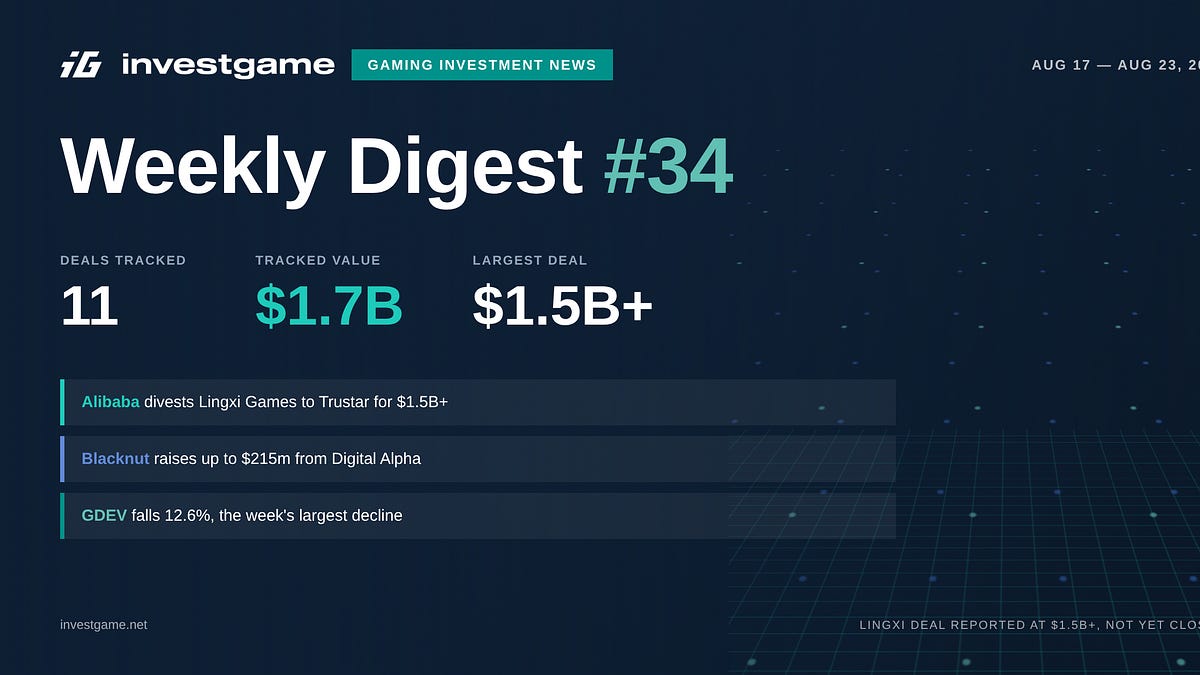
Alibaba divested Lingxi Games for over $1.5 billion.
Alibaba sold its entire stake in mobile developer Lingxi Games to Trustar Capital. This deal is valued at more than $1.5 billion.
Strategic Shift
Alibaba is redirecting capital towards AI and cloud services.
The sale of Lingxi Games is part of Alibaba’s broader strategy.
It's like a company selling off a side business to invest more in its main growth areas.
New Focus. Alibaba is shifting its capital towards AI and cloud services by divesting non-core assets.
Cloud Gaming Investment
Blacknut secured up to $215 million for growth.
Cloud gaming platform Blacknut raised up to $215 million from Digital Alpha Advisors. This funding will support catalog expansion, infrastructure, and international growth.
Fund Closing
Makers Fund closed its fourth venture fund at $250 million.
Makers Fund completed its fourth venture fund, bringing its total assets under management to $1.5 billion.
Market Overview
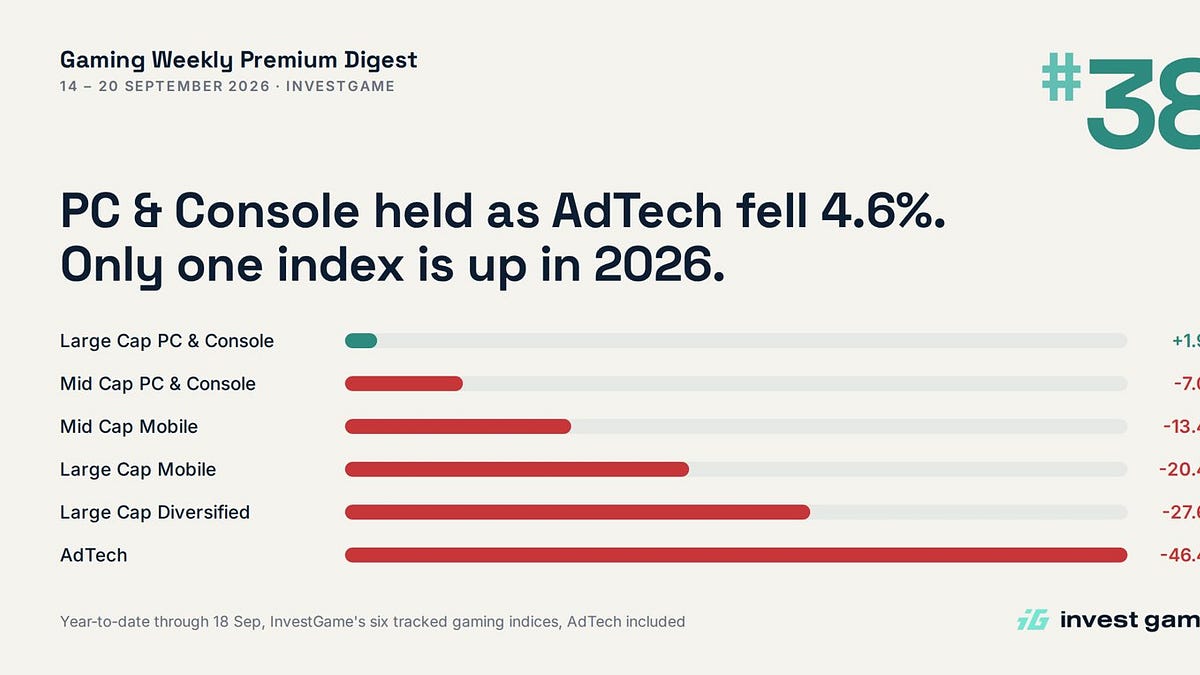
The public gaming market showed a negative trend.
Out of 64 tracked public gaming companies, 40 stocks declined. Only 23 stocks saw gains during this period.
Market Downturn. The majority of public gaming stocks tracked experienced a decline.
Company Performance
NCSOFT shares fell 9.3% after market enthusiasm faded.
NCSOFT shares declined by 9.3%. Market enthusiasm for their Q2 earnings, which included a one-off contract payment, faded.
1 / 6
Ask AI about this report