ArticleInvestGame
Gaming Weekly Premium Digest #38: 14-20 September 2026
24 Sept 20261 pages~1 min full read
Key insights
5 slides
Weekly Performance
The gaming market saw a median share price increase of 0.2% across 59 companies.
During the week of September 14–20, 2026, 30 companies experienced share price increases. The broader market remained relatively stagnant.
Market Movement. The gaming market experienced a median movement of 0.2% across a tracked universe of 59 companies.
AdTech Decline
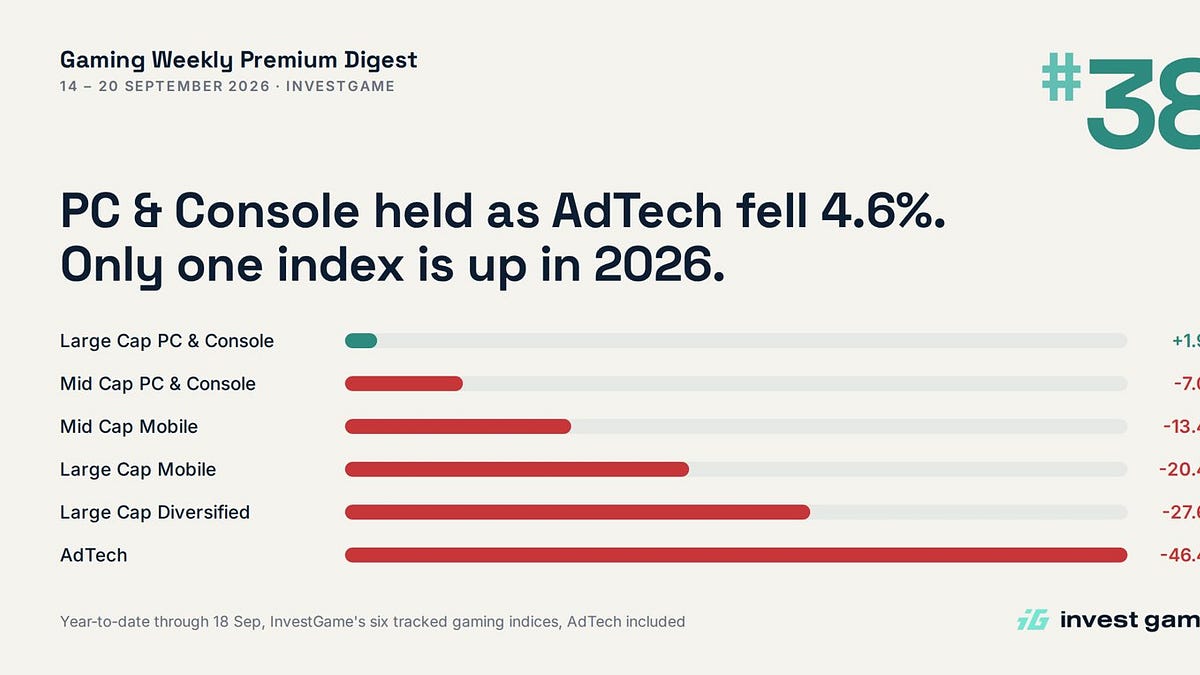
AdTech stocks experienced the steepest weekly decline at -4.6%.
This downturn extended the sector's year-to-date losses to -46.4%.
PC & Console Resilience
Mid Cap PC & Console companies were the week's top performers, rising 2.9%.
This segment provided a stabilizing force in the market. Large-cap PC and console entities remained flat for the week.
Year-to-Date Leader
Large Cap PC & Console stocks are the only index above their January 2026 levels.
It stands as the only tracked category with positive growth relative to its January baseline.
Positive Growth. Large Cap PC & Console stocks currently stand as the only index above their January 2026 levels, with a year-to-date gain of 1.9%.
1.9%
Large Cap PC & Console stocks year-to-date gain.
Platform Split
Market performance was split along platform lines during the week.
Mobile tiers and Large Cap Diversified indices both closed lower.
Like a fork in the road, different gaming platforms took different directions in market performance.
1 / 5
Ask AI about this report