ArticleInvestGame
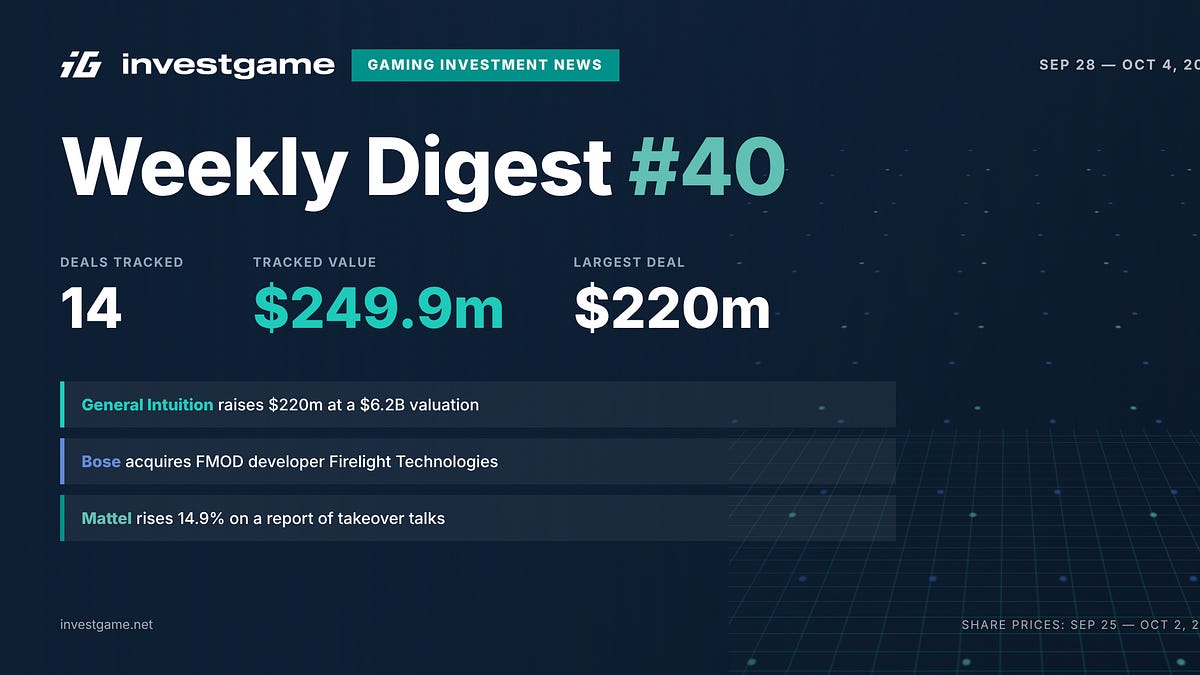
Gaming Weekly Premium Digest #40: 28 September–4 October 2026
8 Oct 20261 pages~4 min full read
Key insights
6 slides
Market Overview
The gaming industry experienced mixed stock performance.
The median market movement remained flat, but the AdTech sector faced significant pressure.
Flat
Median market movement for 59 tracked companies.
- AdTech sector decline
- -6.8%
Legal Impact
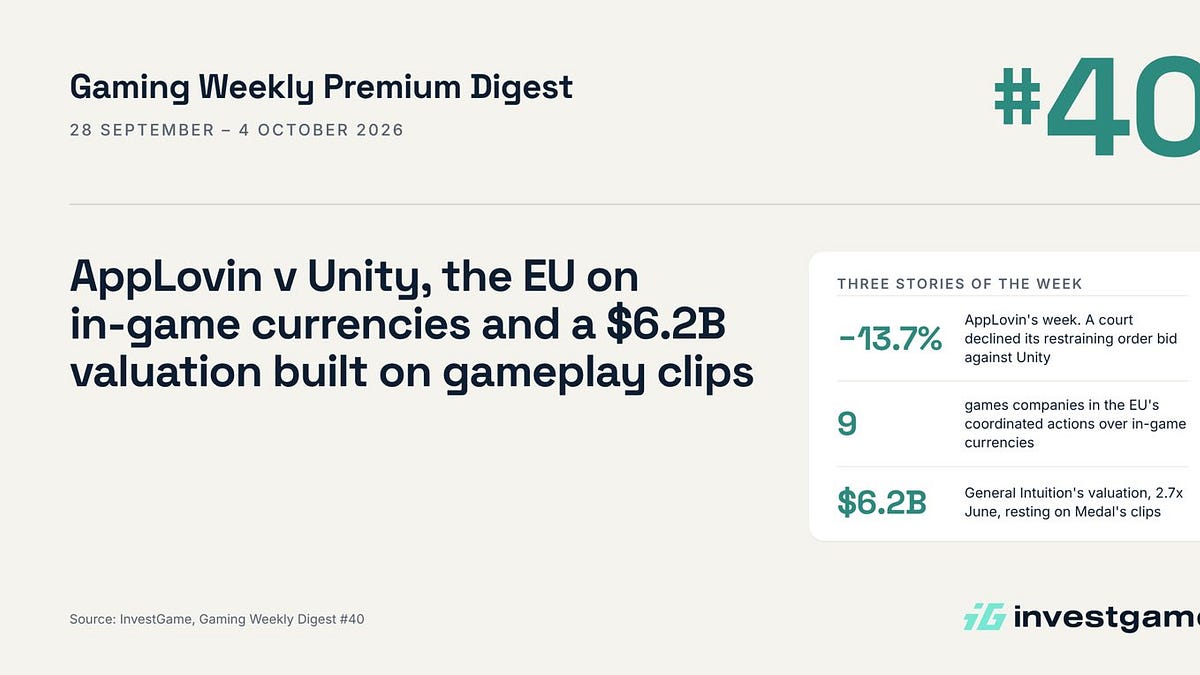
AppLovin's shares fell after a court decision.
A San Francisco court denied AppLovin’s request for a temporary restraining order against Unity’s Ad Quality SDK. The legal dispute will now proceed to private arbitration.
-13.7%
AppLovin share price decline.
Funding Success
General Intuition secured a significant funding round.
The company raised $220 million, achieving a $6.2 billion valuation. This valuation represents a 2.7x increase since June, driven by its library of gameplay clips.
Stock Performance
NCSOFT's stock price increased after a successful game launch.
Shares rose 13.7% following the global early access launch of Aion 2 on Steam. The game achieved top-tier sales rankings and significant concurrent players.
13.7%
NCSOFT stock price increase.
- Peak concurrent players for Aion 2
- 171,530
Platform Shift
Valve transitioned Steam to personalized recommendations.
This change replaces curated event placements in the Discounts and Events section. During tests, it resulted in a tenfold increase in daily game exposure.
It's like a personalized shopping assistant replacing a general store display.
10x
Increase in daily game exposure on Steam.
Strategic Clarification
Xbox leadership confirmed the division is not for sale.
Xbox CEO Asha Sharma emphasized a focus on developing new partnerships and operating models.
1 / 6
Ask AI about this report