1 free read left. Create a free account for unlimited reading + AI research.
Create free accountArticle Quantic Foundry
1 free read left. Create a free account for unlimited reading + AI research.
Create free accountArticleQuantic Foundry
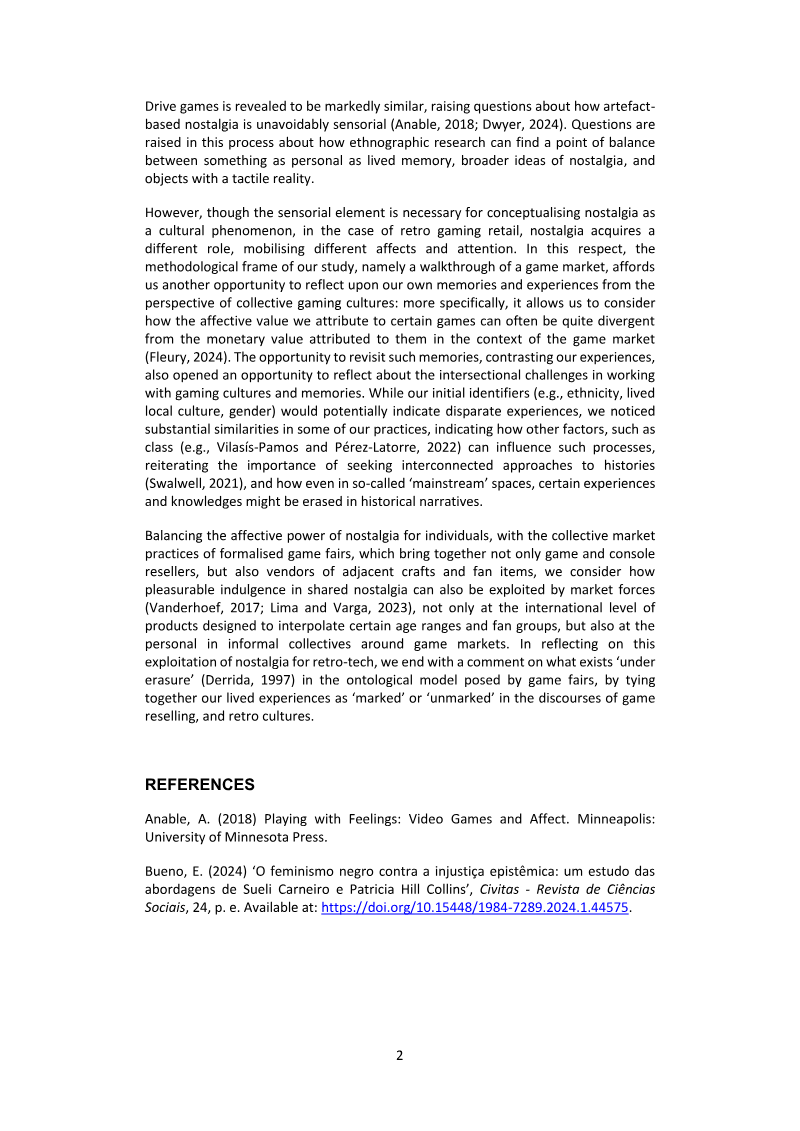
The study uses a proprietary Gamer Motivation Model.
Key finding. The report analyzes data from 177,410 gamers to identify how gaming motivations, genre preferences, and popular titles shift across age segments ranging from 15 to 64 years old.
Quantic Foundry's Age Report is a 55-page paid market research product ($2,499) examining how gaming motivations, genre preferences, and popular titles change as players age, with a particular focus on the growing 35+ gamer segment. The central thesis is that the generation that grew up with games now forms a distinct and expanding market with its own needs and motivations, and that developers and marketers must understand these shifts to tailor products and messaging effectively.
The analysis draws on survey responses from 177,410 gamers, with ages ranging from 13 to 74 and a median of 25. Respondents were 82% male, 17% female, and 1% non-binary, and the survey ran in English only, with most participants from North America followed by the EU. Self-identified play styles were 11% casual, 67% core, and 21% hardcore. Platform use was 83% PC, 55% console, 35% smartphone, and 25% handheld. Leading genres were RPG (28%), shooters (25%), action adventure (18%), and strategy (14%).
Data came from the 5-minute Gamer Motivation Profile, with about 80% of respondents recruited organically through social sharing and no incentives offered. The authors acknowledge that the sample skews younger, male, and toward core PC gamers relative to ESA 2015 figures. They argue that breaking results out by gender and age controls for the main demographic biases, and that console, smartphone, and handheld usage rates match ESA figures within one percentage point. They conclude the findings describe the core gamer market rather than all gamers. The underlying 12-motivation model was built through factor analysis, and its authors have published over 40 peer-reviewed papers.
The report covers age segments of 15–24, 25–34, 35–44, 45–54, and 55–64 (men only), with results split by gender. Its four main sections cover motivation changes across ages 15–55, genre appeal that rises, falls, or stays stable with age, and popular games and psychological emphasis by segment. Game popularity is presented both as raw frequencies and as adjusted "QF scores" relative to baseline, which reveal age-specific play styles within broadly popular titles such as World of Warcraft.
Each row is a game or company this document names, each column a document, oldest first. A mark means that document names it. Select a row to see those documents.
Quantic Foundry · 2026
Quantic Foundry · 2025
Quantic Foundry · 2025
Quantic Foundry · 2025
Quantic Foundry · 2025
Quantic Foundry · 2024
Quantic Foundry · 2023
Quantic Foundry · 2023
Quantic Foundry · 2023
Quantic Foundry · 2021
Quantic Foundry · 2021
Quantic Foundry · 2021
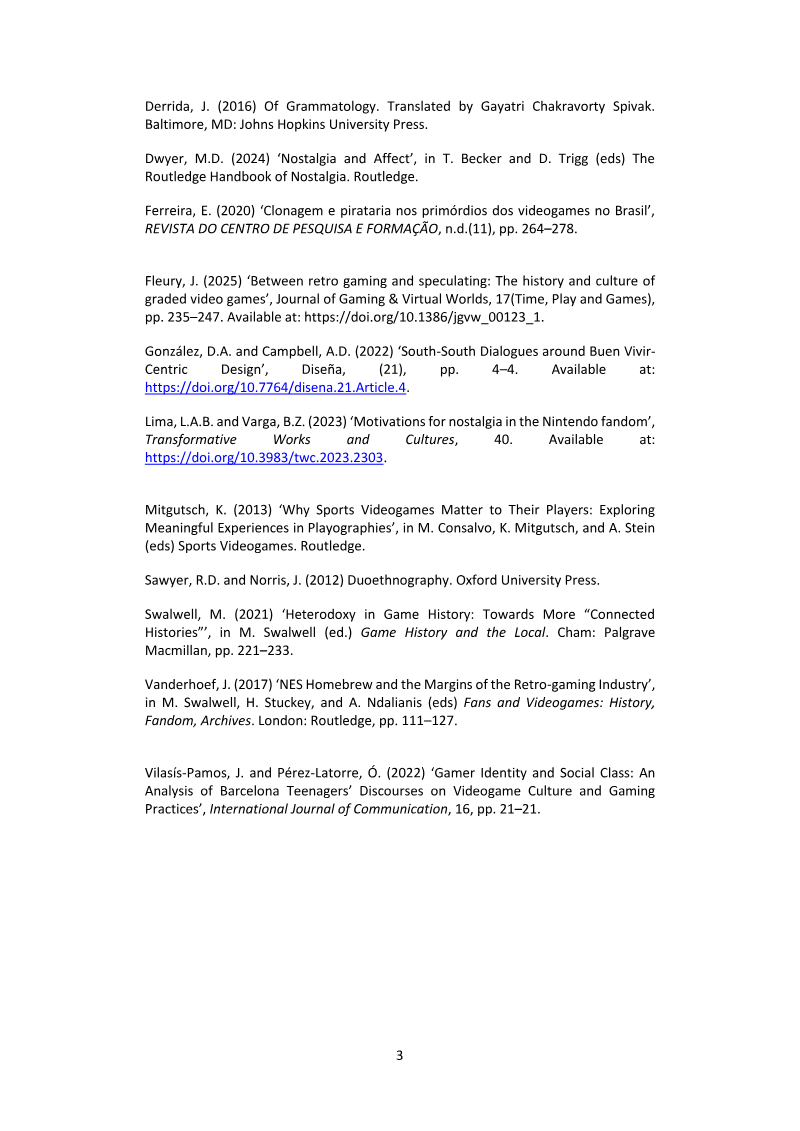
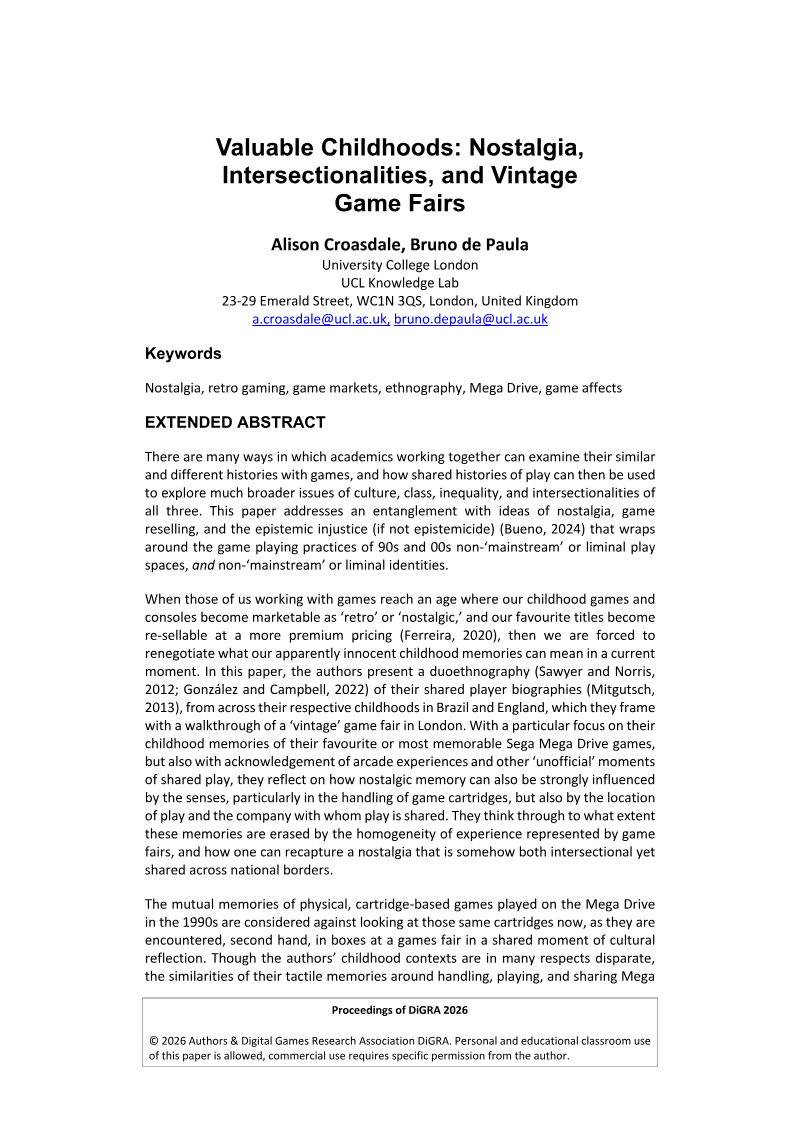
DiGRA · 2026