1 free read left. Create a free account for unlimited reading + AI research.
Create free accountArticle International Journal of Esports
1 free read left. Create a free account for unlimited reading + AI research.
Create free accountArticleInternational Journal of Esports
The qualitative study looked at sleep, nutrition and physical activity among students aged 17 to 21, and how they related to health and performance.
This qualitative study examines the sleep, nutrition, and physical activity habits of Norwegian esports students and how these habits relate to their perceived health and performance. Drawing on interviews with 20 students aged 17 to 21, the research seeks to understand whether lifestyle factors that are well established in general health research also shape outcomes for competitive gamers. The authors frame their work within a broader literature linking sleep deprivation, caffeine and energy drink consumption, skipped meals, and sedentary behavior to cognitive function.
The central finding is that energy levels and focus, shaped largely by diet and sleep, were the main drivers participants associated with their performance and well-being. Participants widely agreed that nutrition, sleep, and physical activity matter, yet many skipped breakfast, consumed energy drinks despite noticing their effect on concentration, and averaged about 6.8 hours of sleep on weekdays, below the recommended 7 to 10 hours for young adults. Notably, competitive play itself was not seen as disruptive to sleep when it ended hours before bed, whereas casual gaming close to bedtime was. Many participants also believed physical activity supported their mental health, self-esteem, and performance.
The authors conclude that lifestyle factors meaningfully influence esports performance and recommend simple interventions, including avoiding screens and caffeine before bed, eating regular meals, exercising consistently, and taking breaks. Because the data are self-reported and drawn from a small sample of Norwegian students, the findings are not broadly generalizable, though they offer a qualitative foundation for future research on the health of competitive gamers.
International Journal of Esports · 2026
International Journal of Esports · 2026
International Journal of Esports · 2026
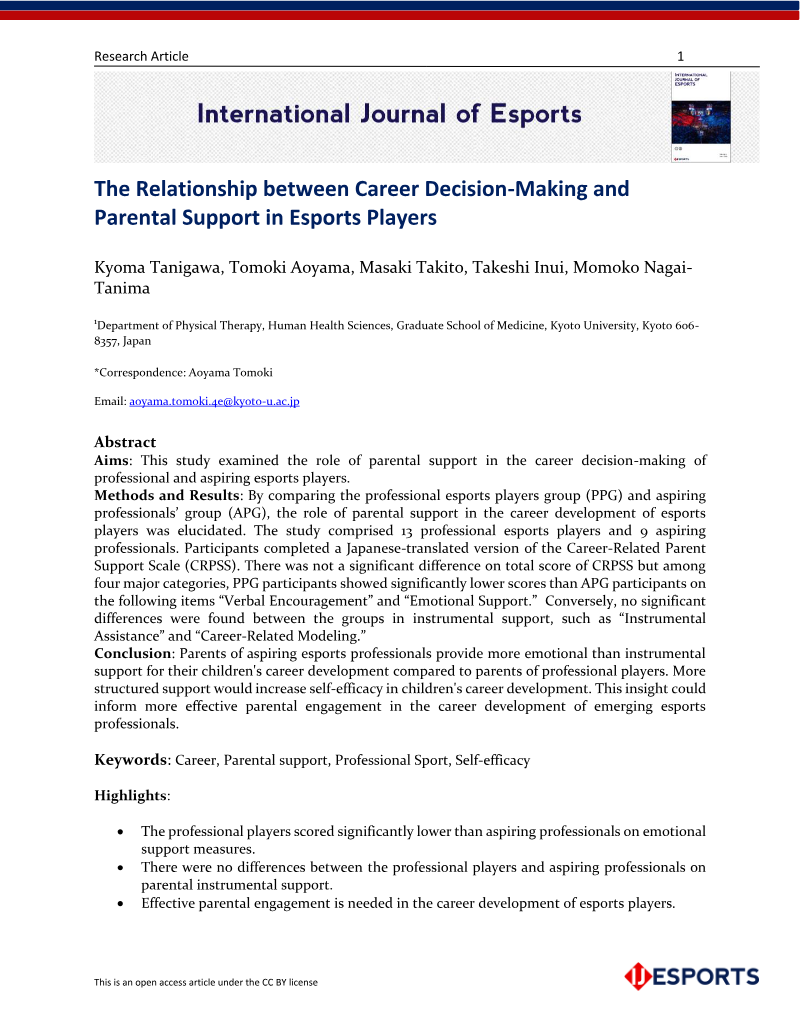
International Journal of Esports · 2026
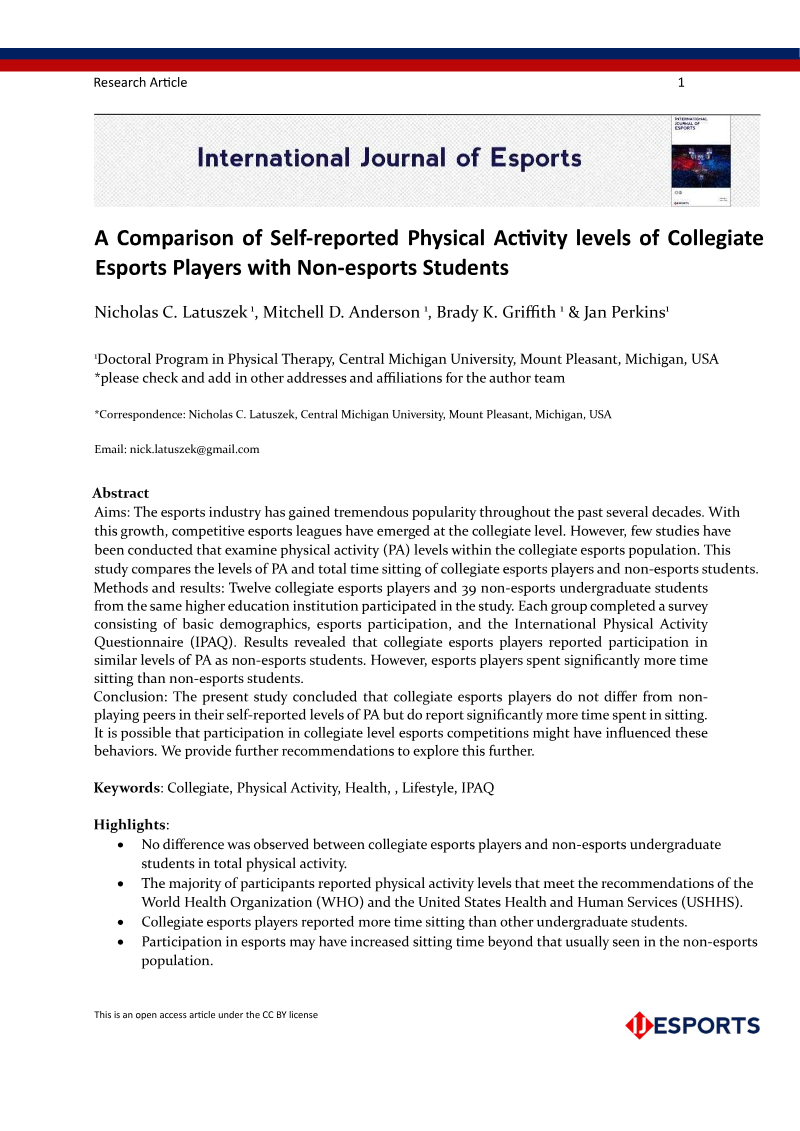
International Journal of Esports · 2026
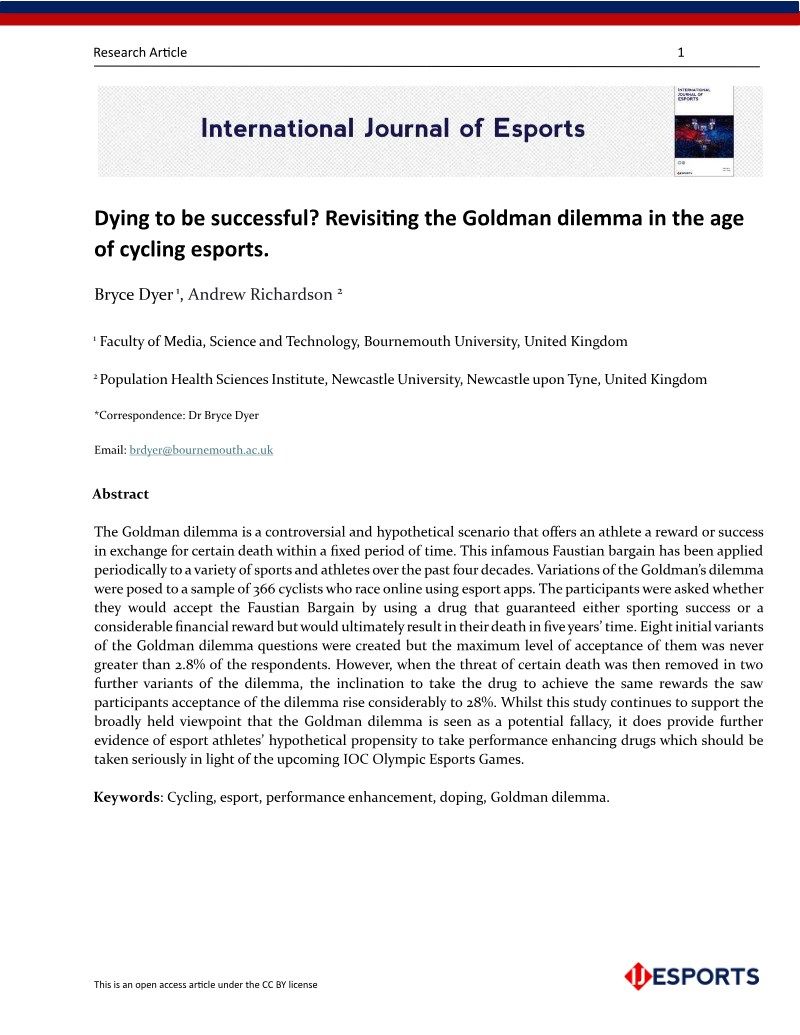
International Journal of Esports · 2026
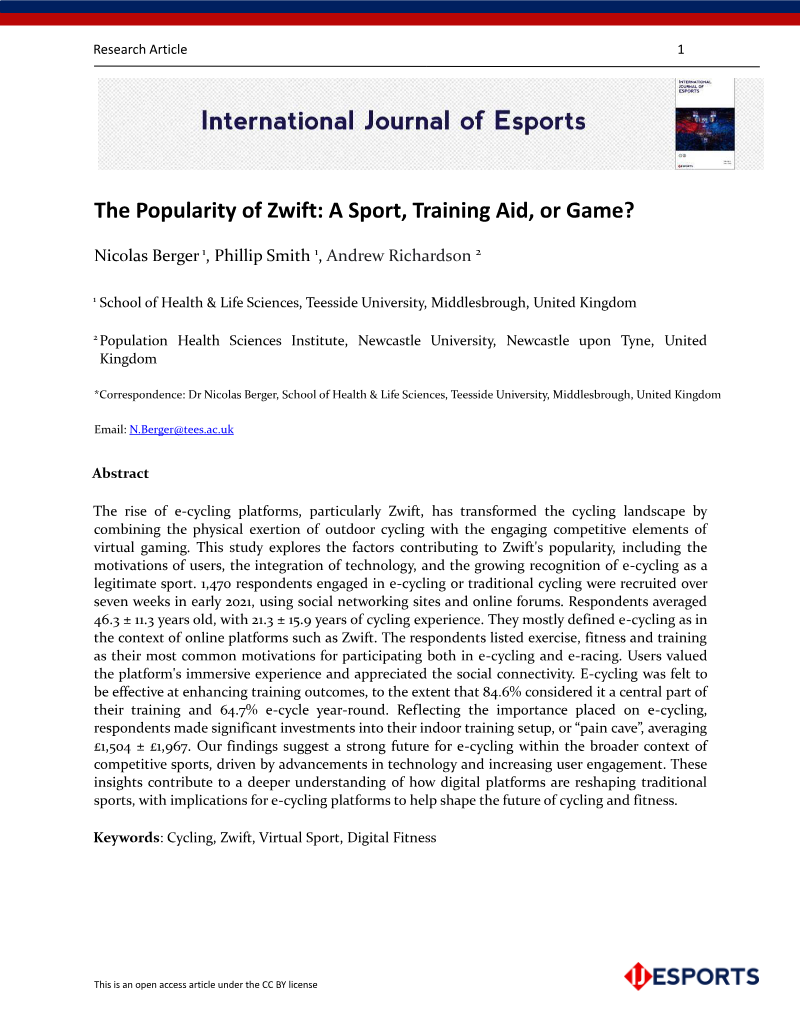
International Journal of Esports · 2025
International Journal of Esports · 2025
International Journal of Esports · 2025
International Journal of Esports · 2025
International Journal of Esports · 2025
International Journal of Esports · 2025
GAMEHEARTS · 2026